
Antun Augustinčić
Croatian sculptor, political commissar and university teacher
About Antun Augustinčić
Lived 1900 – 1979 (aged 79). Antun Augustinčić was a Hungarian and Yugoslav sculptor, political commissar and university teacher.
Antun Augustinčić (4 May 1900 – 10 May 1979) was a Croatian sculptor active in Yugoslavia and the United States. Along with Ivan Meštrović and Frano Kršinić, he is considered one of the three most important Croatian sculptors of the 20th century. After the college became the Royal Academy of Arts and Crafts in 1922, he studied under the guidance of Ivan Meštrović until his graduation in 1924. He then received a scholarship from the French government and continued his studies at the École des Arts Décoratifs and École des Beaux-Arts in Paris under the guidance of Jean Antoine Injalbert. after his design won the competition out of the 23 works submitted, with prominent Yugoslav sculptors Risto Stijović and Sreten Stojanović coming in second and third. From then on equestrian statues became one the hallmarks of his career, notable examples being the monument to Józef Piłsudski in Katowice, Poland (commissioned in the 1930s but placed in 1991) and his most notable work, the Peace monument, erected in front of the United Nations building in New York in 1954.
In 1940 he became a corresponding member of the Yugoslav Academy of Sciences and Arts (JAZU) and his works were featured in the 1940 documentary film Croatian Sculptors (German title: Bilhauerkunst in Kroatien) filmed by Oktavijan Miletić. During the war Augustinčić remained active and was commissioned to sculpt a bust of the Croatian Poglavnik Ante Pavelić. In 1943, he defected to the Yugoslav Partisans' movement and the same year made the bust of Josip Broz Tito in Jajce. In 1946 Augustinčić became a professor at the Academy of Fine Arts in Zagreb, and after the war he was made a member of the People's Assembly.
In 1949 he was made a full member of the Yugoslav Academy, and from the 1950s onwards he started making portraits, art nudes, and figurative sculptures. In the years after the war he made a number of notable sculptures, such as the monuments to Josip Broz Tito in Tito's birthplace of Kumrovec (1948), politician Moša Pijade (1953), violinist Zlatko Baloković (1962), 16th century Croatian writer Marin Držić (1963) and many others. His most important sculpture in this period is The Carrying of the Wounded , which evolved from a sketch made in 1944 and which he used as a recurring motif in a number of monuments he created in the following three decades,
During his visit to Yugoslavia, the Emperor of Ethiopia Haile Selassie met Augustinčić on the Brijuni islands. The Emperor invited Augustinčić to design a monument which will commemorate victims of Italian reprisals in Addis Ababa and stated "Who better than you will be able to portray the suffering of victims of fascism?".
Gallery
Don’t just read it —
keep it.
Full-length biographies made to live with: read them, listen on the way to work, watch them tonight.
- E-book
- Audio
- Video
Instant download · yours to keep · every purchase keeps this site free
Important facts
People in Antun Augustinčić's life
Named in this biography and alive at the same time
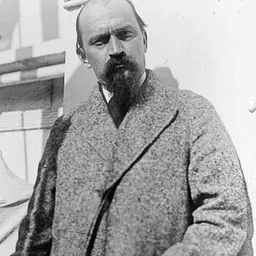

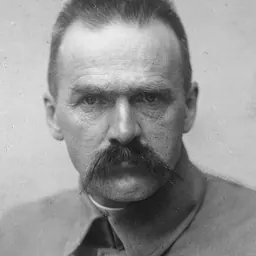
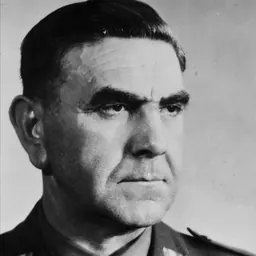


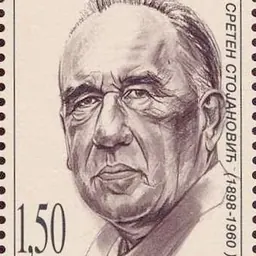
Related people
Same field, nearest in time



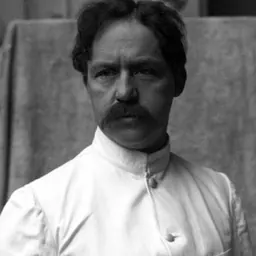

Contemporaries
People whose lives overlapped Antun Augustinčić's


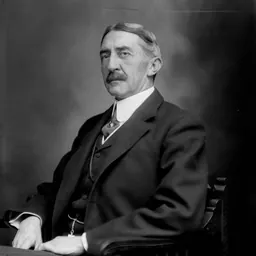
Frequently asked questions
Who was Antun Augustinčić?
Croatian sculptor, political commissar and university teacher (1900-1979)
When was Antun Augustinčić born?
Antun Augustinčić was born on 4 May 1900 in Klanjec.
When did Antun Augustinčić die?
Antun Augustinčić died on 10 May 1979 in Zagreb.
What was Antun Augustinčić's occupation?
Antun Augustinčić was a sculptor, political commissar and university teacher.
What nationality was Antun Augustinčić?
Antun Augustinčić was Hungarian and Yugoslav.
Sources & further reading
· Wikipedia: Antun Augustinčić
Cite this page
APA: Biography.guide. (2026). Antun Augustinčić. https://biography.guide/antun-augustincic/
MLA: "Antun Augustinčić." Biography.guide, https://biography.guide/antun-augustincic/.
Chicago: "Antun Augustinčić." Biography.guide. https://biography.guide/antun-augustincic/.
Data last updated: 2026-09-20 · Spot an error? Report a correction.
Page generated 2026-09-27 05:22 UTC