
About Matteo Albertone
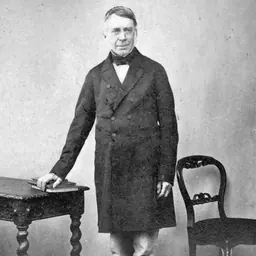
Lived 1840 – 1919 (aged 78). Matteo Albertone was an Italian military officer.
First Italo-Ethiopian War Albertone returned in Eritrea in 1895, when the tensions upon diverging interpretations of the Treaty of Wuchale between Italy and Ethiopia escalated into the First Italo-Ethiopian War. When the fighting started the Italian forces were divided into two operational Corps, one in Adigrat and the other in Mek'ele: the latter, almost entirely composed by ascari under general Arimondi, won the victory at Coatit, the opening engagement of the war. The Italian then invaded Tigray, while Menelik II was slowly gathering his forces in Addis Abeba. By November, when the negus finally started marching towards Italian positions, the occupation was complete, and a line of outposts and pickets was established on the borders. Realizing Menelik forces greatly outnumbered those units, Baratieri ordered a preemptive retreat. His conflictual relationship with Arimondi, however, led to the massacre of Toselli's column at the Amba Alagi and the loss of the isolated Fort of Mek'ele (Macallè in Italian sources) after a two-weeks siege.
As the situation deteriorated, Baratieri reorganized his command: Albertone received command of the highly respected Native Brigade, formed with troops that served in the 2nd operational Corps, while Arimondi was moved to the I Infantry Brigade, a mixed formation that mostly comprised Italian units recently shipped from Italy. By mid February 1896, the Italian expeditionary force concentrated on the Sauria hills, near Adwa, a small settlement where the Ethiopian army was encamped. Albertone informed his commander that, according to native informants, the Ethiopians were scattered across the hills of Adwa, foraging. This was later proved to be wrong, but, with Arimondi's mistaken estimate of Menelik's forces, it suggested to the commanders that Baratieri was moving away from an easy victory. Following Arimondi, Albertone urged an aggressive attack and was soon joined by his colleagues.
At midnight it was found that the paths followed by Albertone and Arimondi were converging. Albertone took the lead, forcing Arimondi to stop for an entire hour. Since the Native Brigade marched faster than the two others, by 3:30 a.m. Albertone reached his intended position, on what he thought was the Kidane Meret. His guides, though, informed him that the brigade was on Erarà Hill. After an hour, not seeing Arimondi coming into line on his right as he expected, Albertone deemed that he was on the wrong position and decided to resume the march toward the real Kidane Meret, away.
Menelik's first attack Albertone's move opened a wide gap in the Italian lines, and isolated his brigade from Arimondi and Dabormida. By 5:30 a.m., at sunrise, while the two Italian brigades deployed on the Rebbi Arienni, from his position overlooking the Mariam Shavitu valley Albertone sighted the Ethiopian camp. Convincing himself that Baratieri wanted him to threaten those positions, he sent forward the 1st Native Battalion of major Turitto to scout the ground. Around 6 p.m. the advanced battalion came under heavy attacks from nearby Ethiopian troops, and Menelik was rapidly binging fresh forces to this side. The assault was so fierce that it reached the Italian second line, and the entire Native Brigade was forced to retreat, protected by the fire of Albertone's two mountain artillery batteries. At 6:45 Baratieri, who heard the sound of the fighting, ordered Dabormida to advance in support of Albertone, whom he assumed to be at the false Kidane Meret, a little ahead. Once Dabormida discovered the Native Brigade was further away, he continued to slowly march westwards, reaching the Mariam Shavitu valley 3 miles north of Albertone's positions.
Mount Semaiata By 7:00 a.m. Albertone was arraying his remaining battalions on the nearby Mount Semaiata, leaving Turitto and the two batteries on the Kidane Meret to cover his movements. He wrote a message to Baratieri, informing him that he was under heavy attack and in dire need of reinforcements: it would reach the commander only at 8:15. From 7:30, the 1st Native Battalion held off increasing numbers of enemy troops until 8:30, when it was forced to retreat. At this time, about 18,000 Ethiopians were converging on Albertone's brigade in a half moon formation, trying to encircle it, and the strong Ethiopian northern wing occupied Mount Gusoso, cutting any existing link between Albertone and Dabormida's relief attempt. For about two hours, the ascari under Albertone held their position, the artillery inflicting heavy casualties on the attackers, but then the Ethiopians set up quick-firing batteries on the Kidane Meret. While Menelik was committing more troops from his own command, the badly mauled flanks of the Native Brigade collapsed, and by 10:30 the whole brigade, low on ammunition, started a fighting retreat that soon turned into a rout. The batteries that tried to cover the withdrawal were captured, retaken by ascari with a bayonet charge, then definitely lost, their crews annihilated. Albertone was captured leading his troops, and his brigade was shattered shortly afterwards.
Last years
After being held prisoner by the Ethiopians for fourteen months, he was freed under the terms of the treaty of Addis Abeba and returned to Italy in July 1897. After commanding for two months the "Re" (lit. King's Own) Brigade, he retired from the Army at his request. For his valiant deeds during the battle of Adwa, Albertone received the Silver Medal of Military Valour in 1898. He died peacefully and almost forgotten in Rome, in 1919.
Don’t just read it —
keep it.
Full-length biographies made to live with: read them, listen on the way to work, watch them tonight.
- E-book
- Audio
- Video
Instant download · yours to keep · every purchase keeps this site free
Important facts
Related people
Same field, nearest in time




Contemporaries
People whose lives overlapped Matteo Albertone's

Frequently asked questions
Who was Matteo Albertone?
Italian officer (1840-1919)
When was Matteo Albertone born?
Matteo Albertone was born on 29 March 1840 in Alessandria.
When did Matteo Albertone die?
Matteo Albertone died on 13 February 1919 in Rome.
What was Matteo Albertone's occupation?
Matteo Albertone was a military officer.
What nationality was Matteo Albertone?
Matteo Albertone was Italian.
Sources & further reading
Cite this page
APA: Biography.guide. (2026). Matteo Albertone. https://biography.guide/matteo-albertone/
MLA: "Matteo Albertone." Biography.guide, https://biography.guide/matteo-albertone/.
Chicago: "Matteo Albertone." Biography.guide. https://biography.guide/matteo-albertone/.
Data last updated: 2026-09-20 · Spot an error? Report a correction.
Page generated 2026-09-27 05:29 UTC