
About Maxine Greene
Lived 1917 – 2014 (aged 96). Maxine Greene was an American philosopher.
Sarah Maxine Greene (née Meyer; December 23, 1917 – May 29, 2014) was an American educational philosopher, author, social activist, and teacher. Described upon her death as "perhaps the most iconic and influential living figure associated with Teachers College, Columbia University", she was a pioneer for women in the field of philosophy of education, often being the sole woman presenter at educational philosophy conferences as well as the second woman elected as president of the Philosophy of Education Society in 1967. Additionally, she was the third woman to preside over the American Educational Research Association in 1981. Greene was largely raised in a way which conformed to the cultural expectations of women at that time. From an early age, however, she demonstrated an affinity towards the arts. Describing her family as one who "discouraged intellectual adventure and risk", she disregarded that approach and from the age of 7 regularly attended concerts and plays as a means of escape. She wrote her first novel for her father, Having achieved high marks and academic awards, At a time when only 10-15% of women attended college, Greene enrolled at Barnard College, Columbia University where she received a bachelor of arts with a major in American history and minor in philosophy in 1938. She was the first in her family to attain a higher education degree. with whom she had a daughter, Linda. while also pursuing her writing ambitions. She authored several historical and personal novels that despite negotiations with publishers did not go to press. It was only after this second marriage that Greene entertained the notion of returning to school. In the film Exclusions and Awakenings: The Life of Maxine Greene, Greene recounts that her career in education began largely due to demands of child rearing. When identifying and choosing a graduate program, she needed to find courses offered when her children were at school.
Academic career
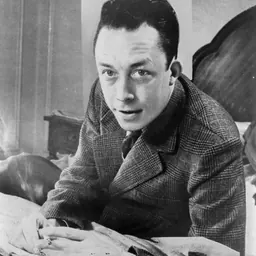
After completing her doctorate, Greene's ambition was to become a faculty member of a Department of the Philosophy of Education, which was challenging as a woman in 1950s and 1960s academia. Until she attained that goal, she occupied faculty positions, primarily in English departments, at various institutions in proximity to her New York city home. She taught at New York University between 1949 and 1956 and between 1957 and 1959, Montclair State College as assistant professor between 1956 and 1957, and Brooklyn College as Associate Professor of Education from 1962 to 1965. Her work was perceived as unsuitable and outside of the dominant philosophy of education disciplinary discourse, as Greene reflected in 2009, "my writing was described as not the writing of a philosopher but of an artist." Rules prohibited women from entering the shared faculty club, which further isolated Greene from fellow philosophers. She served as the William F. Russell Professor in the Foundations of Education at the Teachers College of Columbia from 1975 to 1998 and was professor emeritus thereafter. Greene recalls that appointment as one of the most startling events in her career, in part, because a woman had not filled that role in over 31 years. American Educational Studies Association (1972), and the Middle Atlantic States Philosophy of Education Society. Additionally, she served on municipal and state curriculum committees For Greene, the inclusion of arts in education was a means to reveal the social conditions that shape schools and to spark imagination that looks beyond current conditions towards future change. She was an advocate for approaches to education founded on concepts of freedom and humanity. A prolific writer, her works signal an intellectual heritage with existential philosophers: Jean-Paul Sartre, Simone de Beauvoir, Albert Camus, Soren Kierkegaard, and Maurice Merleau-Ponty. She wrote more than 100 articles and essays, 40 contributed chapters, six books and one edited collection.
In 1967, Greene published Existential Encounters for Teachers which marked her move as one of the first educational philosophers to draw out connections between existential philosophy and educational theory. In 1974, the book won the "Educational Book of the Year" award from Delta Kappa Gamma. The text was originally given as her John Dewey Lecture presented at a meeting of the American Educational Research Association, in which she calls on North American educators to examine models from diverse educators across the globe who successfully center learning on imagination and possibility. Greene's primary claim is that the pursuit of a pedagogy for freedom is situated in specific time and contexts, and, therefore, is an ongoing process that requires educators, in community, to continually pose questions about what has become accepted or given in educational systems. For Greene, transformations are possible when educators and students, inspired by works of literature and art, enter into dialog in public spaces. The text has been cited as an essential theoretical work within liberatory and critical pedagogies, alongside Freire's Pedagogy of the Oppressed, Illich's Deschooling Society, and Rancière's The Ignorant Schoolmaster. While written in response to the social situation of the 1980s, the text continues in its relevance to educators.
Extremely well known for her inspiring and lyrical speaking, her lectures given between 1974 and 1977 were compiled, revised, and published in Landscapes of Learning (1978). primarily concentrates on Greene's concept of wide-awakeness that challenges teachers and learners to be fully aware of both the internal and external landscapes that influence schools.
In Releasing the Imagination (1995), through narrative essays, Greene urges educators to be aware of inequities, complacency, and exclusions in everyday life and in schools. She argues that imagination and the arts can, and should, play a key role in helping educators to look on education anew, to shift inherited perspectives, and to pursue reimagined approaches for learning. The text reiterates Greene's belief that, through the cultivation of dialog in public spaces, change for education and for broader social impact are possible. The text organizes 14 essays into three sections: creating possibilities, illuminations and epiphanies, and community in the making.
In Variations on a Blue Guitar (2001), thirty of Greene's lectures given at the Lincoln Center from 1980 onward are collected into one volume. The title is based on Wallace Stevens' poem, Man with the Blue Guitar, in which arguably the poet converses with Picasso's painting the Old Guitarist. The poem's theme, seeking alternatives to the way things are, resonated with Greene's concept of social imagination. In the lectures, Greene defines aesthetic education and articulates how inquiry and cognition are built through encounters with works of art. For Greene, the purpose of the book was "to make aesthetics entirely accessible to public school teachers who may never have had a class in philosophy." Arguing against a generic and abstracted approach to teaching, Greene emphasized a focus on the uniqueness of the teachers and learners occupying a specific learning space. According to Greene, social imagination enables a breaking with habitual ways of doing and perceiving to imagine futures that are more just and equitable.
Wide-awakeness Wide-awakeness is a concept that Greene drew from phenomenologist Alfred Schütz and poet Henry David Thoreau, which describes a degree of consciousness necessary for actors to critically and deliberately make choices and have impact on the world. Wide-awakeness assumes that an individual who actively perceives as they experience the world would be equipped to pose meaningful questions and potentially to enact change. Heritage of this concept is also drawn to Paulo Freire's conscientization and John Dewey's extraordinary experiences.
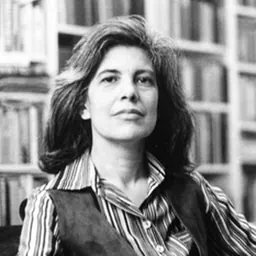
Public works Greene placed tremendous importance on the public sphere as a location to collectively engage in intellectual dialog beyond traditional education boundaries, and as such has been grouped with thinkers like Susan Sontag under the title: New York Intellectual. Even after her retirement, friends, scholars, and students recall salons hosted by Greene in her 5th Avenue apartment near the Solomon R. Guggenheim Museum and the Metropolitan Museum of Art. The primary goal is to expose teachers to aesthetics in education and to demonstrate the impact arts may have on learning. Between 1976 and 2012, Greene lectured at the summer sessions in her capacity as philosopher-in-residence. The foundation supports the creation and appreciation of works that embody fresh social visions. In Greene's words, the foundation hoped that through encounters with the arts they could awaken in people "their own questions, their own sense of predicament, their longings for something better"
Selected honors Greene was the recipient of honorary degrees in the Humanities from Lehigh University, Hofstra University, the University of Colorado at Denver, Indiana University, Goddard College, Bank Street College, Nazareth College (Rochester, New York), McGill University, College Misericordia, and Binghamton University. She was awarded the Medal of Honor from Teachers College and Barnard College; Educator of the Year Award from Phi Delta Kappa, Columbia University, and Ohio University; the Scholarly Achievement Award from Barnard College; AERA's Lifetime Achievement Award; and received a Fulbright Program fellowship, which took her to New Zealand. She was elected to the National Academy of Education in 1984. On Greene's 90th birthday, the Teachers College hosted a celebration titled "Toward Pedagogy of Thought and Imagination" that included lectures from Greene among others. Similarly, a 2017 issue of the journal Review of Education, Pedagogy, and Cultural Studies celebrated the centennial year of Greene's birth. The issue includes articles by education scholars who reflect on Greene's intellectual heritage and impact. The authors include: Henry Giroux, John Baldacchino, Susan Jean Mayer, Hannah Spector, Robert Lake, Tricia Kress, Rebecca Luce-Kapler, Sabrina Ross, and Christopher Emdin. The letters are organized into four sections: The school and society; In a tune beyond us and yet ourselves; Strangers, others, and friends: Expanding the conversation; and Blue guitar lessons: The Arts and keeping wide-awake in the world. While, William Pinar's edited volume, titled The Passionate Mind of Maxine Greene: "I Am—Not Yet," includes twenty two chapters that begin with Greene's "Autobiographical Remembrance" and moves onto thematic sections: Four books, Themes, Influences on Greene's thought, and Greene's influence on educational theory. Releasing the Imagination: Essays on Education, the Arts, and Social Change (National Association of Independent Schools, 2004)
Selected contributions to edited volumes "Introduction: Teaching for Social Justice", In: William Ayers, Jean Ann Hunt, and Therese Quinn. Teaching for Social Justice: A Democracy and Education Reader. New Press (1998) "Forward", In: John Dewey, How We Think. Houghton Mifflin (1998). "Forward", In: Linda Lambert, Deborah Walker, Diane P. Zimmerman, and Joanne E. Cooper. The Constructivist Leader. Teachers College Press (2002). "Feminism, Philosophy, and Education: Imagining Public Spaces", In: Nigel Blake et al. The Blackwell Guide to the Philosophy of Education. Blackwell (2003), pages 73–92. "Foreword", In: Colin Lankshear and Peter L. McLaren. Critical Literacy: Politics, Praxis, and the Postmodern. State University of New York (1993), pages ix–xi. "An Autobiographical Remembrance", In: William F. Pinar. The Passionate Mind of Maxine Greene 'I am ... not yet'. Falmer Press (1998), pages 8–11.
Selected articles "Imaginary Gardens with Real Toads in Them': The Literary Experience and Educational Philosophy." Philosophy of Education, volume 19 (1963), pages 170–192. "Toward Wide-Awakeness: An Argument for the Arts and Humanities in Education." Teachers College Record, volume 79, number 1 (1977), pages 119–125. "In Search of a Critical Pedagogy." Harvard Educational Review (1986), pages 427–441. "The Spaces of Aesthetic Education." Journal of Aesthetic Education, volume 20 (1986), pages 56–62.
Thesis Naturalist-humanism in eighteenth century England: An Essay in the Sociology of Knowledge (Thesis, 1956)
Talks, lectures and other work Arts and the Search for Social Justice (Lecture at The Maxine Greene Foundation for Social Imagination, The Arts & Education, 2003) Active Learning and Aesthetic Encounters (Talks at the Lincoln Center Institute, National Center for Reconstructing Education, Schools and Teaching, 1994) Education, Freedom and Possibility (Russell Lecture, 1975) Educational Research and National Policy Keynote Address: Jubilee Week, August 3, 1982. The Ohio State University College of Education. Lending the Work your Life: A Celebration with Maxine Greene (Lincoln Center Institute, 2006) A Teacher Talks to Teachers: Perspectives on the Lincoln Center Institute (Lincoln Center Institute, 1980)
Don’t just read it —
keep it.
Full-length biographies made to live with: read them, listen on the way to work, watch them tonight.
- E-book
- Audio
- Video
Instant download · yours to keep · every purchase keeps this site free
Important facts
People in Maxine Greene's life
Named in this biography and alive at the same time





Related people
Same field, nearest in time


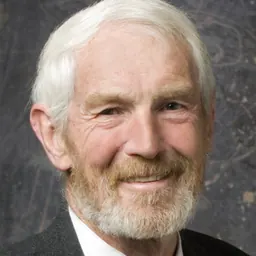
Contemporaries
People whose lives overlapped Maxine Greene's

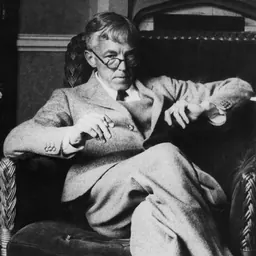
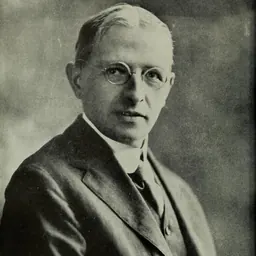
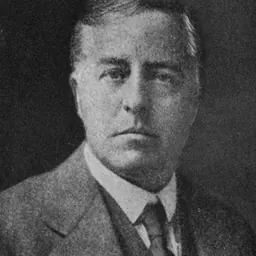
Frequently asked questions
Who was Maxine Greene?
American philosopher (1917-2014)
When was Maxine Greene born?
Maxine Greene was born on 22 December 1917 in Brooklyn.
When did Maxine Greene die?
Maxine Greene died on 29 May 2014 in Manhattan.
What was Maxine Greene's occupation?
Maxine Greene was a philosopher.
What nationality was Maxine Greene?
Maxine Greene was American.
Sources & further reading
Cite this page
APA: Biography.guide. (2026). Maxine Greene. https://biography.guide/maxine-greene/
MLA: "Maxine Greene." Biography.guide, https://biography.guide/maxine-greene/.
Chicago: "Maxine Greene." Biography.guide. https://biography.guide/maxine-greene/.
Data last updated: 2026-09-26 · Spot an error? Report a correction.
Page generated 2026-09-27 05:14 UTC