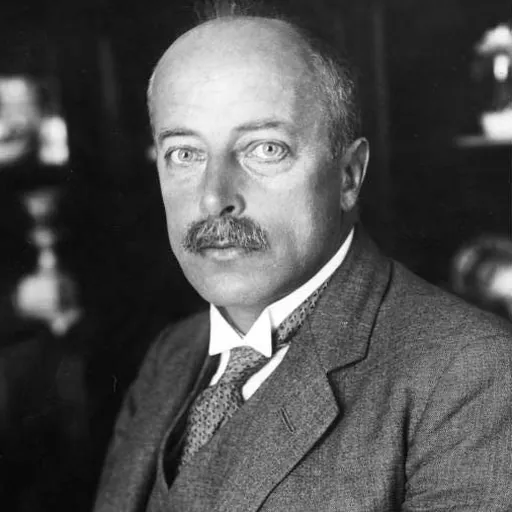
Max von Laue
German physicist, Nobel laureate and anti-Nazi
About Max von Laue
Lived 1879 – 1960 (aged 80). Max von Laue was a German physicist, university teacher and crystallographer, known for X-ray crystallography.
Education Max Theodor Felix Laue was born on 9 October 1879 in Pfaffendorf (now part of Koblenz), Germany, the son of Julius Laue and Minna Zerrenner. In 1898, after passing his Abitur, Laue did one year of military service, after which he started to study mathematics, physics, and chemistry at the University of Strassburg. He then went to the University of Göttingen, where he was greatly influenced by Woldemar Voigt and Max Abraham. In 1902, after one semester at the Ludwig-Maximilians-Universität München, Laue went to the Friedrich Wilhelm University of Berlin, where he studied under Max Planck, who gave birth to the quantum theory revolution on 14 December 1900, when he delivered his famous paper before the German Physical Society.
At the Friedrich Wilhelm University of Berlin, Laue attended lectures by Otto Lummer on heat radiation and interference spectroscopy, the influence of which can be seen in Laue's thesis on interference phenomena in plane-parallel plates, for which he received his Ph.D. in 1903. In 1906, he completed his habilitation under Arnold Sommerfeld at the Ludwig-Maximilians-Universität München.
Career and research In 1906, Laue became a Privatdozent at the University of Berlin. There, he met Albert Einstein for the first time; their friendship contributed to the acceptance and development of Einstein's theory of relativity. At the University of Berlin, he worked on the application of entropy to radiation fields and on the thermodynamic significance of the coherence of light waves.
In 1912, Laue became Professor of Physics at the University of Zurich, and in 1914 was appointed Ordinarius Professor of Theoretical Physics at the University of Frankfurt am Main. From 1916, he was engaged in vacuum tube development at the University of Würzburg for use in military telephony and wireless communication. Meissner published a biography on him in 1960.
Opposition to Nazism Laue opposed Nazism in general, and Deutsche Physik in particular; the former persecuted the Jews, and the latter, among other things, put down the theory of relativity as "Jewish physics", which he saw as ridiculous: "science has no race or religion". He and his close friend, Otto Hahn, secretly helped scientific colleagues persecuted by Nazi policies to emigrate from Germany. He also openly opposed antisemitism. An address on 18 September 1933 at the opening of the physics convention in Würzburg, opposition to Johannes Stark, an obituary note on Fritz Haber in 1934, and attendance at a commemoration for Haber are examples of Laue's open opposition that earned him multiple government reprimands. Laue, as Chairman of the German Physical Society, gave the opening address at the 1933 physics convention. In it, he compared the persecution of Galileo and the oppression of his scientific views on the solar theory of Copernicus to the then conflict and persecution over the theory of relativity by the proponents of Deutsche Physik, against the work of Einstein, labeled "Jewish physics." Stark, who had received the Nobel Prize in Physics in 1919, wished to become the Führer of German physics and was a proponent of Deutsche Physik. Against the unanimous advice of those consulted, Stark was appointed President of the PTR in May 1933. However, Laue successfully blocked Stark's regular membership in the Prussian Academy of Sciences. Haber received the Nobel Prize in Chemistry in 1918. In spite of this and his many other contributions to Germany, he was forced to emigrate from Germany as a result of the Law for the Restoration of the Professional Civil Service, which removed Jews from their jobs. Laue's obituary note praising Haber and comparing his forced emigration to the expulsion of Themistocles from Athens was a direct affront to National Socialism. In connection with Haber; Max Planck, Otto Hahn, and Laue organized a commemoration event held in Berlin-Dahlem on 29 January 1935, the first anniversary of Haber's death – attendance at the event by professors in the civil service had been expressly forbidden by the government. While many scientific and technical personnel were represented at the memorial by their wives, Laue and Wolfgang Heubner were the only two professors to attend. This was yet another blatant demonstration of Laue's opposition to National Socialism. The date of the first anniversary of Haber's death was also one day before the second anniversary of National Socialism seizing power in Germany, thus further increasing the affront given by holding the event.
In particular, the struggle between Laue and Planck regarding the Nazi takeover of the Prussian Academy of Sciences has been extensively documented.
Hidden Nobel Prize When Germany invaded Denmark in World War II, the Hungarian chemist George de Hevesy dissolved the Nobel Prize gold medals of Laue and James Franck in aqua regia to prevent the Nazis from discovering them. At the time, it was illegal to take gold out of the country, and if it had been discovered that Laue had done so, he could have faced prosecution in Germany. Hevesy placed the resulting solution on a shelf in his laboratory at the Niels Bohr Institute. After the war, he returned to find the solution undisturbed and precipitated the gold out of the acid. The Nobel Society then re-cast the Nobel Prize gold medals, using the original gold.
Post-war On 23 April 1945, French troops entered Hechingen, followed the next day by a contingent of Operation Alsos—an operation to investigate the German nuclear energy effort, seize equipment, and prevent German scientists from being captured by the Soviets. The scientific advisor to the Operation was the Dutch-American physicist Samuel Goudsmit, who, adorned with a steel helmet, appeared at Laue's home. Laue was taken into custody and taken to Huntingdon, England, and interned at Farm Hall with other scientists thought to be involved in nuclear research and development.
In July 1946, Laue went back to England, only four months after having been interned there, to attend an international conference on crystallography. This was a distinct honor, as he was the only German invited to attend. He was extended many courtesies by the British officer who escorted him there and back, and a well-known English crystallographer as his host; Laue was even allowed to wander around London on his own.
Personal life and death
It was in 1913 that Laue's father, Julius Laue, a civil servant in the military administration, was raised into the ranks of hereditary nobility, thus he became Max von Laue.
Among Laue's chief recreational activities were mountaineering, motoring in his automobile, motor-biking, sailing, and skiing. While not a mountain climber, he did enjoy hiking on the Alpine glaciers with his friends. He is buried in the Stadtfriedhof in Göttingen.
Organizations 1919: Corresponding member of the Prussian Academy of Sciences From 1922: Member of the Board of Trustees of the Potsdam Astrophysics Observatory 1914 Royal Swedish Academy of Sciences Nobel Prize in Physics "For his discovery of the diffraction of X-rays by crystals." 1932 German Physical Society Max Planck Medal
Memberships Year Organization Type 1924 Accademia dei Lincei Foreign Member 1948 American Academy of Arts and Sciences International Honorary Member 1949 Royal Society Foreign Member 1949 American Philosophical Society International Member 1955 Pontifical Academy of Sciences Academician 1958 National Academy of Sciences International Member
Orders Year Head of state Order 1952 Theodor Heuss
Publications
Max von Laue Die Relativitätstheorie. Band 1: Die spezielle Relativitätstheorie (Friedr. Vieweg & Sohn, Braunschweig, 1911, and 1919) Max von Laue Die Relativitätstheorie. Erster Band. Das Relativitätsprinzip der Lorentz-transformation. Vierte vermehrte Auflage. (Friedr. Vieweg & Sohn, 1921) Max von Laue Die Relativitätstheorie. Zweiter Band : Die Allgemeine Relativitätstheorie Und Einsteins Lehre Von Der Schwerkraft (Friedr. Vieweg & Sohn, Braunschweig, 1921 and 1923) Max von Laue Korpuskular- und Wellentheorie (Leipzig, 1933) Max von Laue Die Interferenzen von Röntgen- und Elektronenstrahlen. Fünf Vorträge. (Springer, 1935) Max von Laue Eine Ausgestaltung der Londonschen Theorie der Supraleitung (Barth, 1942) Max von Laue Materiewellen und ihre Interferenzen (Akadem. Verl.-Ges. Becker & Erler, 1944) (Geest und Portig, 1948) Max von Laue Theorie der Supraleitung (Springer, 1947 and 1949) Max von Laue, translated by Lothar Meyer and William Band Theory of Superconductivity (N.Y., 1952) Max von Laue Geschichte der Physik (Univ.-Verl., 1946 and 1947), (Athenäum-Verl., 1950) and (Ullstein Taschenbücher-Verl., 1959, 1966 and 1982) [This book was translated into seven other languages.
Don’t just read it —
keep it.
Full-length biographies made to live with: read them, listen on the way to work, watch them tonight.
- E-book
- Audio
- Video
Instant download · yours to keep · every purchase keeps this site free
Important facts
People in Max von Laue's life
Named in this biography and alive at the same time

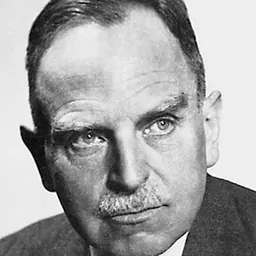

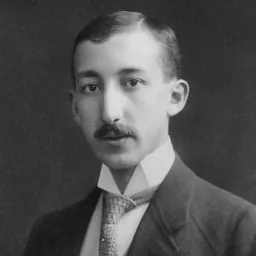

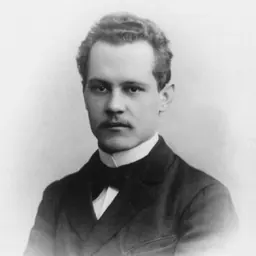

Related people
Same field, nearest in time

Contemporaries
People whose lives overlapped Max von Laue's

Frequently asked questions
Who was Max von Laue?
German physicist, Nobel laureate and anti-Nazi (1879–1960)
When was Max von Laue born?
Max von Laue was born on 9 October 1879 in Koblenz.
When did Max von Laue die?
Max von Laue died on 24 April 1960 in West Berlin, Berlin.
What was Max von Laue's occupation?
Max von Laue was a physicist, university teacher and crystallographer.
What was Max von Laue known for?
Max von Laue was known for X-ray crystallography.
What nationality was Max von Laue?
Max von Laue was German.
Sources & further reading
Cite this page
APA: Biography.guide. (2026). Max von Laue. https://biography.guide/max-von-laue/
MLA: "Max von Laue." Biography.guide, https://biography.guide/max-von-laue/.
Chicago: "Max von Laue." Biography.guide. https://biography.guide/max-von-laue/.
Data last updated: 2026-09-21 · Spot an error? Report a correction.
Portrait: Wikimedia Commons · author & licence
Page generated 2026-09-27 05:00 UTC