
About Max Dessoir
Lived 1867 – 1947 (aged 80). Max Dessoir was a German philosopher, art historian, psychologist, university teacher, psychiatrist and screenwriter.
Maximilian Dessoir (8 February 1867 – 19 July 1947) was a German philosopher, psychologist and theorist of aesthetics.
Career Dessoir was born in Berlin, into a German Jewish family, his parents being Ludwig Dessoir (1810-1874), "Germany's most admired Shakespearean actor", and Ludwig's third wife Auguste Grünemeyer (died about 1924). Max earned doctorates from the universities of Berlin (philosophy, 1889) and Würzburg (medicine, 1892). He was a professor at Berlin from 1897 until 1933, when the Nazis forbade him to teach.
An associate of Pierre Janet and Sigmund Freud, Dessoir published in 1890 a book on The Double Ego, describing the mind as divided into two layers, each with its own associative links - its own chain of memory. He considered that the 'underconsciousness' (Unterbewusstein) emerged in such phenomena as dreams, hypnosis, and dual personality. His work was built on by Otto Rank in his study of the Doppelgänger.
In an article of 1894, Dessoir published an account of the evolution of the sex instinct from undifferentiated to differentiated, which was taken up by Albert Moll and Sigmund Freud. Freud cites it approvingly in his Three Essays on the Theory of Sexuality.
Considered a Neo-Kantian philosopher Max Dessoir founded the Zeitschift für Ästhetik und allgemeine Kunstwissenschaft, which he edited for many years, and published the work Ästhetik und allgemeine Kunstwissenschaft in which he formulated five primary aesthetic forms: the beautiful, the sublime, the tragic, the ugly, and the comic.
Dussoir was married to soprano Susanne Dessoir. He died in Königstein im Taunus at the age of 80.
Parapsychology In 1889, in an article in the German periodical Sphinx, Dessoir coined the term 'parapsychology' (actually in its German equivalent, 'Parapsychologie'): "If one ... characterizes by para- something going beyond or besides the ordinary, than one could perhaps call the phenomena that step outside the usual process of the inner life parapsychical, and the science dealing with them parapsychology. The word is not nice, yet in my opinion it has the advantage to denote a hitherto unknown fringe area between the average and the pathological states; however, more than the limited value of practical usefulness such neologisms do not demand."
Dessoir was a member of the Society for Psychical Research. He was highly skeptical of physical mediumship. He was the author of the book Vom Jenseits der Seele: Die Geheimwissenschaften in kritischer Betrachtung (The "beyond" of the soul: occult sciences critically examined) that went through six editions. The book contained skeptical information on the mediums Jan Guzyk, Franek Kluski, Henry Slade and many others. The 1930 sixth edition (reprinted in 1967) contained an exposure of the alleged poltergeist victim Eleonore Zugun. According to Dessoir she had performed the phenomena fraudulently.
His article Psychology of the Art of Conjuring was included in H. J. Burlingame's book Around the World with a Magician and a Juggler (1891).
Publications Bibliographie des modernen Hypnotismus (1888) Karl Philipp Moritz als Aesthetiker (1889) Geschichte der neueren deutschen Psychologie (1902) Zeitschrift für Ästhetik und allgemeine kunstwissenschaft (1906) Outlines of the History of Psychology (1912) Vom Jenseits der Seele: Die Geheimwissenschaften in kritischer Betrachtung (1917, 1920, 1930, reprinted in 1967)
On magic
Psychology of the Art of Conjuring (1891) Psychologische Skizzen (1893, Edmund W. Rells [pseud.]) Dessoir, M. (1893). The Psychology of Legerdemain. The Open Court 7: 3599-3602.
Translations to English Aesthetics and theory of art : Ästhetik und allgemeine Kunstwissenschaft / Translated by Stephen A. Emery. With a foreword by Thomas Munro (1970)
Don’t just read it —
keep it.
Full-length biographies made to live with: read them, listen on the way to work, watch them tonight.
- E-book
- Audio
- Video
Instant download · yours to keep · every purchase keeps this site free
Important facts
People in Max Dessoir's life
Named in this biography and alive at the same time
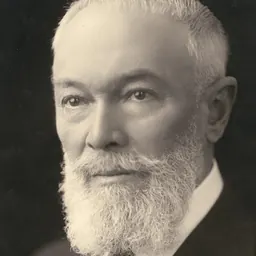




Related people
Same field, nearest in time



Contemporaries
People whose lives overlapped Max Dessoir's


Frequently asked questions
Who was Max Dessoir?
German philosopher (1867–1947)
When was Max Dessoir born?
Max Dessoir was born on 8 February 1867 in Berlin.
When did Max Dessoir die?
Max Dessoir died on 19 July 1947 in Königstein im Taunus.
What was Max Dessoir's occupation?
Max Dessoir was a philosopher, art historian, psychologist, university teacher, psychiatrist and screenwriter.
What nationality was Max Dessoir?
Max Dessoir was German.
Sources & further reading
Cite this page
APA: Biography.guide. (2026). Max Dessoir. https://biography.guide/max-dessoir/
MLA: "Max Dessoir." Biography.guide, https://biography.guide/max-dessoir/.
Chicago: "Max Dessoir." Biography.guide. https://biography.guide/max-dessoir/.
Data last updated: 2026-09-20 · Spot an error? Report a correction.
Page generated 2026-09-27 05:31 UTC