
About Albert Moll
Lived 1862 – 1939 (aged 77). Albert Moll was a psychiatrist, psychologist, psychotherapist, sexologist, physician and neurologist.
Albert Moll (; 4 May 1862 – 23 September 1939) was a neurologist, psychologist, sexologist, and ethicist. Alongside Iwan Bloch and Magnus Hirschfeld, he is considered the founder of medical psychology and sexology. Although Moll was a pioneer of sexology, his contemporaries such as Magnus Hirschfeld and Sigmund Freud eclipsed his work, primarily due to the bitter rivalry between them. Moll accused Freud of selection bias, and Freud claimed Moll could not handle constructive criticism after their first meeting.
Moll believed human sexual nature involved two entirely distinct parts: sexual stimulation and sexual attraction.
Biography Born in Lissa (then part of Prussia) to a Jewish tradesman, Moll attended Catholic school in the Silesian city of Glogau before studying medicine in Breslau, Freiburg, Jena, and Berlin. In 1885, Moll completed his doctorate, having researched the consequences of the long-term immobilization of joints in laboratory animals.
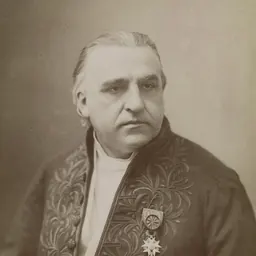
On a tour of Salpêtrière Hospital in Paris, Moll observed the now-famous demonstrations of hysteria and hypnosis by Jean-Martin Charcot. Returning to Berlin in 1887, Moll opened a private practice for nervous diseases where he used association therapy for patients with nervous complaints and aberrant sexual behavior.
In 1926, Moll organized and chaired the week-long International Congress for Sexology in Berlin, the first international scientific congress in Germany since the war. In the early 1920s, he founded a private Institute for Practical Psychology, performing psychological tests and rendering career advice.
Moll often served as an expert witness in court, especially in cases concerning sexual offenses. Moll believed that psychologists should not be used as forensic experts in court, but rather courts should consult with psychiatrists with training in psychology, as they would have a medical expert's opinion to add to a case. He worked until 1938 when the Nazi administration revoked his medical license due to his Jewish heritage.
He died unmarried only one year later, in September 1939.
Moll believed that Freud influenced his patients' memories through therapist suggestion and that he overstated the influence of sexuality in the etiology of neuroses. Moll added that he attempted to use Freud's therapeutic method to treat neurotic patients but found that sexuality played no prominent role, in opposition to Freud's claims.
Freud disparaged Moll among his colleagues even before appeared. Moll was a prominent physician in Berlin. Freud and his contemporaries were defensive as physicians historically viewed psychoanalysis with skepticism or open hostility. Freud questioned Moll's credentials and defamed his character, even accusing Moll of plagiarism for not crediting Freud in his criticisms of infant sexuality and psychoanalytical technique.
Views on homosexuality Moll's constantly changing views on homosexuality were based around real homosexual relations he saw around him, his conflicting feelings on the impact sexology had on society, his feuds with Freud and Hirschfeld, and his own career initiatives. His works on homosexuality mainly consisted of case studies and biographical accounts from patients of his, which was customary for the time. His own reflections and comments on those studies were considered to be much more in depth than some other sexologists of the time, including Krafft-Ebing whom Moll admired (as a matter of fact, he completely revised and updated his famous Psychopathia sexualis, issuing in 1924 its 16th-17th edition).
Moll did not believe that homosexuality was a result of masturbation or seduction, he believed if they did play a role, it was simply to reveal preexisting feelings. He originally argued that because it was something innate in people, homosexuality should not be illegal nor considered immoral. Moll's analysis of infant sexuality emphasized the boundary between normal and abnormal sexual development. In his case studies, he found that healthy and "perverted" individuals varied little in their reports of childhood sexual conflicts. Numerous sexual drives and actions, including masturbation, attraction to those of the same sex or different ages, and other fetishistic inclinations, were not uncommon in childhood and did not necessarily indicate the development of perversion in adulthood. Moll's assertions leaned on his experience of participating in mutual masturbation at his all-boys boarding school. Moll described such activities as characteristic of sexual development between age 8–10 and the end of puberty at 20. He stated that the maturation of the sex organs would expose distinct sexual drives, mental associations, and habits.
While most adults will develop heterosexual drives and urges, a minority display homosexual or bisexual tendencies. Sexual deviancy can emerge in both heterosexual and homosexual individuals. Moll argued that psychological and environmental triggers preventing the natural transformation of infantile sexual urges are the determinants of perversion.
Moll divided the sexual response into four phases: The onset The equable voluptuous sensation The voluptuous acme The sudden diminution and cessation of the voluptuous sensation
In The Sexual Life of the Child, he encouraged parents to provide sex education to their children.
Hypnotism
Moll was a leading researcher on subject of hypnotism.
Moll was a member of a group of doctors in West Berlin that treated different psychological illnesses using hypnotism, focusing on addiction and sexual ailments—including homosexuality, which was considered a perversion at the time.
His book Christian Science, Medicine, and Occultism (1902) is an early text on anomalistic psychology. In the book, Moll criticized practices such as Christian Science, spiritualism, and occultism, claiming they were the result of fraud and hypnotic suggestion. He argued that suggestion explained the cures of Christian Science and the apparently supernatural rapport between magnetisers and their somnambulists. He wrote that fraud and hypnotism could explain mediums. According Heather Wolffram, "[Moll] argued that the hypnotic atmosphere of the darkened séance room and the suggestive effect of the experimenters' social and scientific prestige could be used to explain why seemingly rational people vouchsafed occult phenomena."
Moll was involved in a legal dispute with the spiritualist medium Maria Vollhardt who he considered a fraud.
Publications
Hypnotism (1890) Les perversions l'instinct génital : Étude sur l'inversion sexuelle basée sur des documents officiels (1897) Untersuchungen über die libido sexualis (1898) Christian Science, Medicine, and Occultism (1902) Das Sexualleben des Kindes (1908)
Don’t just read it —
keep it.
Full-length biographies made to live with: read them, listen on the way to work, watch them tonight.
- E-book
- Audio
- Video
Instant download · yours to keep · every purchase keeps this site free
Important facts
People in Albert Moll's life
Named in this biography and alive at the same time


Related people
Same field, nearest in time




Contemporaries
People whose lives overlapped Albert Moll's




Frequently asked questions
Who was Albert Moll?
German psychiatrist (1862–1939)
When was Albert Moll born?
Albert Moll was born on 4 May 1862 in Leszno.
When did Albert Moll die?
Albert Moll died on 23 September 1939 in Berlin.
What was Albert Moll's occupation?
Albert Moll was a psychiatrist, psychologist, psychotherapist, sexologist, physician and neurologist.
What nationality was Albert Moll?
Albert Moll's recorded nationality: German Reich.
Sources & further reading
· DBpedia: Albert Moll (German psychiatrist)
Cite this page
APA: Biography.guide. (2026). Albert Moll. https://biography.guide/albert-moll/
MLA: "Albert Moll." Biography.guide, https://biography.guide/albert-moll/.
Chicago: "Albert Moll." Biography.guide. https://biography.guide/albert-moll/.
Data last updated: 2026-09-20 · Spot an error? Report a correction.
Page generated 2026-09-27 05:34 UTC