
About Max Baumann
Lived 1917 – 1999 (aged 81). Max Baumann was a German composer and university teacher.
Max Georg Baumann (20 November 1917, Kronach – 17 July 1999, Berlin) was a German composer.
Biography
He studied conducting, piano, and trombone Berlin Hochschule für Musik with Konrad Friedrich Noetel and Boris Blacher. He spent two years as a choir director and deputy Kapellmeister at the opera in Stralsund (1947–1949). He taught piano and music theory at the Berlin College of Music (1946–1978). In 1960 he was appointed professor. After meeting French organist Jean Guillou during this time, Baumann wrote his first compositions for organ (Invocation op. 67 no. 5, Trois pièces brèves op. 67 no. 6, Psalmi op. 67 no. 2), which Guillou premiered in a concert on January 20, 1963, at St. Matthias church in Berlin. Baumann also appeared as conductor and choirmaster and, in 1963, became interim conductor of the choir at St. Hedwig's Cathedral. His cantata Libertas cruciata was the first composition written specifically with stereo FM radio in mind.
Awards 1953: Berlin Art Prize. 1963: Prix Italia for the Dramatic Cantata Libertas cruciata - the first stereophonic work. 1977: Gold Medal "for special merits" by the district Kronach. 1977: Golden Orlando di Lasso Medal of general Cecilia Association. 1986: Commander of St Gregory with Star, appointed by Pope John Paul II.
Works Change of Scenes, Op. 83 (1968) for flute and piano Coming of the Lord, Op. 66 (1959), Advent cycle for Choir Concertino for recorder, guitar, and mandolin orchestra, Op. 38 no. 2 Concerto for Piano and Orchestra, Op. 36 (1953) Concerto for Organ, Strings and Timpani, Op. 70 (1964) Duo op. 62 no. 1 (1958) for cello and guitar Five Songs, Op. 9 (1947) for baritone and piano German Vespers, Op. 64 (1960) for soprano, speaker ad lib., choir, and orchestra Invocation, Op. 67 no. 5 (1962) for organ Libertas cruciata. Dramatic Cantata, Op. 71 (1963), for soloists, speaker, speech choir, chorus and large orchestra Mass: Guardian Angel, Op. 50 (1955) for SATB. Choir (organ ad lib.) Octet for Strings, Clarinet, Bassoon and Horn, Op. 72 (1964) Orchestral Variations, Op. 29 (1951) Pater Noster, Op. 51 (1955) for mixed choir Pelléas and Mélisande. Ballet (after Maurice Maeterlinck), Op. 44 (1954) Perspectives I, Op. 55 (1957) for large orchestra Psalmi, Op. 67 no. 2 (1962) for organ Resurrection, Op. 94 (1980) for soprano, baritone, bass, narrators, choir, and orchestra Serenata italiana danzante for Plucked Instruments Sonata, Op. 8 (1947) for cello and piano Sonatina, Op. 13 (1949) for violin and piano Sonatina, Op. 74 (1963) for organ String Quartet no. 3, Op. 33 (1953) Symphony no. 1, Op. 14 (1949) Symphony no. 2, Op. 15 (1950) Tafelmusik for Plucked Instruments Three Duets, Op. 40 (1953) for two violins Three Little Pieces, Op. 35 (c. 1954) for piano Trois pièces brèves, Op. 67 no. 6 (1962) for organ
Don’t just read it —
keep it.
Full-length biographies made to live with: read them, listen on the way to work, watch them tonight.
- E-book
- Audio
- Video
Instant download · yours to keep · every purchase keeps this site free
Important facts
People in Max Baumann's life
Named in this biography and alive at the same time



Related people
Same field, nearest in time


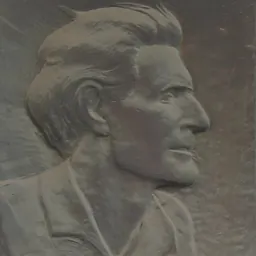
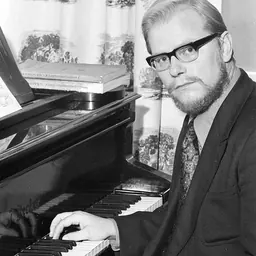
Contemporaries
People whose lives overlapped Max Baumann's

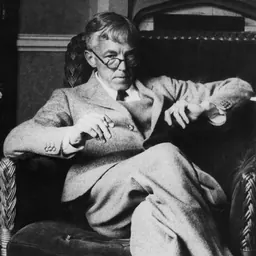
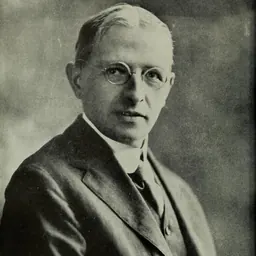
Frequently asked questions
Who was Max Baumann?
German composer (1917–1999)
When was Max Baumann born?
Max Baumann was born on 20 November 1917 in Kronach.
When did Max Baumann die?
Max Baumann died on 17 July 1999 in Berlin.
What was Max Baumann's occupation?
Max Baumann was a composer and university teacher.
What nationality was Max Baumann?
Max Baumann was German.
Sources & further reading
Cite this page
APA: Biography.guide. (2026). Max Baumann. https://biography.guide/max-baumann/
MLA: "Max Baumann." Biography.guide, https://biography.guide/max-baumann/.
Chicago: "Max Baumann." Biography.guide. https://biography.guide/max-baumann/.
Data last updated: 2026-09-20 · Spot an error? Report a correction.
Page generated 2026-09-27 05:27 UTC