
About Maurice Thorez
Lived 1900 – 1964 (aged 64). Maurice Thorez was a French politician and miner.
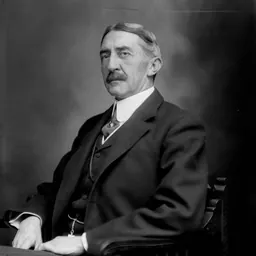
Maurice Thorez (; 28 April 1900 – 11 July 1964) was a French politician and longtime leader of the French Communist Party (PCF) from 1930 until his death. He also served as Deputy Prime Minister of France from 1946 to 1947.
Pre-war Thorez, born in Noyelles-Godault, Pas-de-Calais, became a coal miner at the age of 12. He joined the French Section of the Workers' International (SFIO) in 1919 and was imprisoned several times for his political activism. After the 1920 split in the SFIO led to the formation of the French Communist Party (PCF) in December 1920, Thorez became party secretary in 1923 and, in 1930, general secretary of the party, a position he held until his death. After he took office as secretary general, he was supported by Soviet leader Joseph Stalin and the Communist Party of the Soviet Union. Throughout his tenure, Thorez was a Stalinist.
In 1932 Thorez became the companion of Jeannette Vermeersch; they had three sons before marrying in 1947, and remained married until his death. Popular Front leaders during a Bastille Day demonstration in Paris, 14 July 1936. On the tribune (front row, left to right): Thérèse Blum, Leon Blum, Thorez, Roger Salengro, Maurice Viollette and Pierre Cot.
Thorez was elected to the Chamber of Deputies in 1932 and reelected in 1936. In 1934, following a Comintern directive, he helped form the Popular Front, an alliance between Communists, Socialists, and radical Socialists. The Front, because of strong popular support as France was reeling from the impact of the Great Depression, won the 1936 election. With the support of the Communists under Thorez, the socialist Léon Blum became Prime Minister of a Popular Front government and managed to enact much of the Front's social-legislation programme. Meanwhile, Thorez presided over massive growth of the Communist Party, beginning with the elections of 1936.
World War II
Following the Molotov–Ribbentrop Pact of 1939 and the subsequent Soviet response to German invasion of Poland, the Communist Party was against the French war effort against the Soviet Union, because the Daladier government planned to send troops to fight against it. The party was outlawed by the French government on September 26th. The Party supported the Soviet Union's tactical treaty with Germany to direct German aggression away from the USSR and toward the United Kingdom and France. Because they were impeding the fight against the Nazis, the Party's publications were banned, and many Party members were interned. Thorez himself had his passport revoked. Shortly thereafter, he was drafted. On September 3, 1939, Thorez enthusiastically joined his regiment, the , in Arras.
Comintern secretary Georgi Dimitrov instructed the French party's leaders to desert after the party was banned. Reluctantly, but dutifully, Thorez deserted on October 4. Thorez arrived in Moscow on November 8, 1939, via Belgium, Stockholm, and Riga. In Moscow, he seems to have been kept on a rather tight leash. In his absence, Thorez was sentenced for desertion on 25 November to six years' imprisonment. On 17 February 1940, he was deprived of his French citizenship.
Following the German invasion of the Soviet Union in June 1941, the French Communist Party openly declared it would violently resist the German occupation; even before this, the Party organized a demonstration of thousands of students and workers against the occupation on 11 November 1940, and in May 1941 organized a strike of 100,000 miners in the Nord and Pas-de-Calais departments. During this time, articles written by and ghostwritten for Thorez appeared frequently in the party's underground newspaper, Humanité Clandestine. Each of these letters was signed 'Maurice Thorez, somewhere in France'. It was not until several years after the war that the party admitted that this was false, and that Thorez had been in Moscow for the entire war. In his absence, the affairs of the PCF and of the Francs-Tireurs et Partisans, the party's resistance movement, in France were organised by his second in command, Jacques Duclos.
When the Allied Armies liberated France in 1944, Thorez received a pardon from Charles de Gaulle. After the Liberation, Thorez was ordered by Stalin to lead the PCF immediately after the Second World War to a non-revolutionary road to power. The instructions were not to seize power as had been done elsewhere, but to have the reluctant wartime Communist partisans surrender their weapons, and the party would become a powerful force in the post-war governments, since it thought that it would soon win legally.
Post-war In November 1944, Thorez returned to France from his exile in the Soviet Union, and in 1945, his citizenship was restored. The PCF emerged from the Second World War as the largest political party in France based on its role in the anti-Nazi resistance movement during the occupation of France, at least after 1941. Thorez was again elected to the Chamber of Deputies and reelected throughout the Fourth Republic (1946–1958).
In power Thorez (front row, third from right) as Deputy Prime Minister in the government of Paul Ramadier, 1947. Forming a popular front with the Socialist Party in the 1945 elections, Thorez became vice premier of France from 1946 to 1947.
Thorez supported the Democratic Republic of Vietnam in the First Indochina War, but did not fully support the DRV because Thorez and other PCF members wanted to keep their positions as ministers.
By 1947 a combination of the emerging Cold War between the United States and the Soviet Union and growing social conflicts in France, linked to the increasing gap between wages and prices, put the three party union (SFIO, PCF and MRP) under heavy pressure, culminating in the May 1947 crisis. Prime Minister Paul Ramadier received threats from the United States that the presence of Communist ministers in the government would have consequences, such as the blocking of U.S. aid from the coming Marshall Plan, or worse: "I told Ramadier," Jefferson Caffery, then US ambassador to France, wrote in his diary, "no Communists in gov. or else."
Simultaneously, the 1947 strikes in France caused rumours to spread among the non-Communist members of the government that the PCF would attempt a coup d'état on 1 May: Jules Moch, SFIO Public Works Minister, claimed to have "certain information" on preparations of a coup by the PCF. Ramadier is alleged to have worked secretly with Georges Revers, the Army Chief of Staff, to set up a secret transport and communications network within the military to safeguard against such a coup, all without the knowledge of François Billoux, the Communist Minister of Defence. The crisis was also escalated by the beginnings of the colonial war in Vietnam, with the communist deputies in the National Assembly voting against the war.
Combined, that led Ramadier to look for a pretext to dismiss Thorez and his colleagues from the ruling coalition. On 4 May, the PCF ministers voted against the government over deflationary policies such as wage and price controls, which was given as the reason for the PCF ministers being forced out of the ruling coalition on 7 May 1947. Thorez later recalled the May 1947 events:
All my colleagues were full of praises and kindnesses for us – they were prodigal with their declarations of appeasement. Ramadier told us: 'I have no reproaches to make of you. You have always been loyal.' And Teitgen came forward to say 'We shall miss you a lot!' They all threw flowers on us, the better to bury us. I knew that Ramadier was cooking up something bad, but never did I think he'd go this far…
In 1945, he published Une politique de grandeur française (1945; "Politics of French Greatness").
A French research institution linked to the French Communist Party and set up in the mid-1960s was named the Institut Maurice Thorez. The city of Chystiakove in Ukraine was named Thorez between 1964 and 2016. The Moscow State Linguistic University was named the Maurice Thorez Moscow Institute of Foreign Languages (Russian: Московский институт иностранных языков имени Мориса Тореза) between 1964 and 1990.
Don’t just read it —
keep it.
Full-length biographies made to live with: read them, listen on the way to work, watch them tonight.
- E-book
- Audio
- Video
Instant download · yours to keep · every purchase keeps this site free
Important facts
Family & relationships
People in Maurice Thorez's life
Named in this biography and alive at the same time



Related people
Same field, nearest in time





Contemporaries
People whose lives overlapped Maurice Thorez's



Frequently asked questions
Who was Maurice Thorez?
French politician (1900-1964)
When was Maurice Thorez born?
Maurice Thorez was born on 28 April 1900 in Noyelles-Godault.
When did Maurice Thorez die?
Maurice Thorez died on 11 July 1964 in Black Sea.
What was Maurice Thorez's occupation?
Maurice Thorez was a politician and miner.
What nationality was Maurice Thorez?
Maurice Thorez was French.
Sources & further reading
Cite this page
APA: Biography.guide. (2026). Maurice Thorez. https://biography.guide/maurice-thorez/
MLA: "Maurice Thorez." Biography.guide, https://biography.guide/maurice-thorez/.
Chicago: "Maurice Thorez." Biography.guide. https://biography.guide/maurice-thorez/.
Data last updated: 2026-09-20 · Spot an error? Report a correction.
Page generated 2026-09-27 05:25 UTC