
About Jefferson Caffery
Lived 1886 – 1974 (aged 87). Jefferson Caffery was an American diplomat, lawyer and head coach.
Jefferson Caffery (December 1, 1886 – April 13, 1974) was an American diplomat. He served as U.S. Ambassador to El Salvador (1926–1928), Colombia (1928–1933), Cuba (1934–1937), Brazil (1937–1944), France (1944–1949), and Egypt (1949–1955).
Early life Caffery was born in Lafayette, Louisiana, to Charles Duval Caffery and Mary Catherine (née Parkerson) Caffery. He was privately educated in primary and secondary school. He was a member of the first class of Southwestern Louisiana Industrial Institute, which later became the University of Louisiana at Lafayette. He also graduated with a bachelor's degree from Tulane University in 1906.
After graduation, he returned to Lafayette to teach at the Industrial Institute, including serving as its head football coach for at least one game, an 11–5 victory over Crowley in 1907. He was admitted to the Louisiana bar in 1909.
Throughout his career he also worked in low ranking diplomatic posts in Belgium, Germany, Greece, Japan, Persia, Sweden, and Venezuela. On December 29, 1928, he wrote a dispatch from the U.S. Embassy in Bogotá to the U.S. Secretary of State stating, "I have the honor to report that the legal advisor of the United Fruit Company here in Bogotá stated yesterday that the total number of strikers killed by the Colombian military authorities exceeded one thousand; while the number of soldiers killed was one."
Service in Cuba In 1934, while ambassador to Cuba, four assailants attempted to assassinate Caffery in front of his home in Havana. The assailants waited outside of his residence for his daily departure to his yacht club. One assailant was killed by a bodyguard, the others escaped. Caffery was not injured. The event was reported on the front page of the New Orleans Times Picayune on May 28, 1934.
Service in Brazil While ambassador to Brazil, Caffery took part in the Potenji River Conference, also known as the Natal Conference. The conference was a meeting that took place on January 28 and 29, 1943 between the President of Brazil, Getúlio Vargas and the President of the United States, Franklin Delano Roosevelt, that occurred during the return of President Roosevelt from the Casablanca Conference to the USA. The Potenji River Conference involved discussions of the ongoing support and role of Brazil in World War II and took place aboard the USS in the Potenji River harbor in Natal, Rio Grande do Norte and defined the agreements that led to the creation of the Brazilian Expeditionary Force.
Caffery served as intermediary between the Egyptian and British Governments in the negotiations, and his "long experience in diplomacy, together with the respect in which he was held by the Egyptian Government, enabled him to arrange for the gradual departure of the British."
During his tenure as Ambassador to Egypt, Caffery prioritized Anglo-Egyptian negotiations over the Suez Canal base amidst rising Cold War tensions. To secure Egyptian cooperation and prevent the spread of Soviet influence in the region, Caffery advocated for British concessions regarding the governance and future independence of Sudan. He said to his British counterpart "I do not understand why anybody should be bothered about the fate of ten million niggers."
In total, he worked 43 years in foreign service under eight U.S. presidents: Taft, Wilson, Harding, Coolidge, Hoover, Roosevelt, Truman, and Eisenhower.
Personal life Portrait of Mrs. Jefferson Caffery by Serge Ivanoff, Paris, 1946. Portrait of Jefferson Caffery by Serge Ivanoff, Paris, 1946. On November 20, 1937, Caffery, then 41 years old, married Gertrude McCarthy of Evansville, Indiana, while in Rio de Janeiro. They had no children. The Cafferys are buried in the cemetery behind St. John's Cathedral in Lafayette.
Honors and awards He was awarded the Foreign Service Cup in 1971 by his fellow Foreign Service officers. He held several honorary degrees and decorations, including the Laetare Medal from the University of Notre Dame in South Bend, Indiana, in 1954. He received the Grand Cross of the Legion of Honour from the president of France in 1949 and the Order of the Cordon of the Republic from the president of Egypt in 1955.
Ambassador Caffery was also bestowed a knighthood in the Sovereign Military Order of Malta (SMOM) by the Grand Master of that Order, for his outstanding service to the Catholic Church.
Head coaching record
Don’t just read it —
keep it.
Full-length biographies made to live with: read them, listen on the way to work, watch them tonight.
- E-book
- Audio
- Video
Instant download · yours to keep · every purchase keeps this site free
Important facts
People in Jefferson Caffery's life
Named in this biography and alive at the same time





Related people
Same field, nearest in time
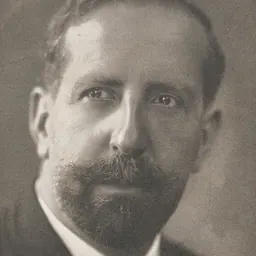
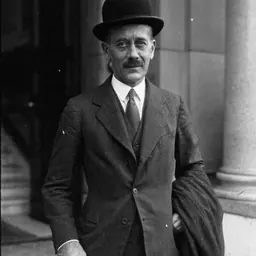

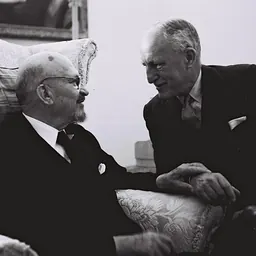
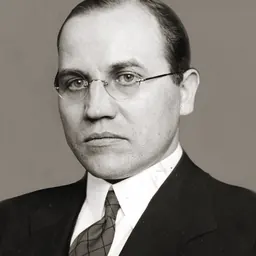
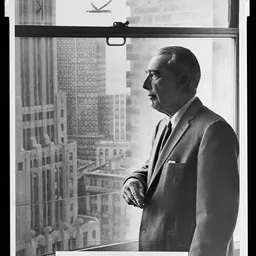
Contemporaries
People whose lives overlapped Jefferson Caffery's



Frequently asked questions
Who was Jefferson Caffery?
American diplomat (1886–1974)
When was Jefferson Caffery born?
Jefferson Caffery was born on 1 December 1886 in Lafayette.
When did Jefferson Caffery die?
Jefferson Caffery died on 13 April 1974 in Lafayette.
What was Jefferson Caffery's occupation?
Jefferson Caffery was a diplomat, lawyer and head coach.
What nationality was Jefferson Caffery?
Jefferson Caffery was American.
Sources & further reading
· Wikipedia: Jefferson Caffery
Cite this page
APA: Biography.guide. (2026). Jefferson Caffery. https://biography.guide/jefferson-caffery/
MLA: "Jefferson Caffery." Biography.guide, https://biography.guide/jefferson-caffery/.
Chicago: "Jefferson Caffery." Biography.guide. https://biography.guide/jefferson-caffery/.
Data last updated: 2026-09-20 · Spot an error? Report a correction.
Page generated 2026-09-27 05:28 UTC