
About Maurice Samuel
Lived 1895 – 1972 (aged 77). Maurice Samuel was an American, Romanian and British translator, novelist, writer and film editor.
Maurice Samuel (February 8, 1895 – May 4, 1972) was a Romanian-born British and American novelist, translator and lecturer of Jewish heritage. He was a prominent Jewish Humanist and Zionist intellectual. His best-known and most commercially successful work was The World of Sholom Aleichem, and for which he was awarded the Anisfield-Wolf Book Award. The non-fiction book deals with Jewish life in Russia in the nineteenth century.
In 1956, he was awarded the 1955 Stephen Wise Award of the American Jewish Congress for his “significant contributions over three decades” to Jewish education and culture."
In 1964, Robert Alter wrote of his profile in Commentary: "For more than three decades, Maurice Samuel has been a kind of one-man educational movement in American Jewish life. Anyone with even a passing interest in the East European Jewish milieu, Yiddish and Hebrew literature, Zionism, the future of American Jewry, the nature of anti-Semitism, the role of Judaism in the West, is likely to have read at least one of Samuel’s books."
In 1967, he was awarded the B’nai B’rith Jewish Heritage Award, a literary prize given annually to a writer who “makes a positive contribution to contemporary literature by his authentic interpretation of Jewish life and values."
Samuel received the Itzik Manger Prize for Yiddish literature posthumously in 1972.
Early life Born in Măcin, Tulcea County, Romania, to Isaac Samuel and Fanny Acker, Samuel moved to Paris with his family at the age of five and one year later, the family relocated to Manchester in England, living in an immigrant district. He studied at the Victoria University on a 3-year scholarship but did not graduate.
He emigrated to the United States in 1914, settling in New York City's Lower East Side.
In 1927, he published I, the Jew. The non-fiction account tracks his intellectual journey from youthful certainty, through periods of doubt and rejection, toward a renewed and more expansive conviction.
In August 1939, he sailed to Europe on special assignment for the New York Post.
In 1944, he was awarded the Anisfield-Wolf Book Award, administered by The Saturday Review of Literature for his non-fiction work, The World of Sholom Aleichem (1943), which deals with Jewish life in Russia in the nineteenth century. The citation accompanying the award described it as "a clear portrayal of a distinctive group of individuals sometimes irrational, often whimsical, occasionally irritating, but always alive and genuinely human." It was also his most commercially successful work, reprinted every two or three years.
Writing in the June 1947 issue of Commentary, Meyer Levin argued that the literary careers of himself, Samuel Ludwig Lewisohn, Daniel Fuchs, and Irving Fineman had been constrained by limited reader and publishing‑industry interest in works that engaged with Jewish or Zionist themes. However, Irving Howe underscores Maurice Samuel's literary significance by emphasizing his unique position between two cultural spheres: the American literary establishment and the Yiddish intellectual tradition. Rather than belonging fully to either, Samuel operated within the liminal space that connected them. Howe commends him as “the rare kind of literary man who established connections between two orders of sensibility and thereby modified each of them a little.” In his Commentary review, Leslie Fiedler wrote that "On the whole, he [Samuel] has skillfully disentangled the living Peretz from the 19th-century corpse of the same name: the optimistic believer in material progress, science, and rationalism, the popularizing lecturer, the despiser of ritual." In 1948, Samuel and S. Y. Agnon were awarded the annual Louis Lamed Fund prizes, which recognized the two best Jewish books published in English in the United States. Samuel received the award for The Prince of the Ghetto.
He also assisted Chaim Weizmann, President of Israel, to write his autobiography, Trial and Error (1949).
In 1963, he published the memoir Little Did I Know: Recollections and Reflections. The collection of essays explore Jewish identity, arguing that despite its challenges, Jewish life carries profound value and meaning. The book was praised by Maurice Edelman in The New York Times as a "sane, witty and challenging book [that] offers a bracing therapy."
In 1968, Samuel published Light on Israel, about the post-Six-Day War nation.
In 1971, he published In Praise of Yiddish. Lucy Dawidowicz reviewed the non-fiction book in the December 1971 issue of Commentary.
He also wrote more conventional fiction, such as The Web of Lucifer, which takes place during the Borgias' rule of Renaissance Italy, and the fantasy science-fiction novel The Devil that Failed. Samuel also wrote the nonfiction King Mob under the pseudonym "Frank K. Notch". He and his work received acclaim within the Jewish community during his lifetime. He received the Itzik Manger Prize for Yiddish literature posthumously in 1972. He was also a well known radio personality appearing in discussions on the NBC summer program "Eternal Light: The Words We Live By" from 1953 to 1971 alongside Mark van Doren where the two discussed the literary and cultural impact of the Bible.
Zionist activism Between 1922 and 1928, he was a paid official of the Zionist Organization of America, travelling extensively, visiting major Jewish communities across the United States, and became a sought‑after speaker on Zionism and a wide range of Jewish cultural and historical topics. He later served as a special correspondent to the Jewish Telegraphic Agency during visits to Mandate Palestine, reporting on the 1929 Palestine riots.
He was a strong proponent of Cultural Zionism: "If our national existence is to be different from the national existence of the Goyim (and otherwise we are Goyim), Zionism must be holy and spiritual, must be a cult, not merely an organization, but a faith, a mighty inward pulse, must be identified with the Bible. At present it is an imitation (and result) of the wave of nationalism which came in Europe in the Nineteenth Century."
On 26 January 1931, The New York Times reported on his address to the Reform Free Synagogue congregation at Carnegie Hall. Samuel highlighted a struggle taking place in Mandate Palestine "between the progressive Jewish force in the country, known as Zionism, and the British Government allied with the Arab landowner and usurer."
In May 1934, at a United Jewish Appeal event held at Temple Israel of the City of New York, Samuel predicted that as many as 400,000 Jews, including 100,000 from Germany, would immigrate to Mandate Palestine over the following decade.
In December 1950, Samuel served as one of the conveners of the second National Assembly for Labor Israel in New York City, a major gathering of American Jewish leaders focused on the theme of “The Jews of Israel and of America – Two Years Experience in Attitudes and Relationships.” Samuel was joined by fellow conveners, Prof. Horace M. Kallen, Dr. Mordecai Kaplan, Max Lerner, Rabbi James G. Heller and Dr. Hayim Greenberg.
Personal life Samuel was married three times. On August 31, 1917, he married 18 year old Marie Syrkin just prior to serving in the United States Army during World War I, however her father, Nahum Syrkin disapproved of Samuel's prospects and quickly arranged to have the marriage annulled. He did allow the couple to remain engaged and they maintained a relationship via correspondence. It eventually cooled and Marie finally broke it off while she was enrolled at Cornell University in February 1919.
His second marriage to Getrude Kahn produced two children and ended in divorce in 1961. His funeral service was held at Riverside Memorial Chapel, a Jewish funeral home on the Upper West Side.
List of works
Fiction The Outsider (1921) Whatever Gods (1923) Beyond Woman (1934) Web of Lucifer (1947) The Devil that Failed (1952) The Second Crucifixion (1960)
Non-fiction You Gentiles (1924) I, the Jew (1927) What Happened in Palestine: The Events of August, 1929: Their Background and Significance King Mob: A Study of the Present-Day Mind (1931) On the Rim of the Wilderness: The Conflict in Palestine (1931) Jews on Approval (1932) The Great Hatred (1940) The World of Sholom Aleichem (1943) Harvest in the Desert (1944) Haggadah of Passover (1947) (translation) Prince of the Ghetto (1948) The Gentleman and the Jew (1950) Level Sunlight (1953) The Professor And The Fossil (1956) Certain People of the Book (1955) Little Did I Know: Recollections and Reflections (1963) Blood Accusation: the Strange History of the Beiliss Case (1966) Light on Israel (1968) In Praise of Yiddish (1971) In the Beginning, Love: Dialogues on the Bible (collaboration) (1975)
Don’t just read it —
keep it.
Full-length biographies made to live with: read them, listen on the way to work, watch them tonight.
- E-book
- Audio
- Video
Instant download · yours to keep · every purchase keeps this site free
Important facts
People in Maurice Samuel's life
Named in this biography and alive at the same time

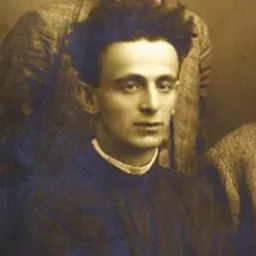
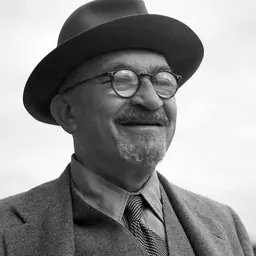
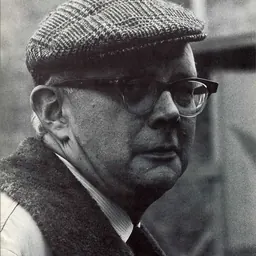




Related people
Same field, nearest in time



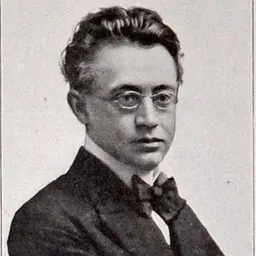
Contemporaries
People whose lives overlapped Maurice Samuel's
Frequently asked questions
Who was Maurice Samuel?
novelist, translator and lecturer
When was Maurice Samuel born?
Maurice Samuel was born on 8 February 1895 in Măcin.
When did Maurice Samuel die?
Maurice Samuel died on 4 May 1972 in New York City.
What was Maurice Samuel's occupation?
Maurice Samuel was a translator, novelist, writer and film editor.
What nationality was Maurice Samuel?
Maurice Samuel was American, Romanian and British.
Sources & further reading
Cite this page
APA: Biography.guide. (2026). Maurice Samuel. https://biography.guide/maurice-samuel/
MLA: "Maurice Samuel." Biography.guide, https://biography.guide/maurice-samuel/.
Chicago: "Maurice Samuel." Biography.guide. https://biography.guide/maurice-samuel/.
Data last updated: 2026-09-20 · Spot an error? Report a correction.
Page generated 2026-09-27 05:21 UTC