
Maurice Rioli
Australian rules footballer and politician
About Maurice Rioli
Lived 1957 – 2010 (aged 53). Maurice Rioli was an Australian australian rules football player and politician.
Maurice Joseph Rioli Sr. (1 September 1957 – 25 December 2010) was an Australian rules footballer who represented St Mary's Football Club in the Northern Territory Football League (NTFL), in the West Australian Football League (WAFL) and in the Victorian Football League (VFL).
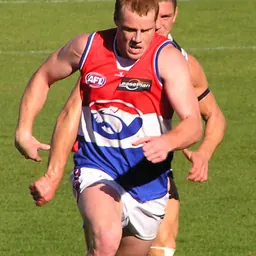
Acknowledged as one of the greatest players of his era, Rioli was among the first Indigenous Australian footballers to make a significant impact in Victorian football. He was named at centre in the Indigenous Team of the Century. Renowned for his exceptional ball-handling ability, quick reflexes, and skill, Rioli was regarded as one of the game's finest centremen.
After retiring from football, Rioli became a politician in the Northern Territory Legislative Assembly, and then worked in community services on the Tiwi Islands.
Early days
Northern Territory Born into the to-become famous Rioli footballing family on Melville Island off the coast of the Northern Territory, the young Rioli learnt the game at the Garden Point Orphanage on the island. He was educated at St John's College, Darwin. He joined St Mary's in the Darwin competition for the 1974–75 season; football in the top end is played during the summer months, or 'wet season'. Richard Woodgate a scout from the South Fremantle club in Perth spotted the sixteen-year-old and lured him to Western Australia to join his brother for the coming season. At this stage in his sporting life, Rioli was also an excellent amateur boxer, who some thought good enough to go to represent Australia at the Olympics. He later won state amateur titles at light middleweight and welterweight.
Western Australia Rioli chose to sign on with South Fremantle as a professional footballer and quickly won a reputation as a brilliant, elusive centreman. During this era, Rioli was one of a number of brilliant Aboriginal players in the WAFL who caught the eyes of recruiting scouts from the VFL clubs in Victoria. South Fremantle, under ex-Richmond player Mal Brown, were a form team of the competition, playing in three consecutive WAFL grand finals between 1979 and 1981, including winning a premiership in 1980. Rioli won the Simpson Medal as best player afield in the 1980 and 1981 Grand Finals. Rioli was recruited by Richmond for the 1982 VFL season, after playing 116 premiership games and five pre-season/night series games for South Fremantle between 1975 and 1981.
Impact in Victoria To this point, few Aboriginal players had extended careers in the VFL. On his arrival in 1982, which coincided with the transfer of the Krakouer brothers to North Melbourne, Rioli spoke about the racial taunts and obstacles faced by Indigenous players in the game. Rioli chose to shrug much of the racism off, and he was certainly possessed with an intense concentration on the field. His reputation as a boxer probably helped to avoid confrontation during a game – Rioli was a scrupulously fair competitor who found no trouble with the umpires.
Richmond Richmond awarded Rioli the number 17 made famous by Jack Dyer. Richmond supporters quickly warmed to their much-heralded recruit, who specialised in the audacious baulk, the pinpoint foot pass and the lightning-fast handball. His ability to work the ball out of packs and congestion was uncanny. Although his leg speed wasn't very fast, his quick mind appeared several steps ahead of the play and he had no problem adjusting to the faster tempo of Victorian football. It was just as well, because the Tigers opted to play him in his favoured centre position where Geoff Raines had dominated. For the previous five years, Raines had been the best player in the team (winning three best and fairest awards) and acknowledged as the best centreman in the competition, but he was moved to accommodate Rioli. The change worked well, and Richmond finished the season on top of the ladder for the first time since 1974. The Tigers booked a berth in the Grand Final with a comfortable win in the semi-final against arch-rivals .
Pitted once more against Carlton, Richmond went into the match as slight favourites. However, despite leading at half-time, the Tigers lost the match. Rioli created history by winning the Norm Smith Medal as best afield, the first Indigenous player and the first player from a losing team to do so; Rioli performed patchily through the season and the next, when Richmond finished last for only the third time in its history. Rioli captained Western Australia in the state game that year against his teammate Dale Weightman, who led Victoria.
Statistics
118 !! 80 !! 57 !! 1645 !! 852 !! 2497 !! 243 !! 55 !! 0.7 !! 0.5 !! 13.9 !! 7.2 !! 21.2 !! 2.1 !! 2.6 !! 60
Honours and achievements Playing honours Team
McClelland Trophy : 1982 WAFL premiership player (South Fremantle): 1980
Individual Norm Smith Medal: 1982 3× All-Australian team: 1983, 1986, 1988 2× Jack Dyer Medal: 1982, 1983 Australian Football League Indigenous Team of the Century 1904-2003 Northern Territory Team of the Century 3× Simpson Medal: 1980, 1981, 1983 State of Origin (Western Australia): 1983, 1984, 1985, 1986, 1987 (c) State of Origin (Northern Territory): 1988 (c) Indigenous All-Stars team: 1983
Coaching honours Individual Indigenous All-Stars team: 1994
Return to South Fremantle and later career Following the 1987 season, at 30 years of age and after 118 games with the Tigers, In 2016, he was posthumously inducted into the Australian Football Hall of Fame. The grandstand of the Marrara Oval in Darwin has been named in his honour. In 2018, he was posthumously honoured with a Richmond life membership.
Politics and community work
After permanently relocating with his family to Darwin, Rioli was elected as the member for Arafura in the Northern Territory Legislative Assembly for the Labor Party in 1992. He held this position until 2001 when he retired from parliament.
Although he played football for almost a decade in Perth and only six years in Melbourne, Rioli is still recognised as one of the most notable Northern Territorians. He was a trailblazer for indigenous Australian football players at the elite level of the game and was an acknowledged elder statesman among Aboriginal players.
After leaving politics, Rioli worked as a community services manager for the Tiwi Islands Council until his death, Willie was drafted by in 1990, but did not make his AFL debut. Maurice is the uncle of former player Cyril Rioli (son of Cyril Jr), current player Willie Rioli (son of Willie Sr), former player Dean Rioli (son of Sebastian) and great uncle to Richmond player Daniel Rioli. His son, Maurice Rioli Jr. was drafted by Richmond under the father–son rule in 2020 and made his debut in 2021.
Death On Christmas Day, 2010, Maurice Rioli collapsed and died at a family barbecue being held in Darwin after suffering a heart attack; he was 53. The Northern Territory Government announced a few days later that they would hold a state funeral for him.
A traditional funeral was held for Rioli at Garden Point on Melville Island on 10 January 2011, led by his 75-year-old father Cyril Rioli senior, and attended by hundreds of residents from the Tiwi Islands. Family members, including nephew and Hawthorn star Cyril Rioli, painted their bodies and danced and chanted their family's Dreaming story of the turtle to farewell Maurice. Cyril said that he remembered his uncle more for his work on the Tiwi Islands—including helping people with alcohol, drug, and other problems—rather than his exploits on the football field. Other clans danced their own Dreaming stories, and wailing men and women threw themselves on his coffin throughout the three-hour ceremony. Following the funeral proceedings, mourners carried Rioli's coffin to the cemetery, where he was buried near a mango tree.
Don’t just read it —
keep it.
Full-length biographies made to live with: read them, listen on the way to work, watch them tonight.
- E-book
- Audio
- Video
Instant download · yours to keep · every purchase keeps this site free
Important facts
People in Maurice Rioli's life
Named in this biography and alive at the same time

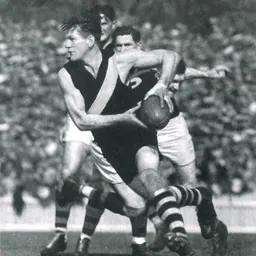

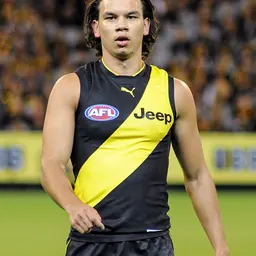



Related people
Same field, nearest in time


Contemporaries
People whose lives overlapped Maurice Rioli's

Frequently asked questions
Who was Maurice Rioli?
Australian rules footballer and politician
When was Maurice Rioli born?
Maurice Rioli was born on 1 September 1957 in Melville Island.
When did Maurice Rioli die?
Maurice Rioli died on 25 December 2010 in Darwin.
What was Maurice Rioli's occupation?
Maurice Rioli was an australian rules football player and politician.
What nationality was Maurice Rioli?
Maurice Rioli was Australian.
Sources & further reading
Cite this page
APA: Biography.guide. (2026). Maurice Rioli. https://biography.guide/maurice-rioli/
MLA: "Maurice Rioli." Biography.guide, https://biography.guide/maurice-rioli/.
Chicago: "Maurice Rioli." Biography.guide. https://biography.guide/maurice-rioli/.
Data last updated: 2026-09-20 · Spot an error? Report a correction.
Page generated 2026-09-27 05:05 UTC