
About Ray O'Connor
Lived 1926 – 2013 (aged 86). Ray O'Connor was an Australian australian rules football player, politician, soldier, café owner, car dealer and lobbyist.
The ministry was reconstituted on 10 March 1977 following the 1977 state election, which the Liberal Party won. O'Connor became the minister for works, minister for water supplies, and the minister for housing, all lower profile ministries than police. Although Court gave no explanation for this, he was reportedly tired of O'Connor's controversies regarding law and order. On 24 July 1978, Bill Grayden resigned from the ministry. O'Connor received his portfolios of labour and industry, consumer affairs, and immigration, first as an acting minister, then from 7 August as the minister. The ministry was reconstituted on 25 August. O'Connor lost his former ministries, and added fisheries and wildlife, and conservation and the environment, to those he had taken over from Grayden. O'Connor handled so many different ministries that he became known as the "minister for just about everything". As immigration minister, O'Connor often criticised the amount of Vietnamese immigrants coming into Western Australia, which sparked debate with federal immigration minister Michael MacKellar. O'Connor objected to immigrants coming to Australia without any check for criminal records or their health, and said that "we should give them money, petrol, turn their boat round and send them home".
Throughout Court's premiership, O'Connor was generally considered second in line, behind Deputy Premier Des O'Neil, to replace Court if he were to stand down as Liberal leader. After O'Neil unexpectedly retired at the 1980 state election, the Liberal MPs elected O'Connor as the party's deputy leader, thus making O'Connor the deputy premier, and Court's most likely successor. O'Connor retained the labour and industry, consumer affairs, and immigration portfolios, and gained regional administration and the north-west, and tourism. In February 1981, he was relieved of the portfolios of regional administration and the north-west and tourism. In anticipation of Court retiring soon, O'Connor would take Liberal MPs out to dinner, sometimes offering them ministries if they voted for him in a leadership election. According to upper house member Phil Lockyer, O'Connor "was a difficult bloke not to be friends with".
Premier Court announced on 18 December 1981 that he planned to resign on 25 January 1982. According to fellow MP Jim Clarko, speaking in an interview in 2012, O'Connor was the only option, with Bill Hassell, who only joined the ministry in 1980, the next best option. According to Tony Warton, Court's media advisor, his preferred successor was Peter Jones, a National Country Party minister. Court was concerned that O'Connor had promised too many MPs cabinet positions and that O'Connor was not able to handle portfolios with large budgets, although Court believed he did "reasonably well with railways" and thought that his personality would help him deal with people. Nevertheless, O'Connor won the leadership ballot unopposed, and Cyril Rushton was elected deputy leader.
O'Connor and his ministry were sworn in by Governor Richard Trowbridge on 25 January 1982. O'Connor chose to make himself treasurer, saying that it was a portfolio best handled by the premier. That day, they voted overwhelmingly against returning to work and they fought with police and picketed outside their workplace. By 3pm that day, they accepted the $11 per week pay rise and returned to work. Later in February, the government approved a pay rise for nurses, who had been part of a prominent campaign against depressed wages a year previously. O'Connor was described in the Australian Journal of Politics and History as "anxious to assert that his administration would be compassionate and people-oriented". On 31 July, another by-election occurred for the North Province following the resignation of Liberal turned independent MLC Bill Withers. Tom Stephens of the Labor Party won with a 14 percent swing towards Labor.
By August, unemployment in Western Australia was rising faster than the other states. On 30 December, O'Connor launched a job bank scheme, and appointed Hassell to the newly created ministry of employment in anticipation of the upcoming election being centred around job creation. To O'Connor's dismay, Fraser set the date of the 1983 federal election for 4 March, two weeks after the state election. The Australian reported that O'Connor was "stunned and infuriated" at the announcement and that Fraser had not consulted with O'Connor. Bob Hawke, who grew up in Western Australia and was popular within the state, was elected leader of the Labor Party at the federal level, which helped the Labor Party in the state election. The Labor Party countered the O'Connor government's job bank by announcing its own plans for job creation, which involved the establishment of a jobs taskforce to create 25,000 new jobs over the next three years. The election resulted in a swing of between five and six percent away from the Liberal Party on a two-party-preferred basis, enough for the Labor Party to win 32 out of the 57 Legislative Assembly seats and win the election. Labor leader Brian Burke succeeded O'Connor as premier on 25 February 1983. On 10 February, Thompson, a formerly staunch supporter of O'Connor, resigned from the shadow ministry and called for him to resign as leader. A meeting of the 39 Liberal MPs was called for 15 February, at which Thompson proposed a motion that the leader and deputy leader positions be declared vacant. The motion was passed, and so a leadership spill occurred among the MPs. O'Connor, along with Hassell, MacKinnon, and Rushton contested the spill. Hassell was elected leader and MacKinnon was elected deputy leader. Afterwards, O'Connor stated that he would resign from politics by the end of the year. The ballot was the first leadership spill in the state Liberal Party's history.
O'Connor resigned from Parliament on 24 August 1984. He was succeeded as the member for Mount Lawley by George Cash. Following that, O'Connor formed a consultancy called Ray O'Connor Consultancy with Laurie Connell. O'Connor owned one third of the company and Connell owned two thirds. The company received a yearly $25,000 retainer each from Connell, Bond Corporation, Multiplex and another company, and O'Connor was additionally paid $500 per week.
In the 1989 Australia Day Honours, O'Connor was appointed an Officer of the Order of Australia for "service to the government and politics and to the Western Australian Parliament".
WA Inc Burke resigned as premier in February 1988 and was replaced by Peter Dowding, who himself resigned in February 1990 amid unpopularity due to the WA Inc scandal, a series of controversial government investments and deals with private enterprise dating back to the Burke government. To reduce the pressure on the Labor Party, Lawrence included investigating the Court and O'Connor governments in the commission's terms of reference as well as the Burke and Dowding governments.
While giving evidence to the commission, Terry Burke, a former member of parliament and the brother of Brian Burke, said that O'Connor had told him in 1987 that he was the middleman between Bond Corporation and City of Stirling councillors in a bribery scandal. It was alleged that Bond Corporation was bribing Stirling councillors in 1984 to approve the Observation City hotel development in Scarborough. The commission was played a recording of the conversation secretly taped by Terry Burke where O'Connor said he was given a $30,000 bribe by former Bond Corporation managing director Peter Beckwith on behalf of subsidiary Austmark International. O'Connor said he then passed the bribe to George Cash, who was a Stirling councillor at the time. O'Connor gave evidence on 28 February 1992, where he admitted to having the conversation with Burke but said that he was lying so that he could find out information from the Burke government that would be useful to the Liberal Party. He admitted to lobbying Stirling councillors on behalf of Austmark but said that no bribes took place. On 30 January 1992, Brian Burke testified that O'Connor had originally told him the story, but thought that O'Connor was trying to set him up, so he got O'Connor to retell the story to Terry Burke, who used a tape recorder to record the conversation. Neither of the Burke's told the police as they said they had no evidence.
Cash, by now a senior opposition MP, commenced defamation action against O'Connor soon after his appearance at the commission. In February 1992, O'Connor resigned from the Liberal Party amid speculation that the party would kick him out. In the same month, the commission began investigating O'Connor's finances, suspecting him of having stolen a $25,000 cheque from Bond Corporation in April 1984. The cheque was made out to a "Mt Lawley campaign fund" and recorded by Bond Corporation as a political donation. The investigation found a $25,000 deposit into O'Connor's bank account at the same time, which O'Connor was unable to explain. By that point, the record of the transaction had been destroyed which prevented investigators from determining where the money came from just based on the bank's records. The report stated that "O'Connor was given every opportunity to explain the source of the sum deposited to the credit of his account on 19 April 1984, but was unable to do so in any believable way. Mr O'Connor misappropriated for his own purposes the monies which were the proceeds of the Bond Corporation cheque."
O'Connor was charged on 11 May 1993 with one count of stealing (O'Connor was initially charged with stealing the $25,000 cheque from the Liberal Party.) Prosecutors amended the charge at a November 1993 preliminary hearing to stealing from Bond Corporation, as there was insufficient evidence the cheque had ever reached the Liberal Party. He pleaded not guilty to all charges and was released on bail. In November 1993, he had a preliminary hearing which determined there was enough evidence for O'Connor to go on trial. The trial for the stealing charge began on 13 February 1995 in the District Court. Evidence was given that O'Connor had a $98,000 overdraft and a $27,000 tax bill, which prosecutors alleged was O'Connor's motive for stealing the cheque. This made him the first conservative MP to be convicted of offences relating to WA Inc, after Brian Burke and David Parker from the Labor Party had been convicted earlier. On 21 February, O'Connor was sentenced to 18 months in prison. He served his sentence at the minimum-security Wooroloo Prison Farm. in which he was found guilty of both counts. He was given an 18-month good behaviour bond. He was released on parole on 20 August 1995 after serving six months of his sentence. As a result of his conviction, his appointment as an Officer of the Order of Australia was terminated on 18 October 1995.
After 2001, O'Connor was reinstated as a member of the Liberal Party when party leader Colin Barnett put forward a motion that his membership be restored. Barnett said "as leader I moved at a state council meeting that Ray's membership be restored on the grounds that he had made a great contribution to the party, he had made an error and done his time, that we should put that behind us, move on, and readmit him."
Personal life and death O'Connor married his first wife Beverley Vilma Lydiate, with whom he had four daughters and four sons, at St Francis Xavier's Church in East Perth on 17 June 1950. They divorced around 1972. His second marriage, to Vesna Frances Stampalia (née Dragicevich), occurred on 14 March 1973. and the grandfather of Adelaide Crows player Ronin O'Connor.
O'Connor died on 25 February 2013 in a nursing home in Scarborough, aged 86. His funeral occurred on 7 March 2013 at the Our Lady of the Rosary Church in Woodlands and he was cremated at Karrakatta Cemetery.
Don’t just read it —
keep it.
Full-length biographies made to live with: read them, listen on the way to work, watch them tonight.
- E-book
- Audio
- Video
Instant download · yours to keep · every purchase keeps this site free
Important facts
People in Ray O'Connor's life
Named in this biography and alive at the same time
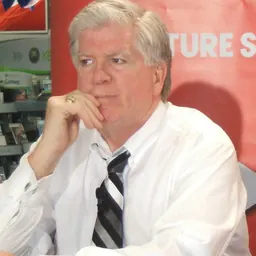


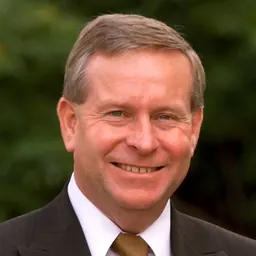
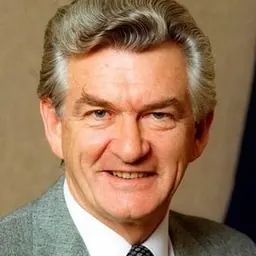

Related people
Same field, nearest in time
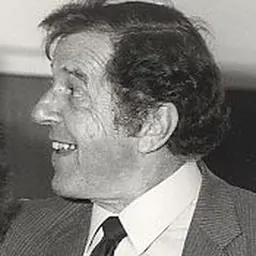




Contemporaries
People whose lives overlapped Ray O'Connor's


Frequently asked questions
Who was Ray O'Connor?
Australian politician (1926-2013)
When was Ray O'Connor born?
Ray O'Connor was born on 6 March 1926 in Perth.
When did Ray O'Connor die?
Ray O'Connor died on 25 February 2013 in Scarborough.
What was Ray O'Connor's occupation?
Ray O'Connor was an australian rules football player, politician, soldier, café owner, car dealer and lobbyist.
What nationality was Ray O'Connor?
Ray O'Connor was Australian.
Sources & further reading
Cite this page
APA: Biography.guide. (2026). Ray O'Connor. https://biography.guide/ray-o-connor/
MLA: "Ray O'Connor." Biography.guide, https://biography.guide/ray-o-connor/.
Chicago: "Ray O'Connor." Biography.guide. https://biography.guide/ray-o-connor/.
Data last updated: 2026-09-20 · Spot an error? Report a correction.
Page generated 2026-09-27 05:25 UTC