
About Maurice Couette
Lived 1858 – 1943 (aged 85). Maurice Couette was a French physicist and teacher.
Maurice Marie Alfred Couette (9 January 1858 in Tours – 18 August 1943 in Angers) was a French physicist known for his studies of fluidity.
Couette is best known for his contributions to rheology and the theory of fluid flow. He designed a concentric cylinder viscometer that he used to accurately measure the viscosity of fluids. The laminar flow observed in the gap between the two cylinders is known as Couette flow. He studied the boundary conditions of a fluid and showed that the "no slip" condition was satisfied for the fluids and wall materials tested.
Early life and career Couette was born in Tours, France, as the only child of Alfred Ernest Couette, a cloth merchant.
Finishing his education with the Frères des Écoles Chrétiennes he obtained a baccalauréat in humanities and in science, both in 1874, as well as bachelor's degrees in mathematics and physical science (delivered by the Faculté de Science in Poitiers) in 1877 and 1879 respectively. Following a short spell as a lecturer in Angers, he joined the 12th Artillery Regiment at Vincennes for one year of voluntary military service.
In 1881 he settled in Paris and enrolled in the Sorbonne, studying physical science in preparation for the , a French teaching diploma. Couette later taught in Arcueil and the École Sainte-Geneviève in Paris. At the Sorbonne he studied under Joseph Boussinesq and from 1887 onwards worked at the Physics Research Laboratory under Gabriel Lippmann( who would later receive the Nobel Prize in Physics). Couette also took his doctoral degree on the friction of liquids ("Studies on the Friction of Liquids", Etude sur le frottement des liquides, Gauthiers-Villars 1890).
Soon afterwards he was given a professorship of physics at the Catholic University of Angers (now known as Université Catholique de l'Ouest) as well as other teaching commitments such as at the Free Faculty of Science, the School of Agriculture and several secondary schools in Angers.
Couette was a member of the French Physics Society and retired in 1933.
Accolades
Since 1993, the Prix Maurice Couette is awarded by the Groupe français de Rhéologie.
Personal life In 1886, Maurice Couette married Jeanne Jenny, who gave birth to eight children, five of whom reached adulthood.
Don’t just read it —
keep it.
Full-length biographies made to live with: read them, listen on the way to work, watch them tonight.
- E-book
- Audio
- Video
Instant download · yours to keep · every purchase keeps this site free
Important facts
People in Maurice Couette's life
Named in this biography and alive at the same time

Related people
Same field, nearest in time

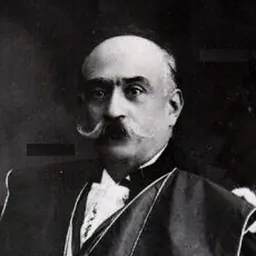


Contemporaries
People whose lives overlapped Maurice Couette's



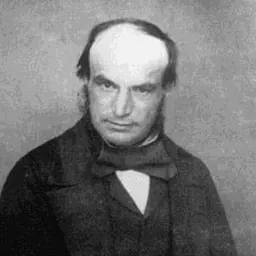
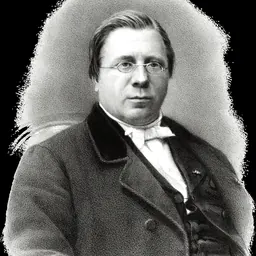
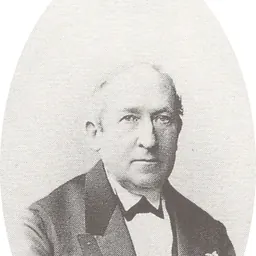
Frequently asked questions
Who was Maurice Couette?
French physicist known for his studies of fluidity (1858–1943)
When was Maurice Couette born?
Maurice Couette was born on 9 January 1858 in Tours.
When did Maurice Couette die?
Maurice Couette died on 18 August 1943 in Angers.
What was Maurice Couette's occupation?
Maurice Couette was a physicist and teacher.
What nationality was Maurice Couette?
Maurice Couette was French.
Sources & further reading
Cite this page
APA: Biography.guide. (2026). Maurice Couette. https://biography.guide/maurice-couette/
MLA: "Maurice Couette." Biography.guide, https://biography.guide/maurice-couette/.
Chicago: "Maurice Couette." Biography.guide. https://biography.guide/maurice-couette/.
Data last updated: 2026-09-20 · Spot an error? Report a correction.
Page generated 2026-09-27 05:31 UTC