
About Maurice Braverman
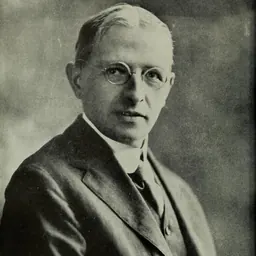
Lived 1916 – 2002 (aged 86). Maurice Braverman was an American lawyer, known for Disbarment and Smith Act.
Maurice Braverman (1916–2002) was a 20th-century American civil rights lawyer and some-time Communist Party member (and Party lawyer) who was convicted in 1952 under the Smith Act, served 28 of 36 months, then immediately faced disbarment, against which he fought in the 1970s and won reinstatement in Maryland and federal courts (1975).
Background
Maurice Louis Braverman was born to a Jewish family in Washington, DC, on February 1, 1916. His family moved to Baltimore, Maryland, when he was five years old. They lived above their family's grocery store on Jackson Street in South Baltimore.
In 1933, he received a BA from City College of New York (CCNY). He opened a grocery store in East Baltimore. In 1938, he started law school at the Baltimore School of Law; he drove taxi cabs to help pay tuition. In 1941, he received his law degree. (During law school, study of the Sacco & Vanzetti case aroused "civil libertarian feelings.") A 1940 census shows Maurice Braverman, 31, white male American, residing in Brooklyn Assembly District 2. In 1948, his law office was at 15 South Gay Street in Baltimore.
Career
Braverman was in civil service in several positions from 1939 to 1940. He worked in a post office in Baltimore for a few months. He worked in the U.S. War Department for a few months, and worked in the Bureau of Internal Revenue.
Hiss Case
On August 26, 1948, Braverman appeared as counsel for Mr. and Mrs. William Rosen, involved in the sale of a Ford automobile once belonging to Alger Hiss during House Un-American Activities Committee (HUAC) hearings that were following the allegations of Elizabeth Bentley and Whittaker Chambers.
Arrest, conviction, disbarment In April 1951, the trial of Julius Rosenberg and Ethel Rosenberg ended in conviction and death sentence. In the wake of many anti-communist trials (in 1949 alone the Smith Act/Foley Square, Judith Coplon, and Alger Hiss trials), the Communist Party's National Committee ordered top leaders to make themselves "unavailable." These included Maryland leader Alfred Blumberg. During the summer of 1951, more than 40 people received subpoenas to appear before HUAC. Hearings ran June 19, 20, 21, 26, 27, 28, and July 11, 13, 1951. During the first six days of hearings, newspapers reported that witnesses balked answering questions.
On July 11, 1951, Mary Stalcup Markward, an FBI undercover agent in the Communist Party, testified. (After consulting earlier in the year with HUAC, the Party heard and expelled her in February 1951.
Braverman had already appeared as counsel to Herbert Kransdorf (June 19, 1951), Michael Howard (June 20, 1951), Peter Edward Forrest (June 26, 1951), and Eli Isadore Schwartz (June 28, 1951). Given opportunity to respond to Markward, Braverman's allegation, Braverman stated, ""I wouldn't have an answer to any stool pigeon." U.S. Representative Francis E. Walter, a HUAC member, retorted, "You may regard her as a stool pigeon, but I regard her as a great American." Three witnesses before the HUAC alleged that Braverman was a Communist Party member. The case continued to attract national attention during that year. John F. King served as Braverman's counsel.
Personal and death
Braverman married Jeanette Block, with whom he had two daughters (one died in 1991); they divorced. In 1981, he married Myrna Lapides (who also had a daughter from a previous marriage). In 1985, they moved to Israel. In 2000, they returned to Maryland and lived in Elkton. Braverman also had a granddaughter.
Braverman attributed his arrest and conviction to his calling FBI chief J. Edgar Hoover a "fag" on a tapped telephone line.
In the 1970s, Braverman became associated with the East Bank Havurah.
Braverman died age 86 of pneumonia in Elkton, Maryland, on March 25, 2002. Myrna Lapides Braverman, a longtime philatelist, died on August 16, 2013.
(At present, there is no known relationship between Maurice Braverman and Harry Braverman (1920–1976), a Marxist economist based in New York City.)
Legacy
Communist Party of Maryland William Z. Foster (on stamp of USSR in 1971) spoke to the Party's Maryland chapter. In 1991, the Baltimore Sun ran an article that assessed the state of the Communist Party of Maryland at that time: Baltimore's Communist Party traces it origins to a strike against the B&O Railroad in 1877... In the 1930s, Baltimore was designated by national party leaders as District 4 and was made up of about 20 "cells"... The party focused its recruiting on companies with many blue-collar workers... Often, national leaders such as Earl Browder and William Z. Foster were guest speakers. The party held rallies... and fielded candidates in local elections... After World War II... most of Baltimore's communists went underground. They maintained low-profile headquarters, successively, on Eutaw Street, Franklin Street and in the 200 block Liberty Street... The communist witch hunts of the late 1940s and early '50s were not among the city's shining hours. In 1949, complying with laws requiring loyalty oaths and federal acts that effectively outlawed the party, city, state and federal authorities began to arrest known communists and to sentence them to jail, often for minor or fabricated crimes. Among those who served time were Maurice Braverman, the party's lawyer; Leroy H. Wood, its treasurer and George A. Meyers, a long-time local and national party leader. In 1952, Meyers spent 30 days in jail for refusing to name others in the party. One Evening Sun headline of the time: "FBI Informer Calls Meyers Key State Red." What was left of the membership lacked the resources to carry on. Postwar prosperity and ideological differences with Soviet communism proved too much for Baltimore's communists, and the local party all but disappeared...1970s, and winning restatement in Maryland (1974) and federal courts (1975). (Note that the Sun calls Braverman a Party lawyer.)
Hiss Case postscript In 1978, Braverman spoke to Garry Wills about his time in prison with Alger Hiss. After the article "Suspecting Alger Hiss" appeared in the New York Review of Books on April 20, 1978, Braverman spoke to its author, Garry Wills. (Wills, formerly a writer for William F. Buckley, Jr.'s magazine National Review, had expressed disbelief in Hiss's innocence, calling him a "man drab with the proper virtues," yet often found "telling odd little needless lies, or suffering inexplicable 'blackouts' of memory.) Calling himself a "civil rights lawyer," Braverman explained that he had served time in the Lewisburg prion with Alger Hiss. When the two met there, Braverman introduced himself as counsel to William Rosen in August 1948, to which Hiss replied curtly, "I know." Wills notes that most innocent people would have expressed great interest in talking to someone who might have details in helping their case. When Hiss was about to be released, Braverman told him the Communist Party would expect him make a statement. Hiss concurred, and Braverman wrote him a first draft. Wills concluded that Hiss "behaved like one still serving the Party."
Don’t just read it —
keep it.
Full-length biographies made to live with: read them, listen on the way to work, watch them tonight.
- E-book
- Audio
- Video
Instant download · yours to keep · every purchase keeps this site free
Important facts
People in Maurice Braverman's life
Named in this biography and alive at the same time
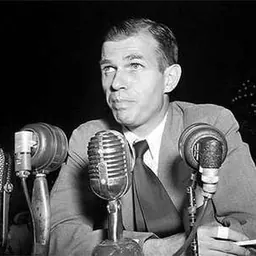





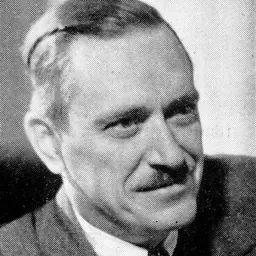
Related people
Same field, nearest in time
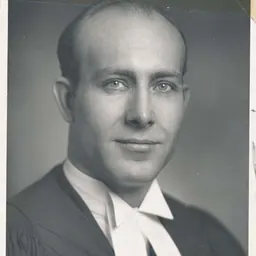


Contemporaries
People whose lives overlapped Maurice Braverman's


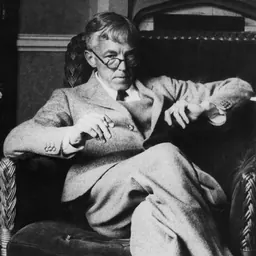
Frequently asked questions
Who was Maurice Braverman?
American lawyer
When was Maurice Braverman born?
Maurice Braverman was born on 1 February 1916 in Washington, D.C..
When did Maurice Braverman die?
Maurice Braverman died on 25 March 2002 in Elkton.
What was Maurice Braverman's occupation?
Maurice Braverman was a lawyer.
What was Maurice Braverman known for?
Maurice Braverman was known for Disbarment and Smith Act.
What nationality was Maurice Braverman?
Maurice Braverman was American.
Sources & further reading
· Wikipedia: Maurice Braverman
Cite this page
APA: Biography.guide. (2026). Maurice Braverman. https://biography.guide/maurice-braverman/
MLA: "Maurice Braverman." Biography.guide, https://biography.guide/maurice-braverman/.
Chicago: "Maurice Braverman." Biography.guide. https://biography.guide/maurice-braverman/.
Data last updated: 2026-09-22 · Spot an error? Report a correction.
Page generated 2026-09-27 04:57 UTC