
About Matteo Maria Boiardo
Lived 1441 – 1494 (aged 52–53). Matteo Maria Boiardo was a poet and writer.
Matteo Maria Boiardo ( , ; 144019/20 December 1494) was an Italian Renaissance poet, best known for his epic poem Orlando innamorato.
Early life Boiardo was born in 1440, at or near, Scandiano (today's province of Reggio Emilia); the son of Giovanni di Feltrino and Lucia Strozzi. His mother Lucia was the sister of the humanist poet Tito Vespasiano Strozzi, his father Giovanni the son of Feltrino Boiardo, whom Niccolò III d'Este, Marquis of Ferrara, had made Count of Scandiano, with seignorial power over Arceto, Casalgrande, Gesso, and Torricella. Boiardo was an ideal example of a gifted and accomplished courtier, possessing both a gallant heart and deep humanistic learning.
In 1441 the family moved to Ferrara, where Matteo Maria grew up until his father died in 1451. At an early age he entered the University of Ferrara, where he acquired a good knowledge of Greek and Latin, and even of the Oriental languages. He was in due time admitted doctor in philosophy and in law.
When his grandfather Feltrino died in 1460, Matteo Maria and his cousin Giovanni inherited the fief of Scandiano with its attached lands, but the joint administration gave rise to family feuds culminating in 1474, when Matteo Maria narrowly averted poisoning at the instigation of his aunt Taddea Pio, Giovanni's mother. This caused the lands to be divided, and Boiardo became Lord of Scandiano. But already in 1461 disputes with relatives had forced him to take up residence in Ferrara.
Career Italian translation of Herodotus' Histories by Count Matteo Maria Boiardo, published in Venice in 1533. Up to the year of his marriage to Taddea Gonzaga, the daughter of the Count of Novellara (1472), he had received many marks of favour from Borso d'Este, Duke of Ferrara, having been sent to meet Frederick III (1469), and afterwards visiting Pope Paul II (1471) in the train of Borso. In 1473 he joined the retinue which escorted Eleonora of Aragon, the daughter of Ferdinand I, to meet her spouse, Ercole, at Ferrara.
In 1476 Boiardo returned to Ferrara to become Duke Ercole's companion; here he witnessed the unfolding of Niccolò d'Este's conspiracy against Ercole, his cousin, whose victory Boiardo promptly celebrated in his Latin Epigrammata. In 1478 Boiardo married Taddea dei Gonzaga of Novellara, by whom he had six children.
In 1481 Boiardo was invested with the governorship of Reggio, an office which he filled with noted success till his death, except for a brief interval (1481–86) when he was governor of Modena. The outbreak of war between Ferrara and Venice, the vicissitudes of which are reflected in his Ecloghe volgari, and his concern for his native Scandiano, forced him to relinquish the post.
In 1487 Ercole appointed Boiardo ducal emissary for Reggio, an office which he was to hold until his death, and which has left us the largest nucleus of his Lettere, mostly of an administrative nature. When Charles VIII of France invaded Italy, in September 1494, Boiardo's health had deteriorated. He died in Reggio on 19 December, his death, with that of Poliziano and Giovanni Pico della Mirandola in the same year, marking the end of an era.
Writings In his youth Boiardo had been a successful imitator of Petrarch's love poems. For Ercole d'Este he produced his first humanist works in Latin, the Carmina de laudibus Estensium and the Pastoralia, both dating from 1463–4; he also undertook a number of free translations into the vernacular, from Cornelius Nepos, Xenophon, Apuleius, Herodotus, and the chronicler Riccobaldo of Ferrara.
While in Reggio in 1469 Boiardo met Antonia Caprara, who inspired his canzoniere, his first original work in the vernacular, now regarded as one of the highest poetic achievements of the 15th century. Entitled Amorum libri tres and comprising 180 sonnets, canzoni, and madrigals, it recounts in Petrarchan mode the three phases of the poet's love, from initial joy to subsequent disillusionment and final mourning. Shortly afterwards Boiardo wrote the comedy Il Timone (1487?), loosely based on the dialogue of the same name by Lucian.
Around 1476 Boiardo began his major work, Orlando Innamorato, originally also called Inamoramento de Orlando, a grandiose poem of chivalry and romance absorbing the poetic experience of the canzoniere and the encomiastic intent of the earlier Latin works (the Encyclopædia Britannica Eleventh Edition provides a detailed discussion of Orlando in its several editions). Within the chivalric tradition Orlando Innamorato is the first poem to effect a deliberate fusion of the Carolingian and Arthurian narrative cycles; hence the poem's novelty, the fact that Orlando, the hero of the Song of Roland, is in love. Seen as a cosmic force as well as an essential attribute to chivalry, love is by far the main theme, alongside other major themes of arms, magic, honour, and adventure. Fabulous and anachronistic as this narrative material may seem, the poet relates it to the present by creating the illusion of a live recitation to a courtly audience, whose reactions he registers at various points. Within this frame the narration itself unfolds at a relentless pace, governed by the so-called entrelacement technique of suspending one story and shifting to another at the point of maximum expectation.
Almost all Boiardo's works, and especially the Orlando innamorato, were composed for the amusement of Duke Ercole and his court, though not written within its precincts. His practice, it is said, was to retire to Scandiano or some other of his estates, and there to devote himself to composition, and historians state that he took care to insert in the descriptions of his poem those of the agreeable environs of his château, and that the greater part of the names of his heroes, as Mandricardo, Gradasse, Sacripant, Agramant and others, were merely the names of some of his peasants, which, from their uncouthness, appeared to him proper to be given to Saracen warriors.
Tarot Boiardo wrote a lengthy poem detailing a custom-made and historically relevant Tarocchi deck of his own making, providing an insightful scholarly glimpse into the game's early stages of development. As the contemporary Sola Busca tarot, it exclusively features mythical and historical figures of classical antiquity for its highly idiosyncratic set of trumps and coat cards, a trait characteristic of French-suited packs. Each trump also depicts specific wildlife, similar to later animal tarots.
Suits A single such deck, produced according to the poem shortly after Boiardo's death, and comprising only 44 out of at least 56 cards (possibly 78, if it originally included the 22 trumps as well) has partially survived, having previously belonged to captain H. E. Rimington Wilson (1899–1971), a collector of rare playing cards, and being auctioned as Lot 310 at Christie's on the 24th of November, 1971 for 350 guineas (£367.50 in new pence). It consisted of four unique suits, representing the main Stoic passions: whips (Timor > fear), eyes (Gelosia > jealousy), vases (Speranza > hope) and arrows (Amor > love), each composed of ten pip cards (ace through 10) and four face cards: fante ("infantryman" / knave), cavallo ("horse" / knight), donna ("lady" / queen) and re ("king"), three framed lines from the poem being featured at the top of each card.
+Court cards Positive pair Negative pair Suit Love or Arrows Caption and imagery Jealousy or Eyes Caption and imagery Knave Polyphemus Depicted as a CyclopesMentions Acis and Galatea Argus Panoptes Portrayed as a Cyclopes,with a peacock at his feet.Mentions Io. Knight Paris of Troy Mentions Helen of TroySee Trojan War Turnus See Virgil's Aeneid Queen Venus Also depicts a pair ofwhite swans and whitedoves. Mentions Adonis. Juno Also depicts a pair ofpeacocks. MentionsJupiter's infidelities. King Jupiter Portrayed as a thunder godAlso depicts Ganymede Vulcan Depicted as a fire god.Mentions Venus' affair withMars, witnessed by The Sun. Suit Hope or Vases Caption and imagery Fear or Whips Caption and imagery Knave Horatius Cocles Also depicts Pons Sublicius Phineus Mentions Medusa Knight Jason Mentions the Argonautsand the Golden Fleece.See Argonautica. Ptolemy XIII Mentions Caesar, PompeySee Trumps XV, XVII Queen Judith Also depicts HolofernesMentions Bethulia Andromache Mentions Hector, OdysseusSee Homer's Odyssey King Aeneas Depicted as king of AlbaSee Virgil's Aeneid Dionysius I See sword of Damocles
Trumps Its lost trumps would have contained ten consecutive pairs of men and women, each representing a vice and a virtue, respectively:
No. Vice/Virtue Man/Woman Animal Caption and imagery(0) Folly Fool donkey Also depicts The WorldSee 1 Corinthians 1:20–21 1 Idleness Sardanapalus marmot See Ashurbanipal 2 Fatigue Hippolyta ants Depicted as an Amazon 3 Desire Actaeon leopard Head of a stag with antlersDogs biting his feetMentions Diana 4 Reason Laura bees Also depicts Cupidand a white ermine 5 Secrecy Antiochus I ostrich Mentions Stratonice I 6 Grace Graces phoenix 7 Disdain Herod I bear Mentions Mariamne I 8 Patience Psyche grey horse See Cupid and Psyche sheep Also depicts a dog collarMentions Leah, Rachel, Laban 10 Perseverance Penelope swallows Also depicts a ship anda warp-weighted loom.See Homer's Odyssey. 11 Doubt Aegeus (lost text) Mentions Theseus 12 Faithfulness Sophonisba (lost text) Mentions Masinissa, TrionfiSee Second Punic War 13 Deceit Nessus (lost text) Mentions the shirt of Nessus,Deianira, Heracles, Hercules 14 Wisdom Hypermnestra (lost text) See Danaus, Danaides 15 Fall Pompey (lost text) Mentions the Wheel of Fortune 16 Modesty Aemilia Tertia (lost text) Mentions Scipio Africanus 17 Danger Caesar Cretan bull Depicts the Ides of MarchMentions Sulla 18 Experience Rhea eagle of Zeus Also depicts Jupiter, Zeus,Mount Ida of Crete, Psychro,the Korybantes. See Cronus. 19 Time Nestor of Pylos longhorn stag Depicted as The HermitSee Chronos 20 Oblivion Dido lynx Depicts Lethe 21 Strength Lucretia lion
Legacy Boiardo's Orlando Innamorato enjoyed great popularity amongst his contemporaries, its unfinished state prompting a number of sequels by, amongst others, Nicolò degli Agostini, Raffaele Valcieco, and above all Ludovico Ariosto in his Orlando Furioso. But Pietro Bembo's reformation of the language in 1525, the rediscovery of Aristotle's Poetics in the 1530s, and the incipient Counter-Reformation in the 1540s all caused it to fall from favour amongst critics and writers, including Torquato Tasso, who found it lacking on linguistic, theoretical, and moral grounds. Gradually, Boiardo's original version was supplanted by Francesco Berni's rifacimento (1542), a recasting of the poem in literary Tuscan, and by Lodovico Domenichi's contemporary revision, the publication of which (1544), significantly, coincided with the last edition of Boiardo to appear in the Renaissance in the original text.
Following centuries of neglect, the rediscovery of Boiardo took place in England during the Romantic period. Starting in 1830 Anthony Panizzi, the expatriate Italian professor later to become librarian of the British Museum, produced a historic combined edition of Boiardo's Orlando Innamorato and Ariosto's Orlando Furioso. This marked both the restoration of the Innamorato 's original text and the beginning of modern Boiardo criticism.
Described by the critic Carlo Dionisotti as "the most misunderstood poet in Italian literature", and for a long time overshadowed by Ariosto, Boiardo has since emerged as a significant poet of the Renaissance, because his work showed more pluralism than other Renaissance writers, challenging the binary opposition between Christianity and Islam. He also was the first poet to use a combination of Latin and vernacular Northern Italian language. As a result of this modern critical appreciation he now seems set to rival Ariosto's long-standing supremacy.
Translations The first translation of Boiardo into English was Robert Tofte's Orlando Inamorato: The Three First Bookes (1598), in reality the first three cantos of book 1 in Domenichi's version. The Italian text was known to Spenser and Milton, but it was not until the 19th century that other partial translations were attempted, by Richard Wharton (1804), William Stewart Rose (1823), and Leigh Hunt (1846).
Don’t just read it —
keep it.
Full-length biographies made to live with: read them, listen on the way to work, watch them tonight.
- E-book
- Audio
- Video
Instant download · yours to keep · every purchase keeps this site free
Important facts
People in Matteo Maria Boiardo's life
Named in this biography and alive at the same time
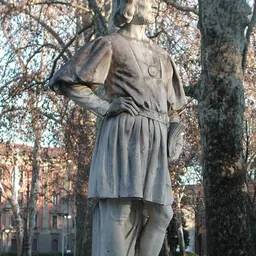

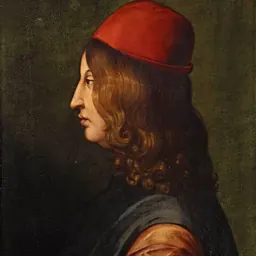

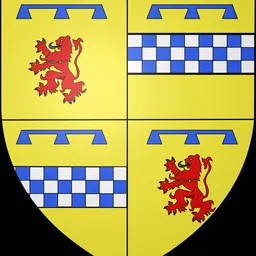
Related people
Same field, nearest in time
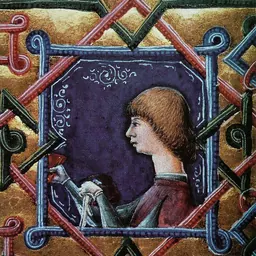

Contemporaries
People whose lives overlapped Matteo Maria Boiardo's

Frequently asked questions
Who was Matteo Maria Boiardo?
Italian writer
When was Matteo Maria Boiardo born?
Matteo Maria Boiardo was born in 1441 in Scandiano.
When did Matteo Maria Boiardo die?
Matteo Maria Boiardo died on 19 December 1494 in Reggio Emilia.
What was Matteo Maria Boiardo's occupation?
Matteo Maria Boiardo was a poet and writer.
Sources & further reading
· Wikipedia: Matteo Maria Boiardo
· DBpedia: Matteo Maria Boiardo
Cite this page
APA: Biography.guide. (2026). Matteo Maria Boiardo. https://biography.guide/matteo-maria-boiardo/
MLA: "Matteo Maria Boiardo." Biography.guide, https://biography.guide/matteo-maria-boiardo/.
Chicago: "Matteo Maria Boiardo." Biography.guide. https://biography.guide/matteo-maria-boiardo/.
Data last updated: 2026-09-20 · Spot an error? Report a correction.
Page generated 2026-09-27 05:18 UTC