
About Mateo García de los Reyes
Lived 1872 – 1936 (aged 64). Mateo García de los Reyes was a Spanish military personnel and naval officer.
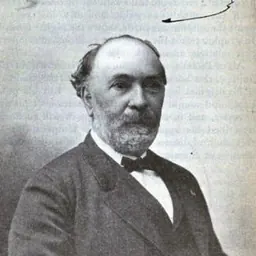
Mateo García de los Reyes (5 February 1872 – 24 November 1936) was a Spanish naval officer and politician. He served in Spanish Navy operations against Filipino insurgents during the Philippine Revolution of 1896–1898 and in the Kert campaign of 1911–1912. He was the organizer and first chief of the Spanish Navy's submarine force and during the Rif War in 1922 led that force's first combat operation. He served as minister of the navy from 1928 to 1930. Early in the Spanish Civil War, he was arrested and executed by Republican forces on suspicion of having Nationalist sympathies.
Biography Early life García de los Reyes was born at 06:00 on 1872 in Montevideo, Uruguay, to Mateo García Anguiano and Manuela de los Reyes del Villar, the only boy among the couple's five children. His father, Mateo Sr., was the commanding officer of the Spanish Navy screw frigate , which was based at Montevideo at the time. For a short time, his father also served as acting commander of the naval base at Montevideo and the Spanish Navy squadron based there, but a persistent myth that his father was the Spanish consul in Montevideo is not true and appears to have arisen because he carried out a diplomatic mission as Spain's highest-ranking representative in the region. Almansa′s chaplain baptized the baby boy with the names Mateo Felipe Adolfo Hercilio on 1872 at the Main Church in Montevideo.
After the family returned to Spain, King Alfonso XII appointed Mateo Sr. as his aide-de-camp in 1880. As a result, the family moved into the Royal Palace of Madrid, where the younger Mateo began his schooling. Mateo Sr. subsequently received a promotion to brigadier de la armada (navy brigadier) and in 1881 was made Commandant General of the Captaincy General of Puerto Rico. The family moved to Puerto Rico, where Mateo Sr. died of tuberculosis in December 1882. The family returned to Madrid and the royal court after his death. Thanks to royal patronage, García de los Reyes continued to receive an excellent education. However, he decided to join the Spanish Navy to reduce the burden on his mother of raising five children as a widow and received his mother's permission to do so, a requirement for a minor. Not long after his return, the Spanish-American War broke out. He spent the war at Cartagena, seeing no combat. The Spanish Navy suffered heavy losses, and as a result of the conflict the Spanish Empire lost control of Cuba, Puerto Rico, Guam, and the Philippines.
García de los Reyes was appointed personal aide to General José Marenco in September 1899. Spain remained neutral during the war, but U-9′s exploit demonstrated the potential of submarines in naval combat and prompted the Spanish Ministry of the Navy to reconsider its decision not to pursue the development of submarines after the Spanish inventor Isaac Peral built the submarine in the late 19th century. It also reinvigorated García de los Reyes's interest in naval affairs, and he decided to remain in the navy.
While under García de los Reyes's command, Narciso Monturiol received her battle flag, donated by the city council of Barcelona, while moored alongside the battleship during a visit to Barcelona on 1919. On 1919, he received a promotion to capitán de fragata (frigate captain), and during the summer of 1919 the four submarines undertook their first extended cruise, accompanied by Extremadura. During this cruise, they arrived at Santander on 1919. On , King Alfonso XIII boarded Narciso Monturiol at Santander, and during the day she submerged off Cabo Mayor with him aboard, touching bottom at a depth of and making him the first Spanish monarch to submerge aboard a submarine. García de los Reyes relinquished command of Narciso Monturiol on 1919 but remained the commander of the submarine division and of the Submarine School at Cartagena. With Isaac Peral as his flagship, he personally commanded the operation, which involved Isaac Peral and the submarine , supported by the battleship . The two submarines departed Cartagena in 1922 and proceeded to Melilla on the North African coast, where they rendezvoused with España. The three ships then headed for Vélez de la Gomera. On the afternoon of Isaac Peral and B-1 conducted a three-hour reconnaissance of the islet and its surroundings. Off the islet's western inlet, Isaac Peral surfaced within sight of the Riffians to make a turn and moored at a rocky outcrop at Cemetery Cove, where García de los Reyes proposed to civilian spectators on the islet that they embark aboard the submarines that night. Both the civilians and the military commander on the islet agreed to this plan. Meanwhile, the Riffians opened artillery and rifle fire on the submarines. While Isaac Peral was moored to the outcrop, a rifle bullet hit her and a shell landed in the water off her bow. Still under fire, the submarines withdrew on the surface.
García de los Reyes was appointed Gentleman of the Bedchamber Grandee of Spain and in this position accompanied King Alfonso XIII, Queen Victoria Eugenie, Infante Jaime on their visit to Italy in 1923. He received a promotion to the rank of capitán de navío (ship-of-the-line captain) on 1924, retaining his position as director of the Submarine School at Cartagena, which had expanded its role to include the Radiotelegraphy School and the Diving School. He was promoted to contralmirante (counter admiral) on 1928. Upon his promotion to contralmirante, he relinquished command of the submarine force. Its aim was to rejuvenate the Navy's top leadership by reducing the mandatory retirement age for high-ranking naval officers by four years, dropping it to 68 for the rank of vicealmirante (vice admiral), 64 for contralmirante (rear admiral), and 62 for capitán de navío (ship-of-the-line captain). he championed established promotions in certain categories in the navy by selection, as was the practice in other modern navies. Previously, the most senior officer at the lower rank had advanced automatically without review or regard to his accomplishments.
For 40 years, Spain's first submarine, the experimental 19th-century vessel , had lain derelict at the Arsenal de La Carraca at San Fernando. The Captain General of the Cartagena Maritime Department, Pedro Mercader Zufía, warned García de los Reyes that Peral might be scrapped, and he recommended that she be moved to Cartagena — where Peral′s inventor, Isaac Peral, was buried — and preserved there. García de los Reyes agreed, abd in 1929 he had Peral towed to the Cartagena Naval Base, where her hull was repaired and she was installed on the esplanade of the Submarine Base., where she remained until 1965.
In mid-1929, García de los Reyes visited Cuba to represent the Government of Spain at the inauguration of Gerardo Machado for a second term as president of Cuba. In the autumn of 1929, the largest Spanish Navy maneuvers of the modern era took place under his ministry, which involved the entire fleet and its aircraft and took place in the Mediterranean Sea. From aboard the new Trasmediterránea passenger-cargo ship , King Alfonso XIII, Queen Victoria Eugenie, and the entire Primo de Rivera government witnessed the maneuvers, which culminated in an impressive naval review, led by the training ship , a barquentine which had entered service in 1928.
Publications Teoría práctica de las conmutatrices ("Practical Theory of Commutators"), Madrid, 1902 Various articles in Revista general de Marina on radiotelegraphy, electricity, navigation, and submarines.
Awards and decorations Spanish
Foreign 100px Knight Grand Cross of the Order of Aviz (Kingdom of Portugal).
Commemoration After García de los Reyes′s death, the Spanish Navy rejected proposals to name a submarine after him three times. Finally, when the United States Navy transferred the to the Spanish Navy — the first submarine Spain acquired through American aid — on 1959, she was renamed Almirante García de los Reyes (briefly with the pennant number E-1, soon changed to S-31), in accordance with Ministerial Order No. 1313/59, published in Diario Oficial (Official Gazette) No. 98 of 1959.
On 1980, coinciding with events held at the Spanish Navy's Submarine Base to commemorate the 65th anniversary of the creation of the Spanish submarine force, García de los Reyes's son unveiled a bust of García de los Reyes, the first commander of the force, at the Submarine Base.
The submarine Almirante García de los Reyes was decommissioned in 1981 after more than 21 years of service in the Spanish Navy. She was stricken from the navy list on 1982. To avoid having García de los Reyes's name disappear from the navy, the Spanish Navy's Submarine School was renamed the Almirante García de los Reyes Submarine School as of 1982.
On 2012, when the Spanish Navy assigned names to its submarines, the fourth of the class received the name in honor of García de los Reyes. Mateo García de los Reyes was laid down in 2011, with her commissioning scheduled for 2029.
Don’t just read it —
keep it.
Full-length biographies made to live with: read them, listen on the way to work, watch them tonight.
- E-book
- Audio
- Video
Instant download · yours to keep · every purchase keeps this site free
Important facts
People in Mateo García de los Reyes's life
Named in this biography and alive at the same time



Related people
Same field, nearest in time





Contemporaries
People whose lives overlapped Mateo García de los Reyes's


Frequently asked questions
Who was Mateo García de los Reyes?
Spanish military personnel (1872-1936)
When was Mateo García de los Reyes born?
Mateo García de los Reyes was born on 6 February 1872 in Montevideo.
When did Mateo García de los Reyes die?
Mateo García de los Reyes died on 24 November 1936 in Paracuellos de Jarama.
What was Mateo García de los Reyes's occupation?
Mateo García de los Reyes was a military personnel and naval officer.
What nationality was Mateo García de los Reyes?
Mateo García de los Reyes was Spanish.
Sources & further reading
· Wikipedia: Mateo García de los Reyes
· DBpedia: Mateo García de los Reyes
Cite this page
APA: Biography.guide. (2026). Mateo García de los Reyes. https://biography.guide/mateo-garcia-de-los-reyes/
MLA: "Mateo García de los Reyes." Biography.guide, https://biography.guide/mateo-garcia-de-los-reyes/.
Chicago: "Mateo García de los Reyes." Biography.guide. https://biography.guide/mateo-garcia-de-los-reyes/.
Data last updated: 2026-09-20 · Spot an error? Report a correction.
Page generated 2026-09-27 05:22 UTC