
About Gerardo Machado
Lived 1871 – 1939 (aged 67). Gerardo Machado was a Cuban politician.
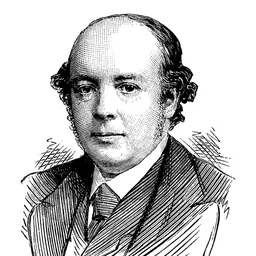
Gerardo Machado y Morales (28 September 1871 – 29 March 1939) was a general of the Cuban War of Independence and President of Cuba from 1925 to 1933.
Machado was elected president in 1924 as the leader of the Liberal Party, a moderate reform-oriented party. He entered the presidency with widespread popularity and support from the major political parties. However, his support declined over time and Machado took dictatorial powers. Despite promising to govern only for one term, he ran for re-election in 1928 and won a non-democratic election where the opposition was repressed. As protests and rebellions became more strident, his administration curtailed free speech and imprisoned, exiled, and murdered his opponents. Machado had two younger siblings, a brother named Carlos and a sister named Consuelo. He and his siblings grew up on their family's cattle farm, during the Ten Years' War, where his father attained the rank of major. The war ended without Cuba achieving independence. When he was in his early 20s, Machado engaged in growing and selling tobacco.
As a young man, he married Elvira Machado Nodal (28 October 1868 in Villa Clara – 1968). They had three daughters together: Laudelina (Nena), Ángela Elvira, and Berta.
Cuban War of Independence In 1895 Cubans launched a War of Independence against Spain. Machado joined the Cuban Liberation Army and rose to the rank of brigadier general. He fought in the middle provinces.
Post-war career After the war ended, Machado turned to politics and business. In 1902, Cuba was granted full independence. Meanwhile, Machado was elected as mayor of Santa Clara. During the national administration of José Miguel Gómez (1909–1913), Machado was appointed as inspector of the armed forces and later as Secretary of the Interior.
After his return to private life, he engaged in farming and in business, investing in public utilities. With his family provided for, he returned to politics in the early 1920s. and Juan Manuel Perez de la Cruz. Finally they could not continue and Machado surrendered on 8 March 1917.
President Mario García Menocal had definitively won the conflict. Technically there was no U.S. intervention in this war. Cuban Army officers, notably Julio Sanguilí in Santiago, and their forces regained control of the government.
In this war, against the background of the Great War raging in Europe, the Liberals were said to be pro-German. This resulted in U.S. President Woodrow Wilson adding Cuba to his worries, as he was already concerned about the Mexican civil conflict and actions of Pancho Villa on the Southern border. The stress of supervising the American military intervention resulted in the death of Frederick Funston, a friend and ally of Menocal. President Menocal declared war on Germany 7 April 1917.
Machado was appointed as Interior Minister under José Miguel Gómez. Allied with his predecessor, the outgoing president Alfredo Zayas, and running as a Liberal Party candidate in the 1924 election, Machado defeated Mario García Menocal of the Conservative Party by an overwhelming majority; he was elected as Cuba's fifth president. He campaigned with the slogan, "Water, roads, and schools".
Among the public works completed during Machado's administration, there was the Carretera Central or Central Highway which ran practically the entire length of the island, from Pinar del Rio in the west to Santiago de Cuba, a distance of over . Machado was also responsible for the construction of El Capitolio (The Capitol), the elegant home of the Cuban Congress from 1929 to 1959. The new building, designed by Raúl Otero and Eugenio Rayneri Piedra and constructed in 1926–1929 had a neoclassical design that borrowed elements from the U.S. Capitol building and the Pantheon in Paris. Its purpose was to portray the optimism, confidence and elegance of the new democracy.
Additionally, Machado oversaw the enlargement of the University of Havana, and the expansion of health facilities. Other key buildings constructed under his administration include the Hotel Nacional de Cuba, the Asturia Center (today National Museum of Fine Arts of Havana), the Bacardi Building (Havana), Lopez Serrano and the Hotel Presidente. He also sponsored a tariff reform bill in 1927 providing protection to certain Cuban industries. Despite these accomplishments, Cuba's dependence on sugar continued, and United States influence and investments increased.
In order to complete the financing of these projects, the President, ignoring his original pledge against foreign loans, entered into transactions with the Chase Bank Syndicate resulting by his second term in the increase of Cuba's public debt by $86 million.
Second term as president
1928 re-election Cosme de la Torriente y Peraza, Cuban statesman and President of the League of Nations in the 1920s, said:
According to Peraza on 9 January 1931, the following newspapers were closed upon Machado's presidential decreeː Diario de la Marina, El Mundo, El Pais, Informacion, The Havana American, La Semana, Karikato, Carteles, and Bohemia, followed by the multiple arrests of numerous newspaper editors.
His detractors claimed he became despotic and forced his way into a second term. Throughout his campaign leading to the 1924 general election, Machado stated numerous times that he did not aspire to be reelected, but only two years into his presidency he changed his mind. In 1927 Machado pushed a series of constitutional amendments to enable him to seek re-election, which he obtained in the 1928 presidential election. This act of continuismo, coupled with growing economic depression caused by a decline in sugar prices starting in 1925, its aggravation due to the crash of 1929, and political repression, led to significant political instability. Machado also faced backlash from university students after the formation of the Directorio Estudiantil Universitario in 1927. After various protests and the death of the DEU members, most notably of Rafael Trejo, Machado closed the university in 1930.
U.S. Secretary of State Cordell Hull wrote, in a telegram to the incoming U.S. Ambassador to Cuba Sumner Welles on 1 May 1933, with respect to Machado's constitutional reforms of 1927:
Violence Machado survived several attempts on his life. In the most famous, a violent opposition group, the ABC (abecedarios), assassinated the President of the Cuban Senate Clemente Vazquez Bello. They had constructed a tunnel to reach the Vazquez family crypt in Havana's Colón Cemetery and planted an explosive device there, anticipating that Machado would attend the funeral. The plan failed when the family decided to bury Vazquez in Santa Clara instead. This attempt is the basis of the 1949 Horizon Pictures film We Were Strangers.
Machado has also been credited for unleashing a wave of violence against his critics. In Machado: Crimenes y Horrores de un Regimen, Carlos G. Peraza details some of Machado's alleged crimes. Peraza blames Machado for the death of numerous Cubans including Armando Andre y Alvarado (1926), Enrique Varona (1926), Claudio Bouzón –Noske Yalob (1928), Ponce de Leon y Perez Terradas (1928), Abelardo Pacheco (1930), Raoul Martin (1931), the three Freyre de Andrade brothers (1932) and most famously Rafael Trejo (30 September 1930).
There were numerous murders and assassinations committed by the police and army under Machado's administration. The extent of his involvement in these is disputed. Writing to the U.S. Secretary of State, on 5 January 1933, U.S. ambassador to Cuba, Harry Frank Guggenheim noted as follows,
The following day Harry Frank Guggenheim reported to the U.S. Secretary of Stateː
Writing to the U.S. Secretary of State, on 8 April 1933, The Chargee in Cuba, Edward Reed noted: according to information obtained by the Embassy from sources believed to be reliable, there were several killings in and near Habana on the night of 6 April... the secret police arrested a young man named Carlos Manuel Fuertes outside of Payret Theatre in Habana. Fuertes is said to have been a member of the student directorate. Later in the night his body was found near the Eremita de las Catalinas on Ayesteran Street.
Regime change
In Cuba, Machado engaged in a long struggle with diverse insurgent groups, from the green shirts of the ABC to Blas Hernández to the conservative veterans of the Cuban War of Independence to the radical Antonio Guiteras group, and he clung on for several years.
In May 1933, newly appointed US ambassador Sumner Welles arrived in Cuba and initiated negotiation with the opposition groups for a government to succeed Machado's. A provisional government headed by Carlos Manuel de Céspedes y Quesada (son of Cuban independence hero Carlos Manuel de Céspedes) and including members of the ABC was brokered; it took power on 13 August 1933 amidst a general strike in Havana. Welles succeeded in weakening Machado's government by extracting a series of concessions which tipped the balance of power in favor of the opposition. Machado left Cuba on a flight to the Bahamas on the afternoon of 12 August 1933.
Machado died of colon cancer in Miami Beach, US in 1939 and was entombed in Miami at Woodlawn Park Cemetery and Mausoleum (now Caballero Rivero Woodlawn North Park Cemetery and Mausoleum).
Don’t just read it —
keep it.
Full-length biographies made to live with: read them, listen on the way to work, watch them tonight.
- E-book
- Audio
- Video
Instant download · yours to keep · every purchase keeps this site free
Important facts
People in Gerardo Machado's life
Named in this biography and alive at the same time




Related people
Same field, nearest in time




Contemporaries
People whose lives overlapped Gerardo Machado's


Frequently asked questions
Who was Gerardo Machado?
President of Cuba from 1925 to 1933
When was Gerardo Machado born?
Gerardo Machado was born on 28 September 1871 in Santa Clara.
When did Gerardo Machado die?
Gerardo Machado died on 29 March 1939 in Miami.
What was Gerardo Machado's occupation?
Gerardo Machado was a politician.
What nationality was Gerardo Machado?
Gerardo Machado was Cuban.
Sources & further reading
Cite this page
APA: Biography.guide. (2026). Gerardo Machado. https://biography.guide/gerardo-machado/
MLA: "Gerardo Machado." Biography.guide, https://biography.guide/gerardo-machado/.
Chicago: "Gerardo Machado." Biography.guide. https://biography.guide/gerardo-machado/.
Data last updated: 2026-09-20 · Spot an error? Report a correction.
Page generated 2026-09-27 05:29 UTC