
About Masatoshi Koshiba
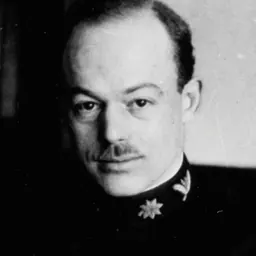
Lived 1926 – 2020 (aged 94). Masatoshi Koshiba was a Japanese physicist, professor and researcher, known for Astrophysics and Neutrino.
was a Japanese physicist and one of the founders of neutrino astronomy. His work with the neutrino detectors Kamiokande and Super-Kamiokande was instrumental in detecting solar neutrinos, providing experimental evidence for the solar neutrino problem.
Koshiba won the Nobel Prize in Physics in 2002, jointly with Raymond Davis Jr., "for pioneering contributions to astrophysics, in particular for the detection of cosmic neutrinos". Koshiba was the first Japanese Nobel laureate to hold two doctoral degrees. In addition, he was the second Japanese recipient of both the Nobel Prize and the Wolf Prize. His mentor, Sin-Itiro Tomonaga, and his student, Takaaki Kajita, were also Nobel Prize winners in Physics.
He was a senior counselor at the International Center for Elementary Particle Physics (ICEPP) and professor at the University of Tokyo.
Early life Koshiba was born in Toyohashi in central Japan on September 19, 1926, to Toshio and Hayako Koshiba. His father was a military officer. His mother died when he was three, leading to his father marrying his wife's elder sister. He grew up in Yokosuka, and completed his high school in Tokyo. It is mentioned that his initial interest was in studying German literature, but, ended up studying physics, spurred by a teacher's denigrating comments.
At the University of Tokyo he became associate professor in March 1963 and then professor in March 1970 in the Department of Physics, Faculty of Science, and emeritus professor there in 1987. From 1987 to 1997, Koshiba taught at Tokai University.
Koshiba's initial research was in cosmic rays. In 1969, he shifted into electron-positron collider physics, and was involved with the JADE detector in Germany, which helped confirm the Standard Model. Along with Masayuki Nakahata and Atsuto Suzuki, Koshiba designed the Kamiokande experiment to detect proton decay, a prediction of grand unified theories. No proton decay was detected, but Koshiba realized the detector could be made to detect neutrinos, and adapted the project accordingly, following the pioneering U.S. work of Davis.
In the early 1970s, Koshiba collaborated with Gersh Budker (1918–1977), the particle-accelerator electron cooling pioneer in the Soviet Union. This collaboration was cut short for unknown reasons but Budker died of heart attack a few years later.
Through this experiment, he (and Davis in the U.S.) were able to confirm the prediction that neutrinos are generated during the nuclear fusion reaction in the sun. However, these experiments detected fewer neutrinos than had been expected. This deficit was called the solar neutrino problem.
In 2003, the Koshiba Prize was created in his honor.
Koshiba was a member of the Board of Sponsors of the Bulletin of the Atomic Scientists, and also a foreign fellow of Bangladesh Academy of Sciences. He was a founding member of the Edogawa NICHE Prize Steering committee.
Academic Lineage Koshiba’s mentor, Sin-Itiro Tomonaga, also served as the matchmaker for Koshiba and his wife. Professor Toshi Koshiba (小柴 俊) of Kagawa University’s Faculty of Engineering is the son of Masatoshi Koshiba.
Koshiba once remarked, “Among the disciples who have inherited my work, two are worthy of receiving the Nobel Prize.” It is generally believed that he was referring to Yoji Totsuka and Takaaki Kajita. In 2015, Kajita was officially awarded the Nobel Prize and explicitly thanked both Koshiba and Totsuka in his Nobel Lecture for their pivotal contributions.
On July 10, 2008, Yoji Totsuka died due to colon cancer. In the September 2008 issue of Bungeishunjū, Koshiba wrote a memorial article titled “The Regret of Reading a Disciple’s Eulogy”, in which he lamented, “If Totsuka had lived just 18 more months, he would certainly have won the Nobel Prize.” To honor his late disciple, Koshiba established the “Shuji Orimoto Prize” and the “Yoji Totsuka Prize” in 2010, awarding individuals who have made outstanding contributions to accelerator and particle physics research, respectively.
Personal life While attending the former First Higher School (now the College of Arts and Sciences at the University of Tokyo), Masatoshi Koshiba performed very poorly academically. One day, he happened to overhear teachers in the school dormitory’s communal bath (as the school was fully residential at the time) discussing his grades, saying, “Koshiba’s grades are so bad that even if he makes it into the UTokyo, the best he could do would be to study Indian philosophy.” Deeply stung by this remark, Koshiba asked his roommate, Kozo Kuchitsu (later UTokyo Professor Emeritus of Chemistry), to tutor him in physics. Thanks to intensive remedial studies, he eventually succeeded in entering UTokyo’s Department of Physics. Even in university, however, Koshiba continued to struggle academically, particularly in theoretical physics. After graduation, he was able to study abroad at the University of Rochester with the help of a Fulbright Scholarship, secured through a letter of recommendation from Sin-Itiro Tomonaga.
Koshiba married Kyoto Kato, an art museum curator, when he returned to Japan in the late 1950s. The couple had a son and a daughter.
After retirement, Professor Koshiba became enthusiastic about video games and once called himself “the world’s oldest gamer.” His favorite game was Final Fantasy. Additionally, he was a classical music enthusiast, particularly fond of Mozart's work.
He died on November 12, 2020, at the Edogawa Hospital in Tokyo at the age of 94. 1987 – Asahi Prize 1987 – Nishina Memorial Prize 1989 – Japan Academy Prize (academics) 1997 – Humboldt Prize 2000 – Wolf Prize in Physics 2002 – Nobel Prize in Physics 2002 – Panofsky Prize 2003 – Benjamin Franklin Medal in Physics
Honors In 2005, the Graduate School of Science at the University of Tokyo established the Koshiba Hall in honor of his contributions.
Source(s): 2002 – Honorary doctor of Meiji University 2002 – Elected Fellow of the American Physical Society.
2003 – In commemoration of the Nobel Prize-winning by Masatoshi Koshiba, Koshiba hall was established at the University of Tokyo's School of science. 2003 – Honorary citizenship of Tokyo 2003 – Emeritus Professor of the University of Tokyo
Publications
Don’t just read it —
keep it.
Full-length biographies made to live with: read them, listen on the way to work, watch them tonight.
- E-book
- Audio
- Video
Instant download · yours to keep · every purchase keeps this site free
Important facts
People in Masatoshi Koshiba's life
Named in this biography and alive at the same time
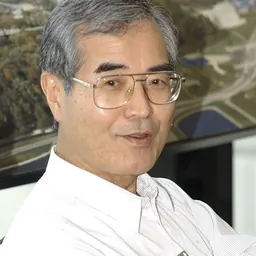
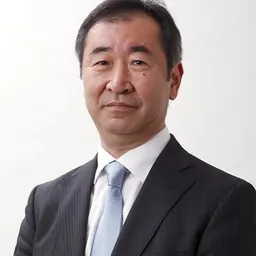
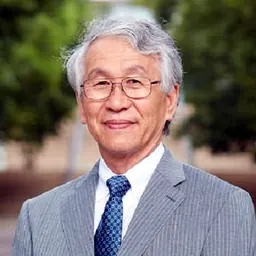


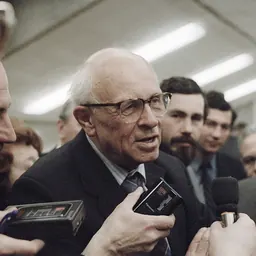
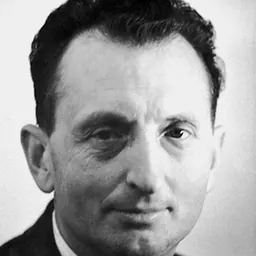
Related people
Same field, nearest in time
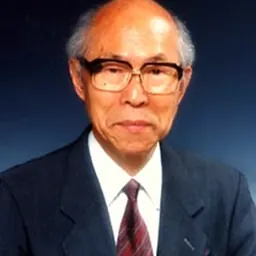


Contemporaries
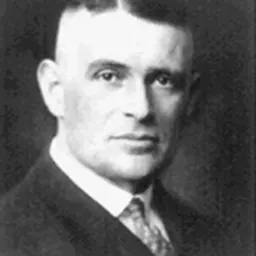
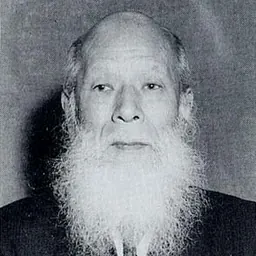
People whose lives overlapped Masatoshi Koshiba's


Frequently asked questions
Who was Masatoshi Koshiba?
Japanese physicist and astronomer (1926-2020)
When was Masatoshi Koshiba born?
Masatoshi Koshiba was born on 19 September 1926 in Toyohashi.
When did Masatoshi Koshiba die?
Masatoshi Koshiba died on 12 November 2020 in Tokyo.
What was Masatoshi Koshiba's occupation?
Masatoshi Koshiba was a physicist, professor and researcher.
What was Masatoshi Koshiba known for?
Masatoshi Koshiba was known for Astrophysics and Neutrino.
What nationality was Masatoshi Koshiba?
Masatoshi Koshiba was Japanese.
Sources & further reading
· Wikipedia: Masatoshi Koshiba
Cite this page
APA: Biography.guide. (2026). Masatoshi Koshiba. https://biography.guide/masatoshi-koshiba/
MLA: "Masatoshi Koshiba." Biography.guide, https://biography.guide/masatoshi-koshiba/.
Chicago: "Masatoshi Koshiba." Biography.guide. https://biography.guide/masatoshi-koshiba/.
Data last updated: 2026-09-20 · Spot an error? Report a correction.
Page generated 2026-09-27 05:29 UTC