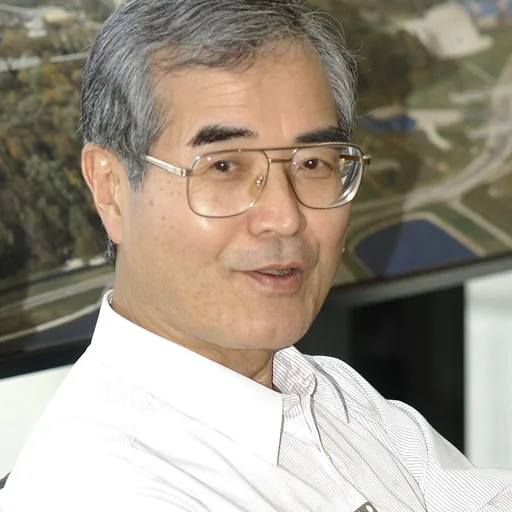
About Yoji Totsuka
Lived 1942 – 2008 (aged 66). Yoji Totsuka was a Japanese physicist and university teacher.
was a Japanese physicist and Special University Professor, emeritus, University of Tokyo. A leader in the study of solar and atmospheric neutrinos, he was a scientist and director at Kamioka Observatory, Super-Kamiokande and the High Energy Physics Laboratory (KEK) in Japan.
Totsuka helped to discover neutrino oscillation and neutrino mass, laying a foundation for the international study of neutrinos.
Early life Totsuka was born March 6, 1942, in Fuji, Shizuoka Prefecture. He completed his B.S. in 1965, his M.S. in 1967 and his Ph.D. in 1972 from the University of Tokyo under the direction of Masatoshi Koshiba.
Career Totsuka held the position of research associate at the University of Tokyo from 1972 to 1979. There he investigated electron–positron collisions.
Totsuka was a full professor in the Institute for Cosmic Ray Research (ICRR) at the University of Tokyo from 1988‐2002. In 1988, after Masatoshi Koshiba retired, Totsuka took his place as organizer and spokesperson of a core group of researchers to promote an expanded Cherenkov detector, the Super-Kamiokande (Super-K) experiment. In 1991 the Japanese government approved a budget for construction of Super-Kamiokande, and construction began. An underground detector containing 50,000 tons of water, beneath Ikenoyama (Mount Ikeno), Following an accident that destroyed over half of the Super-K photomultiplier tubes on 12 November 2001, Totsuka provided key leadership for reconstruction of the detector.
Among the new research were two major findings from the Totsuka group. The data from Kamiokande crucially confirmed the existence of the solar neutrino problem posed by the work of Davis and Bahcall.
Neutrino oscillation involves three types of neutrinos, which can convert between types: electron neutrinos, muon neutrinos and tau neutrinos. Atmospheric neutrinos tend to be muon and electron neutrinos, which can pass through the Earth without being absorbed. It was predicted that the similar numbers of atmospheric neutrinos would come up from the ground and down from the sky. However, Super-Kamiokande found that while equal numbers of electron neutrinos went up and down, fewer muon neutrinos came up than down. A possible explanation was that muon neutrinos that passed through the earth spent more time traveling than those from the atmosphere, and had more time to change into tau neutrinos, which Super-Kamiokande did not directly detect. Analysis showed that muon neutrinos were oscillating into tau neutrinos.
In 2015, the evidence provided by the 1998 and 2001 experiments resulted in a Nobel Prize for Physics, given to Takaaki Kajita from the Super-Kamiokande Observatory and Arthur McDonald from the Sudbury Neutrino Observatory (SNO) "for the discovery of neutrino oscillations, which shows that neutrinos have mass".
Towards the end of his life, Totsuka turned his attention to communicating with the Japanese public about his illness, science, and culture. He maintained a blog, The Fourth Three-Months, where he candidly discussed the extent, progress, and treatment of his cancer. Totsuka also revealed an interest in gardening, particularly the flowers in the area where he spent much of his career, in Mozumi, the village where Super-K is located.
Recognition 2007, Benjamin Franklin Medal in Physics 2004, Order of Culture 1995, EPS Special Prize, European Physical Society 1990, Inoue Prize for Science 1989, Bruno Rossi Prize, (American Astronomical Society) 1988, Nishina Memorial Prize 1987, Asahi Prize
Don’t just read it —
keep it.
Full-length biographies made to live with: read them, listen on the way to work, watch them tonight.
- E-book
- Audio
- Video
Instant download · yours to keep · every purchase keeps this site free
Important facts
People in Yoji Totsuka's life
Named in this biography and alive at the same time


Related people
Same field, nearest in time

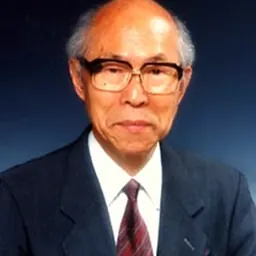
Contemporaries
People whose lives overlapped Yoji Totsuka's
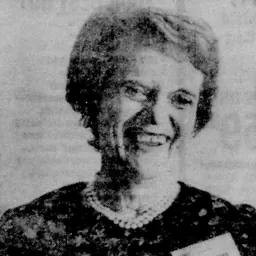
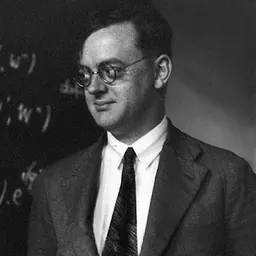

Frequently asked questions
Who was Yoji Totsuka?
Japanese physicist (1942–2008)
When was Yoji Totsuka born?
Yoji Totsuka was born on 6 March 1942 in Fuji.
When did Yoji Totsuka die?
Yoji Totsuka died on 10 July 2008 in Tokyo.
What was Yoji Totsuka's occupation?
Yoji Totsuka was a physicist and university teacher.
What nationality was Yoji Totsuka?
Yoji Totsuka was Japanese.
Sources & further reading
Cite this page
APA: Biography.guide. (2026). Yoji Totsuka. https://biography.guide/yoji-totsuka/
MLA: "Yoji Totsuka." Biography.guide, https://biography.guide/yoji-totsuka/.
Chicago: "Yoji Totsuka." Biography.guide. https://biography.guide/yoji-totsuka/.
Data last updated: 2026-09-20 · Spot an error? Report a correction.
Portrait: Wikimedia Commons · author & licence
Page generated 2026-09-27 04:57 UTC