
Masaru Tomita
Japanese computer scientist
About Masaru Tomita
Born 1957. Masaru Tomita is a Japanese computer scientist, molecular biologist and entomologist, known for Machine translation, Metabolomics and Systems biology.
is a Japanese scientist in the fields of systems biology and computer science, best known as the founder of the E-Cell simulation system and/or the inventor of GLR parser algorithm.
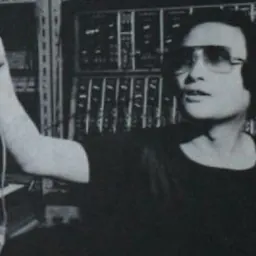
His father was the composer and synthesiser player Isao Tomita.
Biography He received an M.S. (1983) and a Ph.D. (1985) in computer science from Carnegie Mellon University (CMU) under Jaime Carbonell, and three other doctoral degrees in electronic engineering (Kyoto University, 1994), molecular biology (Keio University, 1998), and media and governance (Keio University, 2019).
Career He served a professor of Keio University, Director of the Institute for Advanced Biosciences, and the founder and board member of various spinout companies, including Human Metabolome Technologies, Inc. and Spiber Inc. He is also the co-founder and on the board of directors of The Metabolomics Society.
From Oct. 2005 to Sep. 2007, he served as Dean of Faculty of Environment and Information Studies, Keio University.
At CMU, starting in 1985, Tomita achieved a series of academic promotions from assistant professor to associate professor of computer science and from 1986 he became an associate director of the Center for Machine Translation.
In 1990, he returned to Keio University and served as associate professor, professor, and Dean of the faculty of Environmental Information. At Keio University, he shifted his research emphasis to the studies of molecular biology and systems biology. In 2001, he founded Institute for Advanced Biosciences, Keio University in Tsuruoka City, Yamagata Prefecture, and served as Director of the institute until 2023.
Tomita is a recipient of the Presidential Young Investigator Award from the National Science Foundation of the USA (1988) , IBM Japan Science Prize (2002), IBM Shared University Research Award (2003), Minister of Science and Technology Policy Award (2004), The Commendation for Science and Technology by the Minister of Education, Culture, Sports, Science and Technology (2007), Audi Innovation Award (2016), International Metabolomics Society Lifetime Honorary Fellow (2017), 68th Kahoku Bunka Prize (2019), 5th Bioindustry Award Grand Prize (2021), and 27th Momofuku Ando Award Grand Prize (2023).
Selected papers "Building Working Cells 'in Silico'", Science 1999; 284-5411:80 - 81 "Going for Grand Challenges", Nature 1999; 402:C70 "E-CELL: Software environment for whole cell simulation", Bioinformatics 1999; 15:72-84 "Computerized role models: Japan's push to create a virtual cell signals a new approach to research", Nature 2002; 417 "Multiple high-throughput analyses monitor the response of E. coli to perturbations", Science 2007; 316:593-7
Don’t just read it —
keep it.
Full-length biographies made to live with: read them, listen on the way to work, watch them tonight.
- E-book
- Audio
- Video
Instant download · yours to keep · every purchase keeps this site free
Important facts
People in Masaru Tomita's life
Named in this biography and alive at the same time


Related people
Same field, nearest in time




Contemporaries
People whose lives overlapped Masaru Tomita's

Frequently asked questions
Who is Masaru Tomita?
Japanese computer scientist
When was Masaru Tomita born?
Masaru Tomita was born on 28 December 1957 in Tokyo.
What is Masaru Tomita's occupation?
Masaru Tomita is a computer scientist, molecular biologist and entomologist.
What is Masaru Tomita known for?
Masaru Tomita is known for Machine translation, Metabolomics and Systems biology.
What nationality is Masaru Tomita?
Masaru Tomita is Japanese.
Sources & further reading
Cite this page
APA: Biography.guide. (2026). Masaru Tomita. https://biography.guide/masaru-tomita/
MLA: "Masaru Tomita." Biography.guide, https://biography.guide/masaru-tomita/.
Chicago: "Masaru Tomita." Biography.guide. https://biography.guide/masaru-tomita/.
Data last updated: 2026-09-20 · Spot an error? Report a correction.
Page generated 2026-09-27 05:02 UTC