
About Masaki Kashiwara
Born 1947. Masaki Kashiwara is a Japanese mathematician and university teacher, known for Algebraic analysis, Crystal base and D-module.
is a Japanese mathematician and professor at the Kyoto University Institute for Advanced Study (KUIAS). He is known for his contributions to algebraic analysis, microlocal analysis, D-module theory, Hodge theory, sheaf theory and representation theory. He was awarded the Abel Prize in 2025, and is the award's first recipient from Japan.
Biography Kashiwara was born in Yūki, Ibaraki on January 30, 1947. One of his early mathematical fascinations was the tsurukamezan problem, which asks the number of cranes and turtles given a set number of legs and heads. At UTokyo, Kashiwara was a student of Mikio Sato. His master's thesis, written in Japanese, laid the foundations for the study of D-modules.
He was a plenary speaker at International Congress of Mathematicians in 1978 and an invited speaker in 1990. He is a foreign associate of the French Academy of Sciences and a member of the Japan Academy. He has been involved in Research Institute for Mathematical Sciences (RIMS) since 1978 as a professor and later director.
He received the Abel Prize in 2025, The chairman of the Prize Committee, Helge Holden, described Kashiwara's contributions as "very important in many different areas of mathematics,” and explained that Kashiwara "has solved some open conjectures — hard problems that have been around [and has] opened new avenues, connecting areas that were not known to be connected before.” The award ceremony is planned to be held at Oslo, Norway on May 20, 2025. Kashiwara developed the analytic theory of D-modules, while Joseph Bernstein introduced a similar approach in the algebraic case.
Kashiwara's PhD thesis proves the rationality of the roots of b-functions (Bernstein–Sato polynomials), using D-module theory and resolution of singularities.
Kashiwara's 1973 paper with Sato and Takahiro Kawai on the involutivity of characteristics of microdifferential systems and classification at generic points of microdifferential systems was described by Pierre Schapira as having "an enormous influence on the analysis of partial differential equations".
Books Seminar on Micro-Local Analysis, by Victor Guillemin, Masaki Kashiwara, and Takahiro Kawai (1979), Systems of Microdifferential Equations, by Masaki Kashiwara; notes and translation by Teresa Monteiro Fernandes; introduction by Jean-Luc Brylinski (1983), Introduction to Microlocal Analysis, by Masaki Kashiwara (1986) Foundations of Algebraic Analysis, by Masaki Kashiwara, Takahiro Kawai, and Tatsuo Kimura; translated by Goro Kato (1986), Algebraic Analysis : Papers Dedicated to Professor Mikio Sato on the Occasion of His Sixtieth Birthday, edited by Masaki Kashiwara, Takahiro Kawai (1988), Sheaves on Manifolds : With a Short History by Christian Houzel, by Masaki Kashiwara, Pierre Schapira (1990), Topological Field Theory, Primitive Forms and Related Topics, by Masaki Kashiwara et al.(1998), Physical Combinatorics, Masaki Kashiwara, Tetsuji Miwa, editors (2000), MathPhys Odyssey 2001: Integrable Models and Beyond: In Honor of Barry M. McCoy, Masaki Kashiwara and Tetsuji Miwa, editors (2002), Bases cristallines des groupes quantiques, by Masaki Kashiwara (rédigé par Charles Cochet); Cours Spécialisés 9 (2002), viii+115 pages, D-Modules and Microlocal Calculus, Masaki Kashiwara; translated by Mutsumi Saito (2003), Categories and Sheaves, Masaki Kashiwara and Pierre Schapira (2006),
Don’t just read it —
keep it.
Full-length biographies made to live with: read them, listen on the way to work, watch them tonight.
- E-book
- Audio
- Video
Instant download · yours to keep · every purchase keeps this site free
Important facts
People in Masaki Kashiwara's life
Named in this biography and alive at the same time
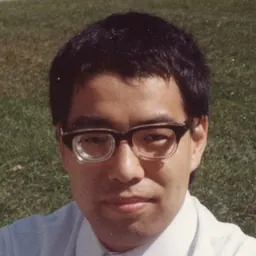

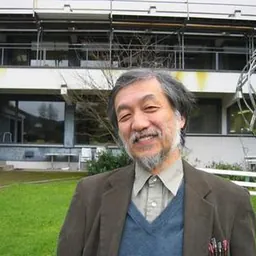


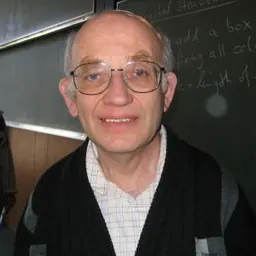


Related people
Same field, nearest in time


Contemporaries
People whose lives overlapped Masaki Kashiwara's



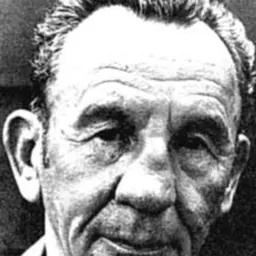
Frequently asked questions
Who is Masaki Kashiwara?
Japanese mathematician born 1947
When was Masaki Kashiwara born?
Masaki Kashiwara was born on 30 January 1947 in Yūki-shi.
What is Masaki Kashiwara's occupation?
Masaki Kashiwara is a mathematician and university teacher.
What is Masaki Kashiwara known for?
Masaki Kashiwara is known for Algebraic analysis, Crystal base, D-module, Kazhdan–Lusztig conjecture, Microlocal analysis and Riemann–Hilbert correspondence.
What nationality is Masaki Kashiwara?
Masaki Kashiwara is Japanese.
Sources & further reading
Cite this page
APA: Biography.guide. (2026). Masaki Kashiwara. https://biography.guide/masaki-kashiwara/
MLA: "Masaki Kashiwara." Biography.guide, https://biography.guide/masaki-kashiwara/.
Chicago: "Masaki Kashiwara." Biography.guide. https://biography.guide/masaki-kashiwara/.
Data last updated: 2026-09-20 · Spot an error? Report a correction.
Page generated 2026-09-27 05:32 UTC