
About Masaichi Nagata
Lived 1906 – 1985 (aged 79). Masaichi Nagata was a Japanese film producer, businessperson, producer, manufacturer and screenwriter.
was a Japanese businessman, film producer, , and a professional baseball team owner. He served as president of Daiei Film and was the self-proclaimed creator of the kaiju Gamera, and was also the owner of the Chiba Lotte Marines-predecessor Daiei Stars, and the first president of the Pacific League. Nagata's relationships with Shōzō and the became a stepping stone for Masaichi's entry into the film industry. He had additional nicknames and .
Either Masaichi or , the inventor of the "Silver Week", was also the inventor of the advertising slogan "Golden Week".
He had never married in life, yet had engaged in multiple love affairs and had biological children and grandchildren. One of his alleged mistresses was the actress Machiko Kyō. He had a particularly close lover who was a student of dance under the actor/comedian Yukitarō Hotaru. She had introduced Yukitarō to Nagata, and Yukitarō's apprentice Yukijirō Hotaru (Yukijirō appeared in the Heisei Gamera trilogy due to Yukitarō's involvement in Gamera vs.) Gyaos.
His biological and non-biological relatives include Hidemasa Nagata (son), a film and television producer (grandson), Masashi Nagata (grandson) who is the current chairman of Nagata Kikaku founded by Masaichi, Ichikawa Raizō VIII's wife Masako Ōta (adopted daughter), and his nephew-in-law is the first professional taiko player in Japan.
Careers Early life Masaichi was born into a ton'ya for yūzen and dye in Kyoto, however his family underwent misfortunes since when Masaichi was three-years-old, and eventually fell apart; loss of the factory by a fire, an elopement by a (employee) and a jochū (housemaid) who stole money when they escaped, and the bankruptcy due to his father being a joint guarantor of his friend. Masaichi attempted to became a kozō for one of his relatives (an executive director of Tokyo Stock Exchange) to reconstruct the family for his parents. To gain a sufficient educational attainment, he attended the (now Tokyo Keizai University), however lost his father due to an intracranial hemorrhage and dropped out the school in despair. As a member of a local seinendan, he diligently contributed in the cleaning of damaged cites following the Great Kantō Earthquake, and subsequently returned to Kyoto.
Nagata was gradually influenced by socialism due to his admire for heroism, and joined a local yakuza Senbongumi afterwards. He, along with , became one of apprentices of , while Nagata defended Suezaburō and his father and the crime boss Sanzaemon; Sanzaemon was a renowned kyōkaku known as the "", and Nagata claimed Sanzaemon definitely not being an actual yakuza, and Suezaburō was the 10th highest taxpayer in Kyoto back then. However, Masaichi's mother strongly deplored the fact that her son became a subject of surveillance by the police, and she expelled Masaichi from the family. It was not uncommon for yakuza syndicates to have connections with show business and entertainment industries, including the below-mentioned Japan Pro Wrestling Alliance, so as the Sasai family. The three (Nagata and Okamoto and Suezaburō) later joined those industries, where Nagata and Okamoto subsequently co-worked in Daiei Film, and various notable filmmakers and actors later emerged under Suezaburō.
Film industry
He joined the Nikkatsu studio in 1925 due to his relationships with the aforementioned Shōzō Makino and the , Experiencing conflicts with the Nikkatsu president, he left the company in 1934, taking many Nikkatsu stars with him, to form Daiichi Eiga. His efforts resulted in the creation of the Daiei Motion Picture Company, where he first served as an executive. thus introducing Japanese cinema to the world. Nagata also spurred the production of Teinosuke Kinugasa's Gate of Hell (1953), the first Japanese color film to be shown abroad, earning both an honorary Academy Award for Best Foreign Language Film and the Palme d'Or at the Cannes Film Festival. Nagata also produced such renowned films as Mizoguchi's Ugetsu (1953) and Sansho the Bailiff (1954), as well as Jokyo (1960) which was entered into the 10th Berlin International Film Festival. On the popular front, Nagata's Daiei was also known for such successful film series as the Zatoichi films starring Shintaro Katsu, the Sleepy Eyes of Death series featuring Raizō Ichikawa, and the Gamera movies. In the early 1950s, Nagata attempted to export Japanese films to obtain foreign currencies for the post-war reconstruction of the Japanese economy; his later efforts to save the declining Japanese cinema resulted in the establishment of a governmental association to export Japanese films and to support productions of kaiju and tokusatsu genres in particular for foreign currencies.
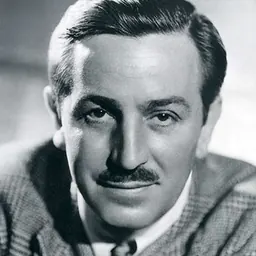
Disney-related businesses Nagata was also known for his friendship with Walt Disney where Disney called him a "brother"; Nagata became an avid fan of the Disneyland and subsequently assumed the presidency of the Disney Japan. He had also associated in other Disney-related businesses such as domestic distributions and dubbings of Disney films by Daiei, publication of Bambi, a Life in the Woods, promotion of the Tokyo Disneyland, construction of the Nara Dreamland (which also affected the opening of the Yokohama Dreamland), and so on. Nagata also established Daiei's department of western films due to influences from Disney, and had started distributing foreign films. Additionally, he produced a documentary film as he was inspired by Walt Disney Productions' True-Life Adventures series.
Baseball
During the age when many Japanese film studios owned professional baseball teams, Nagata served as owner first of the Daiei Stars, and then of the Daimai Orions when the Stars merged with the Mainichi Orions in 1958. He was inducted into the Japanese Baseball Hall of Fame in 1988. Masaichi later became the second president of the Tokyo Racehorse Owners' Association, and contributed in the establishment of the Japan Racing Association as a commissioner.
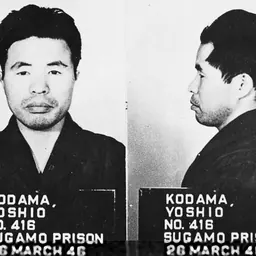
Nagata's competence for managements were also demonstrated in his performances as the first president and a temporal manager of the sports newspaper Tokyo Sports (due to his connection with Yoshio Kodama) to make it into a major national daily, as the business delegate and the owner of Pepsi-Cola Company in Japan, as a sodanyaku of the Japan Pro Wrestling Federation, and as a commissioner (jp) of the Japan Sumo Association.
Nagata was also a patronage of Schools of the Sacred Heart in Japan (jp), and contributed in its expansion notably by contriving resources through managing the palace of the Kuni-no-miya house.
Nagata also became an influential figure on political circles and was regarded as a political fixer. however his position also made him as one of 14 suspects for the corruption of the Bushu Railway (jp), however five of them including Nagata were eventually acquitted. Masaichi declared producing films theming the life of Nichiren is his lifework; he produced Nichiren and the Great Mongol Invasion (1958) and Nichiren (1979), and a number of worshippers of Nichiren-shū were appointed for the latter.
Legacy The 2015 novel was a tribute to Masaichi, which themed Gamera and Nichiren and the Mongol invasions of Japan and set Nichiren as the current summoner of the "Black Tortoise" (Gamera).
The aforementioned actor Yukijirō Hotaru played Nagano, a character based on Masaichi in the 2020 biopic film Nezura 1964, which focused on the production of Giant Horde Beast Nezura (jp), the scrapped predecessor of Gamera, the Giant Monster.
Selected filmography
Sisters of the Gion (1936) Osaka Elegy (1936) Rashomon (1950) Miss Oyu (1951) Tetsu no tsume (1951) aka Claws of Steel The Tale of Genji (1951) Ugetsu (1953) aka Tales of Ugetsu Gate of Hell (1953) Sansho the Bailiff (1954) The Crucified Lovers (1954) Princess Yang Kwei-Fei (1955) The Phantom Horse (1955) Shin Heike Monogatari (1955) Warning from Space (1956) Street of Shame (1956) Zangiku monogatari (1956) Suzakumon (1957) The Loyal 47 Ronin (1958) The Snowy Heron (1958) Enjō (1958) Floating Weeds (1959) Fires on the Plain (1959) Odd Obsession (1959) Jokyo (1960) Her Brother (1960) An Actor's Revenge (1963) Gamera (1965) The Hoodlum Soldier (1965) Shiroi Kyotō (1966) Gamera vs. Barugon (1966) Daimajin trilogy (1966) Zatoichi the Outlaw (1967) Nichiren (1979)
Awards Kikuchi Kan Prize (1954) Japanese Medal of Honor with purple ribbon (1955) Ordre des Arts et des Lettres (1961) Japanese Medal of Honor with blue ribbon (1966)
Don’t just read it —
keep it.
Full-length biographies made to live with: read them, listen on the way to work, watch them tonight.
- E-book
- Audio
- Video
Instant download · yours to keep · every purchase keeps this site free
Important facts
People in Masaichi Nagata's life
Named in this biography and alive at the same time






Related people
Same field, nearest in time



Contemporaries
People whose lives overlapped Masaichi Nagata's
Frequently asked questions
Who was Masaichi Nagata?
Japanese film producer
When was Masaichi Nagata born?
Masaichi Nagata was born on 21 January 1906 in Kyoto.
When did Masaichi Nagata die?
Masaichi Nagata died on 24 October 1985 in Tokyo.
What was Masaichi Nagata's occupation?
Masaichi Nagata was a film producer, businessperson, producer, manufacturer and screenwriter.
What nationality was Masaichi Nagata?
Masaichi Nagata was Japanese.
Sources & further reading
Cite this page
APA: Biography.guide. (2026). Masaichi Nagata. https://biography.guide/masaichi-nagata/
MLA: "Masaichi Nagata." Biography.guide, https://biography.guide/masaichi-nagata/.
Chicago: "Masaichi Nagata." Biography.guide. https://biography.guide/masaichi-nagata/.
Data last updated: 2026-09-22 · Spot an error? Report a correction.
Page generated 2026-09-27 05:24 UTC