
About Mary Treat
Lived 1830 – 1923 (aged 92). Mary Treat was an American botanist, zoologist, entomologist, botanical collector, writer and scientific collector.
Mary Lua Adelia Treat (née Davis; September 7, 1830 – April 11, 1923) was an American naturalist, writer, and correspondent of Charles Darwin. Treat's contributions to both botany and entomology were extensive. She discovered five species of plants and animals that were named for her, including an amaryllis called Zephyranthes treatae, an oak gall wasp species called Belonocnema treatae, and three ant species - Aphaenogaster mariae, Aphaenogaster treatae, and Dolichoderus mariae.
Early life Treat was born Mary Davis to a middle-class family in Trumansburg, New York. At nine years old, she moved with her family to Ohio, where she attended public and private girls' schools. Davis married Dr. Joseph Burrell Treat, an abolitionist and lecturer, in 1863. The couple lived in Iowa until 1868, when they moved to Vineland, New Jersey.
Career and research After moving to New Jersey, Treat began her scientific studies in earnest, and collaborated with her husband on entomological articles and research.
Following her separation from her husband in 1874, Treat supported herself by publishing popular science articles for periodicals such as Harpers and Queen. Beginning in 1870, she published popular naturalist pieces in Garden and Forest, Hearth and Home, Harper's, and Lippincott's.
In 1882, Treat published the book Injurious Insects of the Farm and Field, which was reprinted five times. She also collected plants and insects for other researchers, including Asa Gray, through whom she was introduced to Charles Darwin. Treat wrote letters to engage in botanical and entomological discourse not only with Darwin and Gray, but Auguste Forel and Gustav Mayr as well. She traveled to Florida several times between 1876 and 1878 to investigate insectivorous plants further. On one of these trips, she discovered the amaryllis species Zephyranthes treatae (named after her by Sereno Watson) and discovered that another plant was not extinct.
For her contributions to the field of entomology, Samuel Hubbard Scudder made Treat a member of the Cambridge Entomological Society. in which Treat describes the fly-catching activities of Drosera, commonly known as sundew plants. Treat and Darwin’s recorded correspondence extends over five years around the period of time when Darwin was researching, and then publishing, on carnivorous plants. They predominantly discuss these plants in their correspondence (although not the only theme, they also discussed controlling sex in butterflies), and Treat openly critiqued Darwin’s hypotheses. One notable exchange concerned the bladderwort plant, Utricularia clandestina.thumb Darwin’s teacher and mentor at Cambridge, John Stevens Henslow, had a clear understanding of the morphology of Utricularia (bladderwort) plants, but was not able to understand working mechanics of their traps. Darwin incorrectly concluded that animals entered the traps by forcing their heads through the slit-like orifice with their heads serving as a wedge. In a letter to Treat he informed her that this subject drove him ‘half-mad’. Treat became deeply absorbed in this problem, researching intensively. Through long hours of observing the trapping sequence under her microscope she realised that the hairs around the entrance to the trap were sensitive and part of the process by which Utricularia traps opened, contributing new knowledge on the range of microscopic animal prey caught in these traps and the digestive processes they were subjected to. Treat described it as ‘these little bladders... in truth like so many stomachs, digesting and assimilating animal food’.
By making such public affirmations of Treat’s scientific work, in Tina Gianquitto’s opinion Darwin legitimized her role as a scientist, though this is not completely uncontested among historians. With the advent of the Internet, Treat's correspondence with Darwin has been analyzed in more detail.
Legacy
The best archive of Treat's life is available at the Vineland Historical and Antiquarian Society.
The Harvard University herbarium has a selection of Treat's specimens sent to Asa Gray and examples of their original correspondence. The original letters are, in the main, available to view through The Darwin Correspondence Project and at Cambridge University Library.
The ant species Aphaenogaster mariae is named after Treat; it was first described in 1886, following her collecting specimens in Florida and sending them to Auguste Forel. Likewise, the ant species Aphaenogaster treatae was named after Treat by Forel in honor of her discovery of ant specimens in Florida and New Jersey,
Poet Jessy Randall's 2022 collection Mathematics for Ladies includes a poem honoring Treat.
Works Many of Treat's works detailed her observations of insects and birds in a style accessible to a popular audience.
Chapters on Ants (1879) Injurious Insects of the Farm and Garden (1882) Home Studies in Nature (1885) Through a Microscope (1886) My Garden Pets (1887) Asa Gray: His Life and Work (1890)
Don’t just read it —
keep it.
Full-length biographies made to live with: read them, listen on the way to work, watch them tonight.
- E-book
- Audio
- Video
Instant download · yours to keep · every purchase keeps this site free
Important facts
more
Mary Adelia Davis TreatPeople in Mary Treat's life
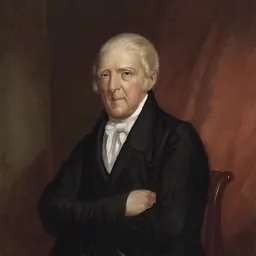
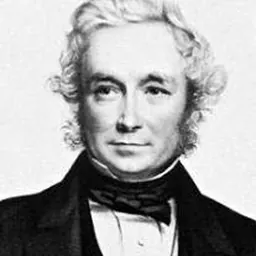
Named in this biography and alive at the same time




Related people
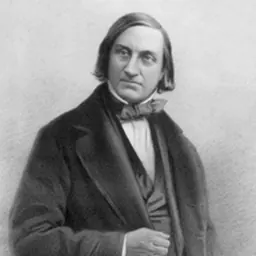
Same field, nearest in time




Contemporaries
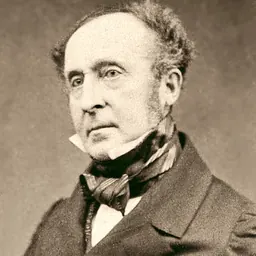
People whose lives overlapped Mary Treat's


Frequently asked questions
Who was Mary Treat?
American biologist, botanist and entomologist (1830-1923)
When was Mary Treat born?
Mary Treat was born on 7 September 1830 in Trumansburg.
When did Mary Treat die?
Mary Treat died on 11 April 1923 in Pembroke.
What was Mary Treat's occupation?
Mary Treat was a botanist, zoologist, entomologist, botanical collector, writer and scientific collector.
What nationality was Mary Treat?
Mary Treat was American.
Sources & further reading
Cite this page
APA: Biography.guide. (2026). Mary Treat. https://biography.guide/mary-treat/
MLA: "Mary Treat." Biography.guide, https://biography.guide/mary-treat/.
Chicago: "Mary Treat." Biography.guide. https://biography.guide/mary-treat/.
Data last updated: 2026-09-20 · Spot an error? Report a correction.
Page generated 2026-09-27 05:34 UTC