
Samuel Hubbard Scudder
American entomologist and paleontologist
About Samuel Hubbard Scudder
Lived 1837 – 1911 (aged 74). Samuel Hubbard Scudder was an American paleontologist, lepidopterist, zoologist, paleoentomologist, scientific illustrator and entomologist.
Samuel Hubbard Scudder (April 13, 1837 – May 17, 1911) was an American entomologist and paleontologist. He was a leading figure in entomology during his lifetime and the founder of insect paleontology in America. In addition to fossil insects, he was an authority on butterflies (Lepidoptera) and grasshoppers (Orthoptera).
Biography Scudder was born on April 13, 1837, in Boston, Massachusetts, the son of Charles Scudder and Sarah Lathrop (Coit) Scudder. His father was a successful merchant, and both parents had Puritan roots dating back to the founding of the Massachusetts Bay Colony in the 1620s. He was raised in a strict Calvinist Congregational household. One of his younger brothers, Horace Scudder, became a noted author and editor of the Atlantic Monthly, while his niece Vida Dutton Scudder was a writer and social activist.
Scudder attended Boston Latin School, and then enrolled in Williams College in 1853 at the age of 16. He studied with naturalist Paul Chadbourne and geologist Ebenezer Emmons. Under their influence, Scudder developed an interest in natural history, especially entomology. He became an ardent collector of butterflies in the nearby Berkshire Hills. By the age of 19, Scudder was committed to pursuing a career studying insects.
Scudder graduated from Williams in 1847 at the head of his class. He then entered the Lawrence Scientific School at Harvard to study under Louis Agassiz, the most influential scientist in America at the time. After studying with Agassiz for four years, he received a Bachelor of Science degree in 1862, and then continued to work for Agassiz for another two years.
Scudder became a leading figure in American entomology, and was especially noted for his work with grasshoppers (Orthoptera), butterflies (Lepidoptera), and insect paleontology. Although he made significant contributions in all these areas, many of his contemporaries felt Scudder was most notable for his study of grasshoppers. He was a world authority on Orthoptera classification, biology, and distribution. During his career he wrote 180 papers on grasshoppers and described 106 genera and 630 species.
In 1889 Scudder completed his monumental treatise, Butterflies of the Eastern United States and Canada incorporating 30 years of work on the physiology, life history, distribution, and classification of butterflies. This publication cemented his reputation as a leading lepidopterist of his day, and remained a standard and influential work for many years. In addition to numerous scientific papers, Scudder also wrote several popular accounts of butterflies for the general public.
In 1865, Scudder wrote his first paper on fossil insects, Devonian Insects of New Brunswick. first editor of Science magazine;
In 1867, Scudder married Ethelinda Jane Blatchford, who died in 1872. Their only son, Gardner, was close to his father and accompanied him on many of his field trips. Gardner died of tuberculosis in 1896. At about the same time, Scudder first showed signs of Parkinson's disease, and by 1902, his disability forced him to retire. He gave his personal insect collections to the Museum of Comparative Zoology at Harvard and his library to the Boston Society of Natural History. He died in Boston on May 17, 1911, after several years of seclusion. Butterflies: Their Structure, Changes, and Life Histories (1881) Butterflies of the Eastern United States and Canada (1889) The Fossil Insects of North America (two volumes, 1890) Index to the Known Fossil Insects of the World (1891) Tertiary Rhynchophorous Coleoptera of the United States (1893) The Life of a Butterfly (1893) Frail Children of the Air: Excursions into the World of Butterflies (1895) Revision of the Orthopteran Group Melanopli (1897) Everyday Butterflies (1899) Catalogue of the Described Orthoptera of the United States and Canada (1900) Adephagous and Clavicorn Coleoptera from the Tertiary Deposits at Florissant, Colorado (1900) Index to North American Orthoptera (1901)
Don’t just read it —
keep it.
Full-length biographies made to live with: read them, listen on the way to work, watch them tonight.
- E-book
- Audio
- Video
Instant download · yours to keep · every purchase keeps this site free
Important facts
People in Samuel Hubbard Scudder's life
Named in this biography and alive at the same time

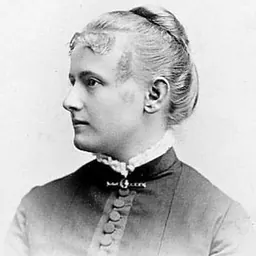

Related people
Same field, nearest in time
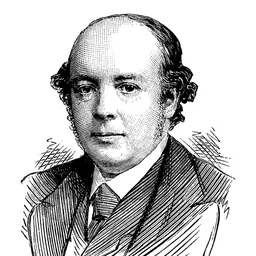
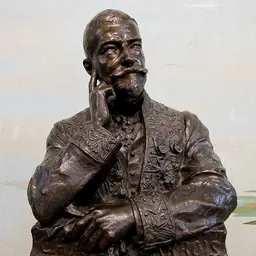
Contemporaries
People whose lives overlapped Samuel Hubbard Scudder's



Frequently asked questions
Who was Samuel Hubbard Scudder?
American entomologist and paleontologist (1837–1911)
When was Samuel Hubbard Scudder born?
Samuel Hubbard Scudder was born on 13 April 1837 in Boston.
When did Samuel Hubbard Scudder die?
Samuel Hubbard Scudder died on 17 May 1911 in Boston.
What was Samuel Hubbard Scudder's occupation?
Samuel Hubbard Scudder was a paleontologist, lepidopterist, zoologist, paleoentomologist, scientific illustrator and entomologist.
What nationality was Samuel Hubbard Scudder?
Samuel Hubbard Scudder was American.
Sources & further reading
· Wikipedia: Samuel Hubbard Scudder
· DBpedia: Samuel Hubbard Scudder
Cite this page
APA: Biography.guide. (2026). Samuel Hubbard Scudder. https://biography.guide/samuel-hubbard-scudder/
MLA: "Samuel Hubbard Scudder." Biography.guide, https://biography.guide/samuel-hubbard-scudder/.
Chicago: "Samuel Hubbard Scudder." Biography.guide. https://biography.guide/samuel-hubbard-scudder/.
Data last updated: 2026-09-20 · Spot an error? Report a correction.
Page generated 2026-09-27 05:30 UTC