
About Mary MacSwiney
Lived 1872 – 1942 (aged 69). Mary MacSwiney was an Irish politician.
Mary MacSwiney (pronounced 'MacSweeney'; ; 27 March 1872 – 8 March 1942) was an Irish republican activist and politician, as well as a teacher.
MacSwiney was thrust into both the national and international spotlight in 1920 when her brother Terence MacSwiney, then the Lord Mayor of Cork, went on hunger strike in protest of British policy in Ireland. Mary, alongside her sister-in-law Muriel MacSwiney kept daily vigil over Terence and effectively became spokespeople for the campaign. Terence MacSwiney would ultimately die in October 1920, and from then on Mary MacSwiney acted as an unofficial custodian of his legacy, becoming a dogged and zealous advocate of Irish Republicanism.
Following a high-profile seven-month tour of the United States in 1921 in which she and Muriel raised the profile of the Irish independence movement, Mary was elected to Dáil Éireann amidst the ongoing Irish War of Independence. During debates of the Anglo-Irish Treaty, a proposed peace deal between the British and the Irish, MacSwiney was amongst the most outspoken advocates against it. During the ensuing Irish Civil War, MacSwiney supported the Anti-Treaty IRA and was imprisoned for it, resulting in her partaking in two hunger strikes herself.
Following the Sinn Féin/Fianna Fáil split in 1926, she became deputy leader of Sinn Féin in 1927. As Sinn Féin and hardline republicans became increasingly sidelined politically in the decade following the split, MacSwiney reacted by endorsing violence carried out by the IRA. Towards the end of her life, she formally endorsed the World War II era leadership of the IRA under Seán Russell, who would go on to carry out the "S-Plan", a bombing campaign of Northern Ireland and England designed to weaken the UK in the face of Germany.
Early life Born in London to an Irish father and English mother, she returned to Ireland with her family at the age of six and was educated at St Angela's School in Cork. Her father was a fervent Irish nationalist and imparted those values to all of his children, including Mary. which was normally reserved for men. She worked at Hillside Convent, Farnborough, and considered becoming a nun, beginning a one-year noviciate with the Oblates of St Benedict, Ventnor.
On the death of her mother in 1904, she returned to Cork to look after the younger members of her family and took a post at St Angela's where she had been a pupil. She attended the first meeting of the Munster Women's Franchise League, becoming a committee member. She opposed militancy within the Irish suffrage movement, and her nationalist views caused irritation to other members.
During the Easter Rising of 1916, there was mass confusion in Cork City over whether or not the Volunteers should mobilise, due to conflicting orders. Unsure of what to do, Terence MacSwiney and other volunteers held up in Volunteers Hall in the city, where they were arrested by the British authorities. Mary, who had been running messages for the Volunteers, attempted to return to teaching at St Angela's but she too was arrested later in the week during class. In the aftermath she was dismissed from her teaching position for her republican activities. Several months later, upon her release from prison, she and her sister Annie re-founded Scoil Íte, a sister school to Patrick Pearse's St. Enda's School, a Gaelscoil she would be involved with for the rest of her life.
At the 1921 Irish elections, MacSwiney was elected for Sinn Féin to the Cork Borough constituency (taking her seat in Dáil Éireann), taking the seat that had once been held by her brother. Another brother, Seán, was also elected to the Dáil in a different Cork constituency.
Following the signing of Anglo-Irish Treaty, MacSwiney made clear her utter opposition to it during debates in the Dáil between December 1921 to January 1922, declaring she would prefer to resume the war:
On 21 December MacSwiney spoke for 2 hours and 41 minutes against the treaty, the longest speech by any member during the debates, criticising the agreement from all angles. Her speech was described as being "uncompromisingly Republican" and drew the ire of many of the pro-treaty TDs, Arthur Griffith and Ernest Blythe amongst them. Ultimately, TDs would vote to endorse the treaty by a vote of 64 to 57. The result was devastating to MacSwiney, and in the aftermath, she publicly endorsed threats of violence by the Irish Republican Army against pro-treaty TDs.
April 1923 hunger strike En route to Liam Lynch's funeral, she was arrested when the car she was in stopped, and she was recognised. She was taken with Kathleen O'Callaghan to Kilmainham Gaol. She began another protest, fearless of death, being "ready for it". They continued to be interned (held without charge), but it was explained she was distributing anti-government propaganda. After nineteen days of hunger strike she was due to be released on 30 April 1923. The Governor allowed O'Callaghan to go, but stayed a decision on MacSwiney. Most of the women on hunger strike were sent to the North Dublin Union. The 1923 Irish Hunger Strikes saw several thousand of the 12,000 republican prisoners on hunger strikes in Irish prisons/internment camps across Ireland, protesting the continuation of internment without charge/trial, demanding immediate release or status as political prisoners.
She retained her seat at the 1923 general election and along with other Sinn Féin members she refused to enter the Dáil.
Vice-President of post-De Valera Sinn Féin
In March 1926 Sinn Féin held its annual Ard Fheis, and the topic on the agenda was whether the party should accept the legitimacy of the Dáil and enter it. De Valera had come to believe that abstentionism was not a workable tactic and now saw the need to become the elected government of the Dáil and republicanise the Free State from within. De Valera proposed a motion to accept the Free State Constitution (contingent on the abolition of the Oath of Allegiance), but it was narrowly defeated by a vote of 223 to 218, with MacSwiney amongst those starkly opposed. De Valera immediately resigned from the party and walked out, taking the great majority of Sinn Féin support with him. De Valera and his supporters would go on to immediately form a new Irish republican party, Fianna Fáil. Following the split, MacSwiney became vice-president of what remained of Sinn Féin. She had not foreseen De Valera walking out of the party, believing he would accept the vote against his motion and was greatly bittered when he left, condemning him.
MacSwiney continued her efforts to reinvigorate the party. However, when De Valera's Fianna Fáil won the 1932 election, she felt there was less need for the extreme oppositional position she had previously taken. However, the fragmentation of the rigid republican side continued with the membership also drifting to the left, which MacSwiney opposed. In 1933 MacSwiney resigned from Cumann na mBan, and founded Mná na Poblachta instead. In 1934 she resigned from Sinn Féin when Fr Michael O'Flanagan was elected president since he was a Free State civil servant.
Renewed support of the IRA and violent action
In 1936 the IRA killed 72-year-old retired British vice-admiral Boyle Somerville and an alleged informer John Egan. De Valera unambiguously condemned the killings but MacSwiney equivocated, stating "that if any man was shot by the IRA, he was shot for being a spy". The entire incident pushed MacSwiney into pulling what little support she had been giving to Fianna Fáil and into backing violent militant republicanism. When newly elected IRA Chief-of-Staff Seán Russell reached out to republican former members of the 2nd Dáil to help legitimise his position, MacSwiney responded and supported him. In December 1938 MacSwiney and six others signed over what supposed they had as the "remaining legitimate government of Ireland" to the IRA Army Council. Russell would use this new found authority to "declare war" on England and begin the "S-Plan", a bombing campaign of Northern Ireland and England carried out by the IRA as World War II began.
MacSwiney suffered a heart attack in 1939, which would ultimately contribute towards her death on 8 March 1942 aged 69. De Valera offered to attend, but her sister Annie blankly refused.
Legacy In the mid-2000s, the Blackpool overpass on Dublin Street (N20) in Cork was officially designated as the "Máire MacSwiney Bridge", but the name was not marked until July 2025, when Cork City Council installed a bilingual commemorative sign reading "Droichead Máire Nic Suibhne / Máire MacSwiney Bridge" on the eastern side of the overpass.
Personal life In 1923, Terence's widow Muriel left Ireland forever, dismayed that the Anti-Treaty IRA has lost the Irish Civil War. She relocated to continental Europe, taking her daughter Máire with her. Máire would grow up primarily in Germany and her communication with the MacSwiney family was severely limited, as Muriel had fallen out with them. However, by the 1930s Máire pined to return to Ireland and made contact with Mary. Mary, for her part, claimed that upon Terence's death, he had placed Máire in both Mary and Muriel's joint custody. Mary journeyed to Switzerland, where she met up with Máire who had run away from boarding school, and together the two returned to Ireland. Because Mary refused to acknowledge the legitimacy of the Irish state, she had no passport, and Éamon De Valera had to see to it that Mary was granted a special one that allowed her to travel.
Máire finished her education in Scoil Íte which MacSwiney had founded and continued to manage and work in as a teacher. Her school, educational advances and feminism were recognised as progressive.
Don’t just read it —
keep it.
Full-length biographies made to live with: read them, listen on the way to work, watch them tonight.
- E-book
- Audio
- Video
Instant download · yours to keep · every purchase keeps this site free
Important facts
People in Mary MacSwiney's life
Named in this biography and alive at the same time

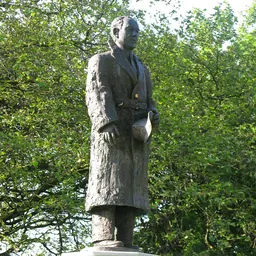

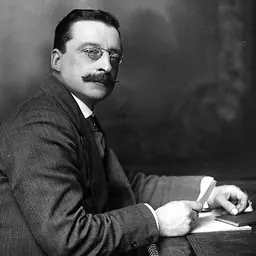



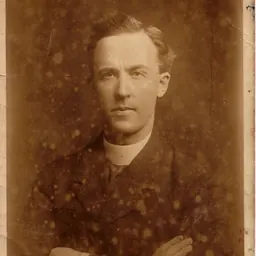
Related people
Same field, nearest in time


Contemporaries
People whose lives overlapped Mary MacSwiney's


Frequently asked questions
Who was Mary MacSwiney?
Irish politician and educationalist (1872-1942)
When was Mary MacSwiney born?
Mary MacSwiney was born on 27 March 1872 in London.
When did Mary MacSwiney die?
Mary MacSwiney died on 8 March 1942 in Cork.
What was Mary MacSwiney's occupation?
Mary MacSwiney was a politician.
What nationality was Mary MacSwiney?
Mary MacSwiney was Irish.
Sources & further reading
Cite this page
APA: Biography.guide. (2026). Mary MacSwiney. https://biography.guide/mary-macswiney/
MLA: "Mary MacSwiney." Biography.guide, https://biography.guide/mary-macswiney/.
Chicago: "Mary MacSwiney." Biography.guide. https://biography.guide/mary-macswiney/.
Data last updated: 2026-09-20 · Spot an error? Report a correction.
Page generated 2026-09-27 05:29 UTC