
Mary Jane Richardson Jones
American abolitionist, suffragist, and activist
About Mary Jane Richardson Jones
Lived 1819 – 1910 (aged 90–91). Mary Jane Richardson Jones was an American abolitionist, activist and suffragist.
Mary Jane Richardson Jones (c. 1819 – December 26, 1909) was an American abolitionist, philanthropist, and suffragist. Born in Tennessee to parents who were free African-Americans, Jones and her family moved to Illinois. With her husband, John, she was a leading African-American figure in the early history of Chicago. The Jones household was a stop on the Underground Railroad and a center of abolitionist activity in the pre-Civil War era, helping hundreds of fugitive slaves flee slavery.
After her husband's death in 1879, Jones continued to support African-American civil rights and advancement in Chicago, and became a suffragist. Jones was active in the women's club movement and mentored a new generation of younger black leaders, such as Fannie Barrier Williams and Ida B. Wells. Historian Wanda A. Hendricks has described her as a wealthy "aristocratic matriarch, presiding over the [city's] black elite for two decades." Richardson. Richardson was one of the middle children among nine born to the Richardsons between 1810 and 1845.
In the 1830s, Richardson moved with her family to the Mississippi River port of Alton, Illinois. As a teenager, she witnessed the riots in Alton surrounding the murder of Elijah Parish Lovejoy, an anti-slavery newspaperman. Lovejoy's funeral passed by Richardson's father's house, an event which she "vividly" remembered years later.
Marriage and move to Chicago
In 1841, Richardson married John Jones, taking his surname. He was a free black man originally from North Carolina. Jones had first met him in Tennessee and he moved to Alton to woo her.
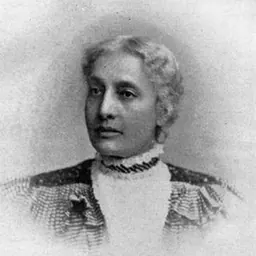
The couple arrived in the city with only $3.50 , pawning a watch to afford rent and the purchase of two stoves. A black grocer, O. G. Hanson, gave the Joneses $2 in credit . Jones kept track of those she had assisted, writing letters to many former fugitives and forming a network of aid centered on her and John. alt=Photograph of Mary Richardson Jones taken in 1883 by Baldwin & Drake in Chicago, Illinois
In 1861, the Joneses helped found Olivet Baptist Church, which contained the first library open to black Chicagoans.
Later life and continued activism Jones, described by historian Richard Junger as a woman of strong "convictions and abilities", continued to advocate for integration and civil rights after the war ended. In 1867, Theodore Tilton, a New York journalist, planned a visit to Crosby's Opera House in Chicago to give a lecture. Jones wrote to warn him that the audience was to be segregated. Upset by this disclosure, Tilton successfully pressed the Opera House to integrate its seating for his talk and presented tickets to Jones, reading the letter she had written to him to the audience. The same year, the Great Chicago Fire destroyed both the Jones family's home and John's four-story tailoring business, together valued at $85,000 (equivalent to $ million in ). The family built a new house near Prairie Avenue, while John's tailoring business was also restarted at a new location; he continued to work until retiring in 1873. Her husband's estate was valued at over $70,000 (equivalent to approximately $ million in ); he had been one of the city's richest men. John's tailoring business was taken over by Lloyd Garrison Wheeler, a family friend. he adds that she was considered the center of black society in Chicago until the 1890s. Historian Wanda A. Hendricks has described her as a wealthy "aristocratic matriarch, presiding over the [city's] black elite for two decades." Her financial support enabled the founding of the Wheatley Home for Girls, which supported newly arrived migrants from rural areas, in 1908. Once she decided to support the cause of women's voting, Jones hosted Susan B. Anthony, Carrie Chapman Catt, and others at her home for meetings.
Recognition In 2004, the City of Chicago designated the site of the John and Mary Jones House as a Chicago Landmark. The Chicago Park District named a park in her honor in 2005; Jones Park is next to South Loop Elementary School and is bounded by 13th Street, Federal Street, and Plymouth Court.
Don’t just read it —
keep it.
Full-length biographies made to live with: read them, listen on the way to work, watch them tonight.
- E-book
- Audio
- Video
Instant download · yours to keep · every purchase keeps this site free
Important facts
Family & relationships
People in Mary Jane Richardson Jones's life
Named in this biography and alive at the same time


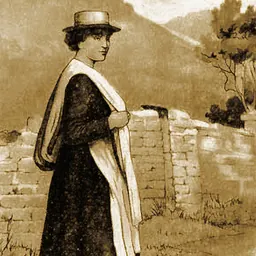
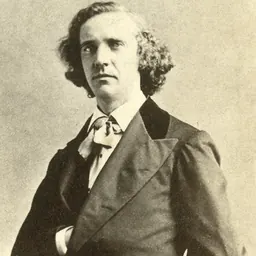
Related people
Same field, nearest in time



Contemporaries
People whose lives overlapped Mary Jane Richardson Jones's

Frequently asked questions
Who was Mary Jane Richardson Jones?
American abolitionist, suffragist, and activist (1819–1909)
When was Mary Jane Richardson Jones born?
Mary Jane Richardson Jones was born in 1819 in Memphis.
When did Mary Jane Richardson Jones die?
Mary Jane Richardson Jones died in 1910 in Chicago.
What was Mary Jane Richardson Jones's occupation?
Mary Jane Richardson Jones was an abolitionist, activist and suffragist.
What nationality was Mary Jane Richardson Jones?
Mary Jane Richardson Jones was American.
Sources & further reading
· Wikipedia: Mary Jane Richardson Jones
· DBpedia: Mary Jane Richardson Jones
Cite this page
APA: Biography.guide. (2026). Mary Jane Richardson Jones. https://biography.guide/mary-jane-richardson-jones/
MLA: "Mary Jane Richardson Jones." Biography.guide, https://biography.guide/mary-jane-richardson-jones/.
Chicago: "Mary Jane Richardson Jones." Biography.guide. https://biography.guide/mary-jane-richardson-jones/.
Data last updated: 2026-09-26 · Spot an error? Report a correction.
Page generated 2026-09-27 05:16 UTC