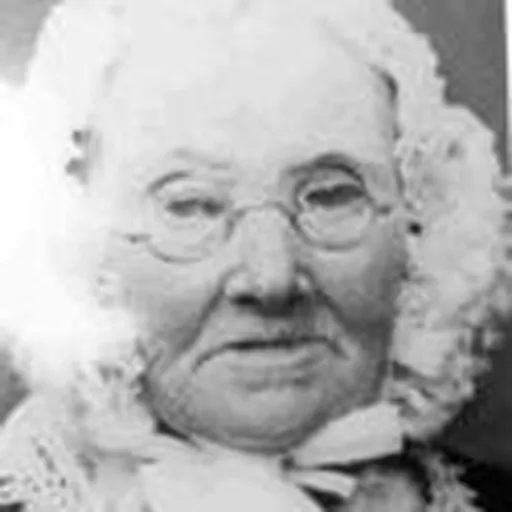
About Mary Hyde
Lived 1779 – 1864 (aged 85). Mary Hyde was an Australian and British businessperson.
Mary Lord née Hyde (c. 19 February 1779 – 1 December 1864) was an English Australian woman who in the period 1855 to 1859 sued the Commissioners of the City of Sydney and won compensation for the sum of over £15,600 (plus costs) for the inundation of her property at Botany.
Hyde is noted for her pertinacity. and Mary was only able to sue as, being a widow, she was no longer married.
Having experienced life as a woman in Victorian society, single, married and widowed, Mary became concerned with what today would be called a feminist issue. She stipulated in her will that any bequests made to her daughters and granddaughters were to be given to them in their own right and that their husbands should not have any say. She attempted to give her daughters and granddaughters control over their own inheritances. The law of the day overrode her stated wishes. Prior to the Married Woman's Property Act 1882 (a rallying point for many first-wave feminists, passed after years of intense political lobbying) in England and similar colonial legislation, a married woman could not independently own property, and had no distinct legal personality. Any property that she had owned as a single woman, or that she inherited as a married woman whether in goods, money, or land, passed into the ownership of her husband.
Life Hyde was born in Halesowen, Worcestershire, England in 1779, the eldest child of Edward Hyde and Sarah Blunn. Mary also had a younger brother John who was born two years later.
After being transported to Sydney as a teenage convict, Mary became the unmarried partner of Captain John Black (1778–1802) the privateer (state-sanctioned pirate), whaler, ship's captain, navigator and master mariner who named King Island; and later the wife of Simeon Lord (1771–1840) a wealthy entrepreneurial emancipist merchant and magistrate.
Convict In November 1795, at the age of 16, Mary was accused of stealing items of clothing from Francis Deakin, her employer, including 1 black silk cloak, 1 muslin shawl, 1 cotton gown, 1 dimity petticoat, 2 pair of cotton stockings and 1 pair of scissors. On 21 March 1796, at the age of 17, Mary, who also used her mother’s name as an alias, was sentenced at the Warwickshire Assizes to seven years' transportation to New South Wales for theft. She was not transported until 1798.
On 18 July 1798 Mary arrived in Sydney, one of 95 female convicts on board the Britannia, a whaling ship that had also previously brought convicts to Sydney in May 1797. Females were in short supply in the colony, and competition for the newly arrived female convicts on that day was described by David Collins in An Account of the English Colony in New South Wales as like a cattle auction. The lot of the women who arrived that day was to be a servant or a "wife" to a stranger, or a hut-keeper for convict males at Parramatta for those who would not go with one man. As Mary stayed in Sydney, it can only be assumed that she was initially chosen by one of the men in the "cattle auction" on board the deck of the Britannia II.
Relationship with John Black In August 1798, when they were both 19 years old, Mary met John Black, a ship's officer who had survived the mutiny on the Lady Shore in 1797, and who that month had arrived in Sydney on board the Indispensable. Mary came under John’s "protection" and fell pregnant almost immediately, and they went on to have two children. Mary, however, was often "keeping the home fires burning" as John was away for months at a time either whaling or otherwise working his trade as a ship's captain. The longest time that Mary got to spend with Black was from 11 January 1801 to 1 January 1802, when he entered into the liquor trade and established a shop on his leased land.
On 31 May 1799, Mary gave birth at home to her first child, John Henry Black (1799–1867). Home since March had been on land leased from the government by John Black, near what is now De Mestre Place in Sydney, on the eastern side of George Street, between Hunter Street and Martin Place. Three days after the birth Black again sailed, and Mary was left to care for her newborn alone until he next returned. John Black's business saw him sailing in and out of the port of Sydney, and their child was not baptised until he was three months old.
In 1800 it was recorded that ‘'Mary Hide(sic) and her son were off the'’ (government) ‘'stores'’. This was because Mary "living on the lease of Mr. Black; and owning 7 sheep, 4 pigs and 3 goats" had been able to meet a level of self-sufficiency, something the government greatly encouraged in an effort to cut costs.
On 7 September 1801, Governor Philip Gidley King granted Mary Hyde an Absolute Pardon, eighteen months before her sentence would have expired.
Back in January 1801, when John Black had returned to Sydney from one of his long voyages, Mary Hyde became pregnant with their second child. Mary Ann Black was born at home on 1 October 1801.
On 1 January 1802, after being home for nearly 12 months, Black sailed for Bombay (now Mumbai) and then Calcutta (now Kolkata) in the Fly. Mary was left at home as the sole parent of two children under the age of three, and one only 3 months old. Then in about May 1802, on the return voyage from Kolkata, John Black's ship was lost at sea with all hands. News did not reach Sydney until 12 months later, in May 1803, that Black's ship was missing, but Black's death was not confirmed until April 1804. Mary was not left completely destitute when Black sailed in January 1802. She had the house and shop on the land leased in Black's name, and what remained of the money and supplies that Black had left behind before he had sailed.
Relationship with Simeon Lord About 1805 Hyde began a new relationship with a business associate of her late partner. He was the former convict, and one of early Sydney's great characters, businessman Simeon Lord, who in addition to becoming a magistrate also happened to be one of the most litigious men in the colony. Simeon Lord knew both Mary and her previous partner through trading dealings involving Black’s ships whose goods had been stored in his warehouse. Simeon Lord became step-father to Mary's two children. Simeon also brought into the relationship a nearly teenage adopted daughter, the orphan of two convicts who had died before she was 4 years old. In 1806 Lord's adopted daughter married one of his business partners when she was no more than 14 years old. Also in 1806 Mary's first child to Lord was born. Mary and Simeon went on to have 8 children of their own over the next 15 years. With investments in Lord's name, they also became one of the richest couples in the Colony of New South Wales, with only six Sydney residents having greater landholdings.
In 1807 Mary sent her daughter, Mary Ann, to England with Simeon Lord's adopted daughter Joanna and her husband Francis Williams, to be placed into the care of the child's grandfather, Reverend John Black. In February 1807 the then five-year-old left on board Lord's ship the Commerce, but the ship returned to Sydney in April 1807 after picking up shipwrecked men, and sustaining damage in a storm. In July 1807 her daughter was baptised at St Philip's Church, Sydney. Then in November 1807 her daughter began the voyage to England for a second time aboard another of Lord's ships, the Sydney Cove. Young Mary Ann Black did not return to Australia until 1814 after her grandfather's death.
Mary Hyde married her partner Simeon Lord on 27 October 1814 at St Philip's Church, Sydney. Their fifth child was only one week old. A witness to the wedding was William Charles Wentworth, the son of magistrate and family friend D'arcy Wentworth.
In the 1820s the family moved from their 'city' home in Macquarie Place, Sydney, to their 'country' home in Botany, nearer to the site of their factory.
Widow When her husband Simeon Lord died in 1840, Mary had a mourning brooch made containing her husband's woven hair in a gold setting with a border of half-pearls. Simeon, the legal holder of the couple's wealth, had died an "immensely wealthy man". Under the terms of the will, Mary, a woman, was made executor of the estate. Lord's estate was divided between his wife and 8 children, the youngest of whom was 18. Mary became one of the wealthiest women in the colony. Hyde then lived about another 24 years as a widow, and continued to reside in the family home until her death.
After her husband's death, in addition to managing large livestock and landholdings, Mary continued the manufacturing business in the factory at Botany. She employed many local people in the milling and dressing of cloth, and in the making of hats, stockings, leather, shoes, candles and harnesses, until the business had to be closed due to the flooding of part of her Botany property and the loss of the stream which drove the mill. Mary sued the Commissioners of the City of Sydney. In July 1855, by notification in the Government Gazette of Colonial Act of the 17 Vic, No. 33, entitled "An Act for supplying the City of Sydney, and portions of the Suburbs thereof, with Water", approximately were resumed for a reserve for a water supply for Sydney. The land resumed included land owned by Mary on which her woollen mill stood. Compensation was offered, but the amount offered was disputed as unreasonable. Under the Colonial Act, questions of disputed compensation were tried in the form of an action brought against the Commissioners. In order to gain reasonable compensation for this resumption the then 76-year-old Mary took the Commissioners of the City of Sydney to the Supreme Court of New South Wales. "For thirty one and a half acres [], with a mill, a dwelling-house, some outbuildings, and water privileges, Mrs. Mary Lord claimed £30,000."
The amount of damages of £11,460 awarded to Hyde were reduced after further action by the Commissioners. They did not question the amount of damages on the land and buildings that had been awarded against them, but they did question the amount of damages on the water for the motive power for the mill. The Supreme Court directed a new trial unless Mary agreed to reduce the amount of the damages that she had been awarded, to which she consented. The fight was not yet over, however, as there was still the issue of the contingent damages of £7,200 to which she believed she was entitled.
Showing her pertinacity, Her total compensation as a result of the court actions was now over £15,600.
Historical research would need to be done to establish if Mary has an even more important place in Australian history. Due to the prohibitive circumstances under which Australian women were living legally and socially, and that for anyone living in Australia prior to or during the Victorian era it was expensive and geographically difficult to appeal a case in England, Mary is perhaps the first, and possibly only, female and/or female convict, to have taken a legal case from New South Wales to the Privy Council.
Death Hyde died on 1 December 1864 at the age of 85 in the family home of "Banks House" (named after Sir Joseph Banks) at Botany. She was the matriarch of a large, notable, Australian family, and had already settled large amounts of her estate on her children before she died. Probate of her remaining estate was granted on 24 August 1865 and was valued at £11,000. In her will she named all her ten children, although some had predeceased her. Mary was also specifically concerned for her daughters and granddaughters. She stipulated that any bequests made to her daughters and granddaughters were to be given to them in their own right and that their husbands should not have any say. She attempted to give her daughters and granddaughters control over their own inheritances. The law of the day overrode her stated wishes. Remembering that colonies in Australia were largely governed by English law, prior to the English 1887 Married Woman's Property Act a married woman could own no property, and was the chattel of her husband. Any property that she had owned as a single woman, or that she inherited as a married woman whether in goods, money, or land, passed into the ownership of her husband.
Don’t just read it —
keep it.
Full-length biographies made to live with: read them, listen on the way to work, watch them tonight.
- E-book
- Audio
- Video
Instant download · yours to keep · every purchase keeps this site free
Important facts
Family & relationships
People in Mary Hyde's life
Named in this biography and alive at the same time

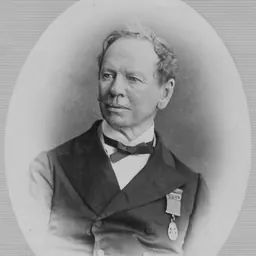
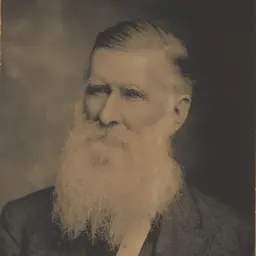
Related people
Same field, nearest in time

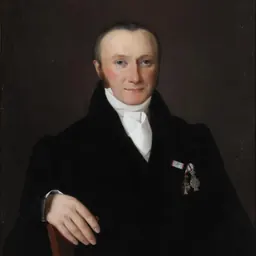

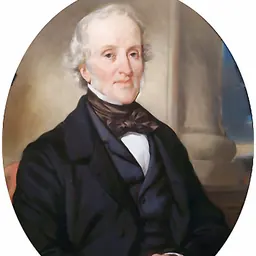

Contemporaries
People whose lives overlapped Mary Hyde's


Frequently asked questions
Who was Mary Hyde?
convict and business woman in New South Wales, Australia (1779-1864)
When was Mary Hyde born?
Mary Hyde was born on 19 February 1779 in Halesowen.
When did Mary Hyde die?
Mary Hyde died on 1 December 1864 in Botany.
What was Mary Hyde's occupation?
Mary Hyde was a businessperson.
What nationality was Mary Hyde?
Mary Hyde was Australian and British.
Sources & further reading
Cite this page
APA: Biography.guide. (2026). Mary Hyde. https://biography.guide/mary-hyde/
MLA: "Mary Hyde." Biography.guide, https://biography.guide/mary-hyde/.
Chicago: "Mary Hyde." Biography.guide. https://biography.guide/mary-hyde/.
Data last updated: 2026-09-23 · Spot an error? Report a correction.
Portrait: Wikimedia Commons · author & licence
Page generated 2026-09-27 05:08 UTC