
About Mary Hays
Lived 1759 – 1843 (aged 83). Mary Hays was a British novelist and writer.
Mary Hays (1759–1843) was an autodidact intellectual who published essays, poetry, novels and several works on famous (and infamous) women. She is remembered for her early feminism, and her close relations to dissenting and radical thinkers of her time including Robert Robinson, Mary Wollstonecraft, William Godwin and William Frend. She was born in 1759, into a family of Protestant dissenters who rejected the practices of the Church of England (the established church). Hays was described by those who disliked her as 'the baldest disciple of [Mary] Wollstonecraft' by The Anti Jacobin Magazine, attacked as an 'unsex'd female' by clergyman Robert Polwhele, and provoked controversy through her long life with her rebellious writings. When Hays's fiancé John Eccles died on the eve of their marriage, Hays expected to die of grief herself. But this apparent tragedy meant that she escaped an ordinary future as wife and mother, remaining unmarried. She seized the chance to make a career for herself in the larger world as a writer. Among these later productions is the six-volume compendium Female Biography: or Memoirs of Illustrious and Celebrated Women of All Ages and Countries, in which Wollstonecraft is not mentioned, although Hays had written an extensive obituary for The Annual Necrology shortly after Godwin's controversial Memoirs. If Wollstonecraft was neglected through the nineteenth century, Hays and her writing received even less critical evaluation or academic attention until the twentieth-century's emerging feminist movement.
Early years Mary Hays was born in Southwark, London 4 May 1759, the daughter of Rational Dissenters John and Elizabeth Hays. They lived in Southwark, London, on Gainsford Street. Her father died young, leaving Hays an annuity of £70 a year, as long as she did not marry without her mother's approval. Hays' early education is shaped by poetry, novels, and religious and political debates at the Dissenting meeting house. In August 1780, just after Eccles received a job which would allow him to marry Hays, Eccles died of a sudden fever. He left Hays all his papers, including the letters she had sent him. Hay's first book, not published in her lifetime, was based on these letters, re-copied and editorialized into a semi-autobiographical epistolary novel. Hays wrote: "All my pleasures – and every opening prospect are buried with him".
After a year in mourning, Hays dedicated herself to an intellectual life of writing. Her first published poem, "Invocation to a Nightingale," appeared in the Lady's Poetical Magazine in 1781. She attended the dissenting academy in Hackney in the late 1780s.
Success in writing In 1791 she replied to Gilbert Wakefield's critique of communal worship with a pamphlet called Cursory Remarks on An Enquiry into the Expediency and Propriety of Public or Social Worship, using the nom-de-plume Eusebia. Her letters are held at the New York Public Library, Astor and Tilden Foundation thanks to the work of Dr. Gina Luria Walker.
List of works All by Mary Hays; dates are for first editions.
Cursory remarks on an enquiry into the expediency and propriety of public or social worship: inscribed to Gilbert Wakefield (as Eusebia). London: Knott, 1791. Letters and essays, moral, and miscellaneous. London: Knott, 1793. Memoirs of Emma Courtney (2 volumes). London: G.G. & J. Robinson, 1796. Appeal to the men of Great Britain in behalf of women (as Anonymous). London: J. Johnson and J. Bell, 1798. The victim of prejudice: In two volumes. London: J. Johnson, 1799. Female Biography, or Memoirs of Illustrious and Celebrated Women of All Ages and Countries (6 volumes). London: R. Phillips, 1803. Harry Clinton: a tale for youth. London: J. Johnson, 1804. Historical Dialogues for young persons (3 volumes). London: J. Johnson, 1806 [-1808]. Family annals, or, The sisters. London: W. Simpkin & R. Marshall, 1817. Memoirs of Queens, illustrious and celebrated. London: T. & J. Allman, 1821. The Love-Letters of Mary Hays (1779–1780). Ed. A.F. Wedd. London: Methuen, 1925. Posthumous.
Don’t just read it —
keep it.
Full-length biographies made to live with: read them, listen on the way to work, watch them tonight.
- E-book
- Audio
- Video
Instant download · yours to keep · every purchase keeps this site free
Important facts
People in Mary Hays's life
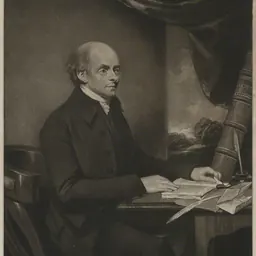
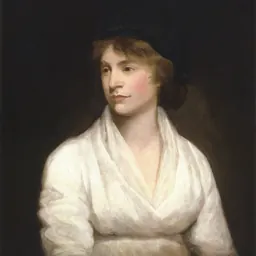
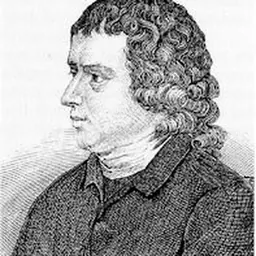
Named in this biography and alive at the same time

Related people
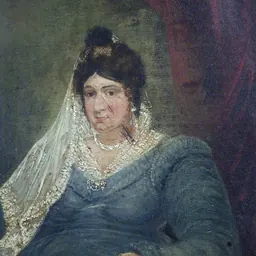
Same field, nearest in time

Contemporaries
People whose lives overlapped Mary Hays's






Frequently asked questions
Who was Mary Hays?
British writer (1759-1843)
When was Mary Hays born?
Mary Hays was born on 4 May 1759 in London.
When did Mary Hays die?
Mary Hays died on 20 February 1843 in London.
What was Mary Hays's occupation?
Mary Hays was a novelist and writer.
What nationality was Mary Hays?
Mary Hays was British.
Sources & further reading
Cite this page
APA: Biography.guide. (2026). Mary Hays. https://biography.guide/mary-hays/
MLA: "Mary Hays." Biography.guide, https://biography.guide/mary-hays/.
Chicago: "Mary Hays." Biography.guide. https://biography.guide/mary-hays/.
Data last updated: 2026-09-22 · Spot an error? Report a correction.
Page generated 2026-09-27 05:30 UTC