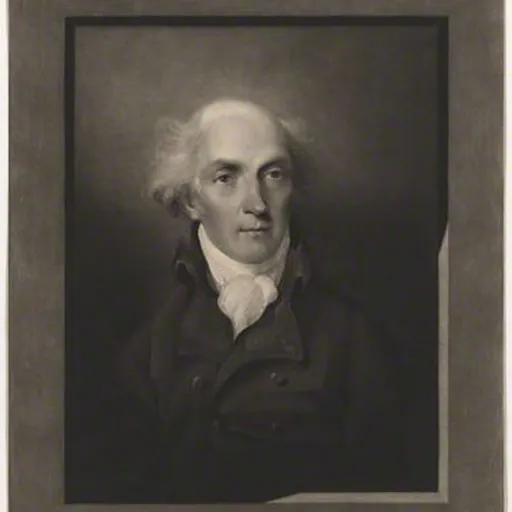
About Samuel Jackson Pratt
Lived 1749 – 1814 (aged 64). Samuel Jackson Pratt was a novelist, poet, bookseller, writer and actor.
Samuel Jackson Pratt (25 December 1749 – 4 October 1814) was a prolific English poet, dramatist and novelist, writing under the pseudonym of "Courtney Melmoth" as well as under his own name. He authored around 40 publications between 1770 and 1810, some of which are still published today, and is probably best remembered as the author of Emma Corbett: or the Miseries of Civil War, and the poem Sympathy (1788). Although his reputation was tainted by scandal during his lifetime, he is today recognised as an early campaigner for animal welfare and the first English writer to treat the American Revolution as a legitimate subject for literature.
Biography
Early life Samuel Jackson Pratt was born "to a very respectable family" on 25 December 1749, in St Ives, Huntingdonshire. His father was a brewer, who twice served as High Sheriff of Huntingdonshire.
"Sham marriage"
Some time in the early 1770s, Pratt entered into a marital-like relationship with a lady who thereafter referred to herself as "Mrs Charlotte Melmoth" (Melmoth being Pratt's stage-name). Her maiden name is unknown. According to A History of The City of Brooklyn, Charlotte "had been duped into a sham marriage, while at boarding school, by a Mr. Pratt (known in the literary and theatrical circles of that day as Courtney Melmoth ), and with him went upon the stage, playing in several companies both in England and Ireland.". Pratt's parents strongly disapproved of the relationship Charlotte, like Pratt, considered herself a poet, and Pratt sent Franklin copies of some of his wife's poetry.
In 1781 the couple separated and Charlotte embarked on a solo acting career. In 1793 she emigrated to America where she gained a reputation as "The Grande Dame of Tragedy on the Early American Stage". one obituary published after his death tactfully refers to the relationship as "such indiscretions as too frequently accompany genius";
Later life
In 1774, having given up the stage, he had his first literary success – a poem entitled The Tears of A Genius, occasioned by the Death of Dr Goldsmith which attracted the attention of the reading public, and from then onwards he was able to make a living by writing. with a partner of the name of Clinch. It was included in many collections of popular poetry throughout the 19th Century.
The Pupil of Pleasure
In 1776 he scandalised the literary world with a novel, satirising Lord Chesterfield, entitled The Pupil of Pleasure or The New System (Lord Chesterfield's) Illustrated, describing a fictional series of seductions in Buxton. Its licentious tone evoked letters of complaints, the author being described as "a dissipated clergyman" and the Monthly Review magazine said of it "It is unnatural and shocking – it cannot be read without disgust.' The novel was highly praised on its release and passed through many editions in several languages.
Dramatic works
As well as his poems, novels and 'miscellanies', Pratt drew upon his theatre experience to write ten plays, although three were never performed or published. His first play, Joseph Andrews, was an adaptation of Henry Fielding's novel of the same name, and was acted at Theatre Royal, Drury Lane on 20 April 1778, with the role of Fanny being played by Mary Robinson. Pratt would eventually write the epitaph for Mary Robinson's tombstone. The play has never been published. His 1783 comedy The School for Vanity was also staged at Drury Lane.
Animal welfare
Pratt was a campaigner against cruelty towards animals and an opponent of hunting and blood-sports. Many of his writings reflect this concern, including his most famous poem, Sympathy (1788) which argues that man was "born to share" the earth with all other living creatures and asks "Why must man subsist by prey?". In Humanity, or the Rights of Nature he attacks hunting, demanding "For hunger kill, but never sport with life". A review in Gentleman's Magazine of Lord Erskine's speech in support of the Bill for Preventing Malicious and Wanton Cruelty to Animals" (1809) said of Pratt, "Certainly [no living author has] expatiated more on this subject [cruelty to animals] than the Author of "Sympathy," both in his poetical and prose writings. Indeed, nearly a third of a volume of the "Gleanings" of that Writer has been consecrated to this subject."
Critical reception
Critical reception to Pratt's works was mixed during his lifetime. His scandalous "sham marriage" and the public furore over his "unnatural and shocking" novel The Pupil of Pleasure damaged his reputation, giving him a 'dubious moral character' which deterred respectable readers. His poem Sympathy, however, was noted for its 'feeling, energy and beauty' and the Gentleman's Magazine remarked "It is a just tribute to his character to say that all his works strongly tended to promote the interests of benevolence and virtue. Though his literary fame has been somewhat overcast by the extraordinary success of several contemporary poets, yet it is probable that many of his works will be admired when most of theirs has sunk into oblivion." However the same publication also noted that "his chief error was not knowing how to check the exuberance of his feeling and imagination; and therefore he sometimes diffused his sentiments to a tedious extent." Charles Lamb lambasted his Gleanings as "A wretched assortment of vapid feelings", although the same volume was popular enough with readers to pass through many editions. The London Magazine said of The Tutor of Truth, "We can recommend this sprightly and at the same time instructive romance in the warmest terms." The Catalogue of Five Hundred Authors Now Living (1788) summarised his works with the succinct phrase "There are people now living who believe that they possess a degree of merit."
The Gentleman's Magazine obituary of Pratt summarised his life with the words "No man who ever attained public distinction was more exempt from envy; and though he may, in the vicissitudes of a life unsupported by fortune and exposed to all the casualties of a precarious subsistence, have fallen into errors, nothing of malice or ill-nature can justly be imputed to him; and as his works are all intended to promote the interests of virtue, none of these errors should be remembered in his epitaph."
Don’t just read it —
keep it.
Full-length biographies made to live with: read them, listen on the way to work, watch them tonight.
- E-book
- Audio
- Video
Instant download · yours to keep · every purchase keeps this site free
Important facts
Family & relationships
People in Samuel Jackson Pratt's life
Named in this biography and alive at the same time


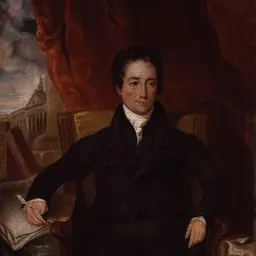
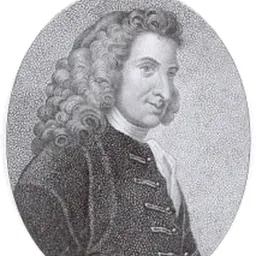
Related people
Same field, nearest in time
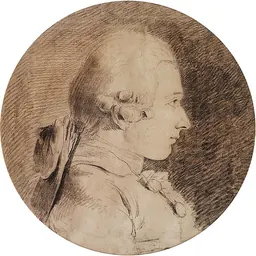

Contemporaries
People whose lives overlapped Samuel Jackson Pratt's





Frequently asked questions
Who was Samuel Jackson Pratt?
British writer
When was Samuel Jackson Pratt born?
Samuel Jackson Pratt was born on 25 December 1749 in St Ives.
When did Samuel Jackson Pratt die?
Samuel Jackson Pratt died on 4 October 1814 in Birmingham.
What was Samuel Jackson Pratt's occupation?
Samuel Jackson Pratt was a novelist, poet, bookseller, writer and actor.
Sources & further reading
· Wikipedia: Samuel Jackson Pratt
· DBpedia: Samuel Jackson Pratt
Cite this page
APA: Biography.guide. (2026). Samuel Jackson Pratt. https://biography.guide/samuel-jackson-pratt/
MLA: "Samuel Jackson Pratt." Biography.guide, https://biography.guide/samuel-jackson-pratt/.
Chicago: "Samuel Jackson Pratt." Biography.guide. https://biography.guide/samuel-jackson-pratt/.
Data last updated: 2026-09-21 · Spot an error? Report a correction.
Portrait: Wikimedia Commons · author & licence
Page generated 2026-09-27 04:59 UTC