
Mary Ellen Pleasant
African-American entrepreneur
About Mary Ellen Pleasant
Lived 1814 – 1904 (aged 89). Mary Ellen Pleasant was an American entrepreneur, abolitionist and civil rights advocate, known for Abolitionism and Entrepreneurship.
The Underground Railroad
Pleasant was an apprentice for a tailor in Boston on Merrimac Street, and she may have met her first husband in the shop.
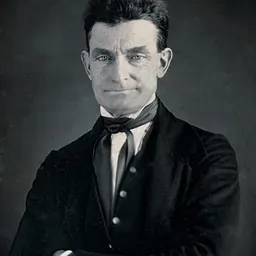
Pleasant claimed, in an autobiography partially dictated on her deathbed, to have been one of the financial backers of abolitionist John Brown's raid on Harpers Ferry. In her scholarly monograph on Pleasant's life, historian Lynn M. Hudson argues that there is adequate proof of the credibility of this claim. She and John Brown met together in Chatham, Ontario, a terminus of the Underground Railroad and a centre of abolitionist activism, in 1858 a year before the raid.
Frank Schneider, Portrait of Marie Laveau (1794–1881), 1920, Louisiana State Museum, New Orleans. Based on an 1835 painting by George Catlin. Pleasant is reputed to have learned about Louisiana Voodoo from Laveau. During that time, she returned to Nantucket for a short period after her husband's death. Edward Gardner had helped transport fugitives to their freedom, and he helped Pleasant manage her husband's estate after his death.
When Brown was hanged on December 2, 1859, for murder and treason, a note found in his pocket read, "The ax is laid at the foot of the tree. When the first blow is struck, there will be more money to help." Officials most likely believed it was written by a wealthy Northerner who had helped fund Brown's attempt to incite, and arm, an enormous slave uprising by taking over an arsenal at Harpers Ferry in Virginia. No one suspected that the note was written by Pleasant. The sum she donated was $30,000 . She has said that it was the "most important and significant act of her life". )
Legal cases Streetcar lawsuits Pleasant successfully attacked racial discrimination in San Francisco public conveyances after she and two other black women were ejected from a city streetcar in 1866. She filed two lawsuits. The first, against the Omnibus Railroad Company, was withdrawn after the company promised to allow African-Americans to board their streetcars. The second case, Pleasant v. North Beach & Mission Railroad Company, went to the California Supreme Court and took two years to complete. In the city, the case outlawed segregation in the city's public conveyances. Pleasant won the case and was awarded $500 by the jury, in part due to the eye-witness testimony of Lisette Woodworth, a white woman who had hired Pleasant, who the woman called "Mamma", for domestic work years ago. Although the woman saw Pleasant as a friend, their relationship and the use of the endearment, "Mamma" was twisted in the newspapers.
The publicity of this case highlighted her differences from others: a woman of mixed ancestry, who lived her life boldly before her time, and who had a significant change in class from the time of her birth. The press also called her "Mammy" Pleasant but she did not approve: "I don't like to be called mammy by everybody. Put. that. down. I am not mammy to everybody in California. I received a letter from a pastor in Sacramento. It was addressed to Mammy Pleasant. I wrote back to him on his own paper that my name was Mrs. Mary E. Pleasant. I wouldn't waste any of my paper on him."
Sharon v. Sharon A lawsuit between Sarah Althea Hill and Senator William Sharon involved the breakup of their arrangement and whether there were damages. They had a contractual relationship in which Sharon agreed to pay $500 each month to her so that they could sleep together from time to time. Hill and Pleasant understood it as marriage contract (kept secret for political and other reasons) and that now Sharon wanted to be rid of her. Pleasant paid Hill's legal fees. David Terry was one of her lawyers who became emotionally involved in the case.
Pleasant was accused by Sharon's lawyer and the press of having sinister intentions and manipulating Hill to drum up the case. The trial received national attention in the press, There were also rumors that damaged Pleasant's reputation. "Story has it that Mammy kept the feeble, near-senile Bell a prisoner in his mansion at the corner of Octavia and Bush, and that she fed his children dog meat and stale bread." While the Bells and Pleasant lived together, Pleasant controlled the combined Bell and Pleasant money. If Teresa wanted money, she asked Pleasant for the money, who thought about it and, if the request seemed reasonable, she checked in with Thomas Bell for his reaction.
Teresa, who had emotional and mental instability, She turned down an offer by a reporter to pay generously for her stories of people from the past, because she said she would never betray her friends. The ghost of Mary Ellen Pleasant is a character in the 1997 novel Earthquake Weather, by Tim Powers. Karen Joy Fowler's historical novel Sister Noon, published in 2001, features Pleasant as a central character, and Thomas Bell and Teresa Bell as secondary characters. She was an important character in Andre Norton's Velvet Shadows, a romantic suspense novel set in San Francisco. The American composer, David Garner, wrote an opera, based on her life and experiences, called Mary Pleasant at Land's End, which was workshopped at the San Francisco Conservatory of Music in 2017.
Pleasant's life has also been discussed in film and television, including in the 2008 documentary Meet Mary Pleasant, and a segment of a 2013 episode of the Comedy Central series Drunk History in which Pleasant was portrayed by Lisa Bonet.
In 1974, the city of San Francisco designated eucalyptus trees that Pleasant had planted outside her mansion at the southwest corner of Octavia and Bush streets in San Francisco as a Structure of Merit. The trees and associated plaque are now known as Mary Ellen Pleasant Memorial Park, which is the smallest park in San Francisco. Her burial site has been designated a "Network to Freedom" site by the National Park Service.
Don’t just read it —
keep it.
Full-length biographies made to live with: read them, listen on the way to work, watch them tonight.
- E-book
- Audio
- Video
Instant download · yours to keep · every purchase keeps this site free
Important facts
People in Mary Ellen Pleasant's life
Named in this biography and alive at the same time



Related people
Same field, nearest in time




Contemporaries
People whose lives overlapped Mary Ellen Pleasant's




Frequently asked questions
Who was Mary Ellen Pleasant?
African-American entrepreneur (1814-1904)
When was Mary Ellen Pleasant born?
Mary Ellen Pleasant was born on 19 August 1814 in Georgia, Virginia.
When did Mary Ellen Pleasant die?
Mary Ellen Pleasant died on 4 January 1904 in San Francisco.
What was Mary Ellen Pleasant's occupation?
Mary Ellen Pleasant was an entrepreneur, abolitionist and civil rights advocate.
What was Mary Ellen Pleasant known for?
Mary Ellen Pleasant was known for Abolitionism and Entrepreneurship.
What nationality was Mary Ellen Pleasant?
Mary Ellen Pleasant was American.
Sources & further reading
· Wikipedia: Mary Ellen Pleasant
· DBpedia: Mary Ellen Pleasant
Cite this page
APA: Biography.guide. (2026). Mary Ellen Pleasant. https://biography.guide/mary-ellen-pleasant/
MLA: "Mary Ellen Pleasant." Biography.guide, https://biography.guide/mary-ellen-pleasant/.
Chicago: "Mary Ellen Pleasant." Biography.guide. https://biography.guide/mary-ellen-pleasant/.
Data last updated: 2026-09-25 · Spot an error? Report a correction.
Page generated 2026-09-27 05:12 UTC