
Sarah Althea Hill
American socialite, mistress of Sen. William Sharon
About Sarah Althea Hill
Lived 1850 – 1937 (aged 86). Sarah Althea Hill was an American, known for William Sharon.
Sarah Althea Hill (March 26, 1850 – February 14, 1937) was a California socialite who became a national celebrity when she sued millionaire Senator William Sharon for divorce, citing adultery, in 1883. She claimed he had secretly married her three years earlier in a private contract. She was known to carry a small-caliber Colt revolver in her purse and did not hesitate to threaten all who crossed her. The divorce case and related lawsuits set legal precedent and spawned numerous spinoff lawsuits that dragged on for nearly a decade. Two months after Sharon died, she married her attorney David S. Terry, and was declared insane after his death.
Early years
Hill was born in Pleasant Hill, Missouri, the daughter of attorney Samuel H. Hill and Julia Sloan. Her older brother was Hiram Morgan Hill, for whom the California town of Morgan Hill is named. Both of their parents died while they were minors, leaving them to be cared for by relatives. When they came of age, they received $20,000 (or about $ today) each as their inheritance from their parents.
In 1871, at the age of 21, Hill came to San Francisco with her brother, where they lived with their relatives, William and Ada Bryan. In 1880, she had a love affair with attorney Reuben H. Lloyd. When he ended the affair, she attempted suicide on May 10, 1880, in his office by drinking poison. She was saved when her stomach was pumped. Sharon countersued, claiming that the marriage contract she produced was fraudulent.
Sharon vs. Sharon Hill initially won the first case in December 1884. Judge Jeremiah F. Sullivan declared her the legal wife of William Sharon and awarded her alimony and the right to half of his accumulated wealth since the date of their marriage. Because of continuing counter-suits and appeals, Hill never received any of Sharon's money. The Sharon family continued to fight Hill.
Forged marriage contract In January 1886, a U.S. Circuit Court Judge and a U.S. District Court Judge sitting as a Circuit Judge rendered a decision that the marriage contract was a forgery. The Terrys were jailed when they refused to comply with the Court's order to give the court the marriage contract. They returned to the court in March 1888, seeking further relief. When Terry and his wife saw Sawyer on the train, she personally threatened to kill Sawyer.
Will a forgery On September 3, 1888, Field delivered the final Circuit Court opinion. He ruled that the will was a forgery. Sarah Althea Hill suddenly stood up, screamed obscenities at the judge, and fumbled in her handbag for her revolver. When Marshal John Franks and others attempted to escort her from the courtroom, attorney Terry rose to defend his wife and drew his Bowie knife.
While being transported to jail and while serving their sentences, Terry and his wife repeatedly threatened Justice Field. The Terrys suffered several more setbacks. Both David and Althea were indicted by a federal grand jury on criminal charges arising out of their behavior in the courtroom before Justice Field. In May 1889, the U.S. Supreme Court refused to review the order that invalidated Althea Terry's marriage contract with Senator Sharon. Then, in July, with only one of the four judges who had earlier ruled in their favor, the California Supreme Court reversed itself. It ruled that because Althea Terry and Sharon had kept their alleged marriage a secret, they were never legally married. While in jail or shortly afterward, pregnant Althea suffered a miscarriage.
Terry killed
When David and Althea Terry were released from jail, they returned to Fresno. On August 14, 1889, they boarded a train in Fresno on which unknown to them Field and Neagle were returning from Los Angeles. At 7:10 am, all of the passengers disembarked the train to eat breakfast in the railroad station dining room at Lathrop, California.
Neagle, who was 5'7" tall and weighed 145 pounds, testified that the 6'3", 250-pound Terry recognized Neagle from the earlier confrontation in the courtroom. Neagle later said he saw a look of determination and victory on Terry's face. Neagle rose from his chair and said, "Stop that! I am an officer."
Althea Hill Terry had been held at the door by one of the dining room proprietors, who had searched the satchel and found a gun within it. She screamed and pushed her way through the crowd, throwing herself over her husband's body. Neagle thought he saw her covertly remove David Terry's knife from his vest. She challenged the crowd to search his body, insistent he was unarmed. The knife was later found in her satchel with the pistol.
Neagle and Field reboarded the train and locked themselves in their cabin. Sarah Terry attempted tried to enter their car, saying she wished to slap Field. Neagle insisted that she be kept out or he would kill her too. The satchel she had fetched from the train was searched and a pistol was found within it. A few minutes later Constable Walker of Lathrop and Stanislaus County Sheriff Purvis arrived. Neagle provided a document issued by the U.S. Attorney General appointing him as a special Marshal to protect Field. Judge Fields telegraphed the Marshal's office in Stockton, who relayed the information to the US Attorney General. The United States Attorney in San Francisco filed a writ of habeas corpus for Neagle's release. The circuit court issued the writ after a hearing and ordered Neagle's release.
Federal law supreme Sheriff Cunningham, with the aid of the State of California, appealed to the United States Supreme Court. Cunningham's appeal was based on whether Neagle acted in pursuance of the law when he shot Terry. Neagle's defense was based on the letter from Miller to Marshal Franks, which gave him federal authority to act as a law enforcement officer. In 1890, the Supreme Court ruled In re Neagle that federal officers are immune from state prosecution for actions taken within the scope of their federal authority.
Declared insane
After her husband's death, Sarah Terry became obsessed with spiritualism, hiring medium after medium to put her in touch with David Terry. Eventually, since she had no money to hire lawyers, the Sharon case gradually came to an end as the final cases were either dismissed or quickly decided against her. By February, 1892, newspapers were reporting that Mrs. Terry was insane. She wandered aimlessly in the streets of San Francisco, ignoring her appearance. She constantly talked to "spirits", especially that of her husband, and could not sleep. She had periods of violence and believed that she was being tormented by electricity and hypnotism.
Abandoned by her relatives since the beginning of the Sharon case, Terry's fate was left to the only friends she had left, R. Porter Ashe and Mary Ellen Pleasant. Pleasant initiated action to have Terry committed to an insane asylum. After a brief examination by the Insanity Commission, Sarah Terry was committed at age 41 to the California Asylum at Stockton (later known as the Stockton State Hospital) on March 11, 1892.
Diagnosed with "dementia praecox", an early term for schizophrenia, she was extremely violent and had to be restrained for years in the asylum. Despite being termed "our best known patient" by Dr. Asa Clark, the hospital superintendent, Terry received almost no visitors over the years other than a few authors researching her case. She was not treated except with sedatives and eventually adapted to her life in the institution but was deluded into thinking that she was a rich and grand lady, the hospital was her mansion, and the staff her servants.
She remained incarcerated for forty-five years, from ages 42 to 86. When she died of pneumonia, Cornelia Terry, the granddaughter of David Terry, stepped forward to offer her a proper burial, saving Sarah Terry from being buried on the hospital grounds. Sarah Althea Hill Terry is buried in the Terry family plot in the Stockton Rural Cemetery.
Don’t just read it —
keep it.
Full-length biographies made to live with: read them, listen on the way to work, watch them tonight.
- E-book
- Audio
- Video
Instant download · yours to keep · every purchase keeps this site free
Important facts
People in Sarah Althea Hill's life
Named in this biography and alive at the same time
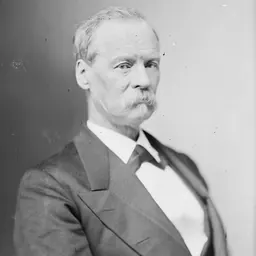

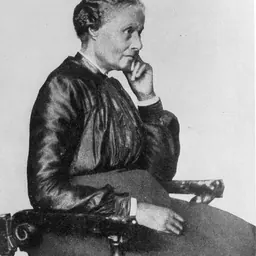

Contemporaries
People whose lives overlapped Sarah Althea Hill's
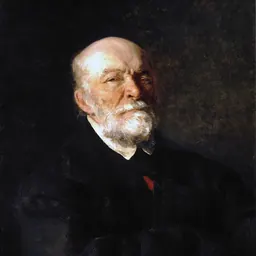


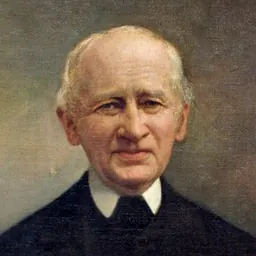
Frequently asked questions
Who was Sarah Althea Hill?
American socialite, mistress of Sen. William Sharon
When was Sarah Althea Hill born?
Sarah Althea Hill was born on 26 March 1850 in Cape Girardeau.
When did Sarah Althea Hill die?
Sarah Althea Hill died on 14 February 1937 in San Francisco.
What was Sarah Althea Hill known for?
Sarah Althea Hill was known for William Sharon.
What nationality was Sarah Althea Hill?
Sarah Althea Hill was American.
Sources & further reading
· Wikipedia: Sarah Althea Hill
Cite this page
APA: Biography.guide. (2026). Sarah Althea Hill. https://biography.guide/sarah-althea-hill/
MLA: "Sarah Althea Hill." Biography.guide, https://biography.guide/sarah-althea-hill/.
Chicago: "Sarah Althea Hill." Biography.guide. https://biography.guide/sarah-althea-hill/.
Data last updated: 2026-09-20 · Spot an error? Report a correction.
Page generated 2026-09-27 05:24 UTC