
Mary Edwards Walker
American feminist and doctor
About Mary Edwards Walker
Lived 1832 – 1919 (aged 86). Mary Edwards Walker was an American abolitionist, women's rights activist, physician, feminist and surgeon, known for Abolitionism in the United States, Medal of Honor and Prohibition.
Mary Edwards Walker (November 26, 1832 – February 21, 1919), commonly referred to as Dr. Mary Walker, was an American abolitionist, prohibitionist, prisoner of war in the American Civil War, and surgeon. She is the only woman to receive the Medal of Honor.
In 1855, she earned her medical degree at Syracuse Medical College in New York, married and started a medical practice. She attempted to join the Union Army at the outbreak of the Civil War, but was turned away. She served as a surgeon at a temporary hospital in Washington, D.C. before being hired by Union Forces and assigned to Army of the Cumberland and later the 52nd Ohio Infantry, becoming the first female surgeon in the US Army. She was captured by Confederate forces She was sent as a prisoner of war to Richmond, Virginia, until released in a prisoner exchange.
After the war, she was approved for the Medal of Honor, for her efforts to treat the wounded in battle and across enemy lines during the Civil War. Notably, the award was not expressly given for gallantry in action at that time, and in fact was the only military decoration during the Civil War. Walker is the only woman to receive the medal and one of only eight civilians to receive it. Her name was deleted from the Army Medal of Honor Roll in 1917 (along with over 900 other recipients); however, it was restored in 1977.
Early life and education Mary Edwards Walker was born in the Town of Oswego, New York, on November 26, 1832, the daughter of Alvah (father) and Vesta (mother) Walker. She had four older sisters and one younger brother. Alvah and Vesta raised both their son and their daughters in a progressive manner that was revolutionary for the time. Their nontraditional parenting nurtured Mary's spirit of independence and sense of justice that she actively demonstrated throughout her life. While they were devoted Christians, the Walkers were Freethinkers who raised their children to question the regulations and restrictions of various denominations. The Walker parents also demonstrated non-traditional gender roles to their children regarding sharing work around the farm: Vesta often participated in heavy labor while Alvah took part in general household chores.
Her elementary education consisted of attendance at the local school that her parents had started. The Walkers were determined that their daughters be as well-educated as their son, so they founded the first free schoolhouse in Oswego in the late 1830s. The practice did not flourish, as female physicians were generally not trusted or respected at that time. They later divorced, on account of Miller's infidelity.
Walker briefly attended Bowen Collegiate Institute (later named Lenox College) in Hopkinton, Iowa, in 1860, until she was suspended for refusing to resign from the school's debating society, which until she joined had been all male.
American Civil War
Walker volunteered at the outbreak of the American Civil War as a surgeon – first for the Army, but was rejected because she was a woman (despite having kept a private practice for many years). She was offered the role of a nurse but declined and chose to volunteer as a surgeon for the Union Army as a civilian. The U.S. Army had no female surgeons, and at first, she was allowed to practice only as a nurse. As a suffragist, she was happy to see women serving as soldiers, and alerted the press to the case of Frances Hook, in Ward 2 of the Chattanooga hospital, a woman who served in the Union forces disguised as a man. Walker was the first female surgeon of the Union army. In September 1863, she was employed as a "Contract Acting Assistant Surgeon (civilian)" by the Army of the Cumberland, becoming the first female surgeon employed by the U.S. Army Surgeon. Walker was later appointed assistant surgeon of the 52nd Ohio Infantry. During her service, she frequently crossed battle lines and treated civilians.
On April 10, 1864, she was captured by Confederate troops, and arrested as a spy, just after she finished helping a Confederate doctor perform an amputation. She was sent to Castle Thunder in Richmond, Virginia, and remained there until August 12, 1864, when she was released as part of a prisoner exchange. While she was imprisoned, she refused to wear the clothes provided her, said to be more "becoming of her sex". Walker was exchanged for a Confederate surgeon from Tennessee on August 12, 1864. She was awarded the Medal of Honor on November 11th,1865.
She became a writer and lecturer, supporting such issues as health care, temperance, women's rights, and dress reform for women. She was frequently arrested for wearing men's clothing, and insisted on her right to wear clothing that she thought appropriate. She wrote two books that discussed women's rights and dress. She replied to criticism of her attire: "I don't wear men's clothes, I wear my own clothes."
Walker was a member of the Central Woman's Suffrage Bureau in Washington, DC and solicited funds to endow a chair for a female professor at Howard University medical school.
In 1907, Walker published "Crowning Constitutional Argument", in which she argued that some states, as well as the federal Constitution, had already granted women the right to vote. She testified on women's suffrage before committees of the U.S. House of Representatives in 1912 and 1914.
After a long illness, Walker died at home on February 21, 1919, at the age of 86. She was buried at Rural Cemetery in Oswego, New York, in a plain funeral, with an American flag draped over her casket, and wearing a black suit instead of a dress. Her death in 1919 came 544 days before the passage of the Nineteenth Amendment to the United States Constitution, which guaranteed women the right to vote.
In 1916, the U.S. Congress created a pension act for Medal of Honor recipients, and in doing so created separate Army and Navy Medal of Honor Rolls. The Army was directed to review eligibility of prior recipients in a separate bill not related to the pension rolls, but which had been requested by the Army in order to retroactively police undesirable awards. The undesirable awards resulted from the lack of regulations on the medal.
The Army had published no regulations until 1897, and the law had very few requirements, meaning that recipients could earn a medal for virtually any reason, resulting in nearly 900 awards for non-combat enlistment extensions.
The Army's Medal of Honor Board deliberated from 1916 to 1917, and struck 911 names from the Army Medal of Honor Roll, including those of Dr. Mary Edwards Walker and William F. "Buffalo Bill" Cody. Both were considered ineligible for the Army Medal of Honor because 1862, 1863, and 1904 laws strictly required recipients to be officers or enlisted service members. In Walker's case, she was a civilian contract surgeon, not a commissioned officer.
Although several sources attribute President Jimmy Carter with restoring Walker's medal posthumously in 1977,
A recent historical work documented that the Board for Correction probably exceeded its authority in making a unilateral restoration of the medal, since the Board is merely a delegation arm of the authority of the Secretary of the Army, and thus cannot contradict a standing law. Therefore, the Board's decision was controversial because its mandate was to only correct errors or injustices within its authority, not act against the authority of public law.
This very point was illustrated by the awarding of Garlin Conner's Medal of Honor in early 2018, which also originated from the Board for Correction, but instead went through the President and required a statutory waiver from Congress—seen to be a requirement because the Board lacked the authority to contravene a public law and the associated statutes of limitations.
Walker felt that she had been awarded the Medal of Honor because she had gone into enemy territory to care for the suffering inhabitants, when no man had the courage to do so, for fear of being imprisoned.
National Women's Hall of Fame Walker was inducted into the National Women's Hall of Fame in 2000. The citation states, in part: "Today, society recognizes her achievements and her insistence that women be treated with the same respect as men."
In popular culture Mary Walker was used as a character in the comic album Les Tuniques Bleues 54, entitled Miss Walker.
Legacy
During World War II, a Liberty ship, the SS Mary Walker, was named for her.
In 1982, the U.S. Postal Service issued a twenty five-cent stamp in her honor, commemorating the anniversary of her birth.
The medical facilities at SUNY Oswego are named in her honor (Mary Walker Health Center). On the same grounds a plaque explains her importance in the Oswego community.
There is a United States Army Reserve center named for her in Walker, Michigan.
The Whitman-Walker Clinic in Washington, D.C., is named in honor of Walker, and poet Walt Whitman, who was a nurse in D.C. during the Civil War.
The Mary Walker Clinic at Fort Irwin National Training Center in California is named in honor of Walker.
The Mary E. Walker House is a thirty-bed transitional residence run by the Philadelphia Veterans Multi-Service & Education Center for homeless women veterans.
In May 2012, a 900-pound bronze statue honoring Walker was unveiled in front of the Oswego, New York Town Hall.
In 2019, Walker was included in Hillary and Chelsea Clinton's book The Book of Gutsy Women: Favorite Stories of Courage and Resilience.
On August 25, 2023, Fort A.P. Hill in Virginia was officially renamed Fort Walker in her honor, as part of the US Defense Department's decision to change the names of military bases named after Confederate soldiers. Walker thus became the first woman in US History to have a United States military installation exclusively named after her. The Fort was renamed To Fort Anderson-Pinn-Hill (aka A.P. Hill) by the Trump Administration in June 2025.
Walker is an honoree on a 2024 American Women quarter. The design depicts Walker holding her pocket surgical kit with the Medal of Honor and a surgeon's pin on her uniform.
Works
Reissued in paperback with a new introduction in 2003.
Works about her Negley, Keith. Mary Wears What She Wants, January 15, 2019 DiMeo, Nate. Mary Walker Would Wear What She Wanted The Memory Palace Podcast Episode 76 , October 19, 2015. (Podcast detailing Mary Walker, her early life and accomplishments.) Gall-Clayton, Nancy. I'm Wearing My Own Clothes! (Full-length play commissioned and produced by Looking for Lilith Theatre Company, July 2017. I’m Wearing My Own Clothes!) Kaminski, Theresa. Dr. Mary Walker's Civil War: One Woman's Journey to the Medal of Honor and the Fight for Women's Rights. Guilford, CT: Lyons Press, 2020, ISBN 978-1-4930-3609-7. Lambil, Willy & Cauvin, Raoul. Miss Walker, Dupuis 2010, is a Belgian comic book in the "Bluecoats"-series (Les Tuniques Bleues). The comic album portrays Mary Walker in a caricatural way as a combative feminist during the civil war.
Don’t just read it —
keep it.
Full-length biographies made to live with: read them, listen on the way to work, watch them tonight.
- E-book
- Audio
- Video
Instant download · yours to keep · every purchase keeps this site free
Important facts
People in Mary Edwards Walker's life
Named in this biography and alive at the same time

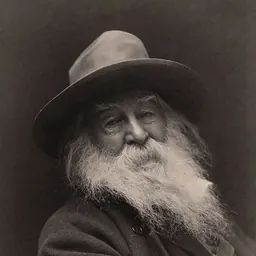
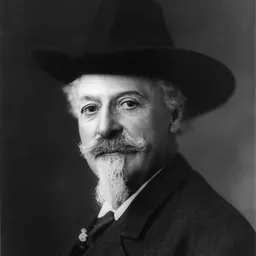
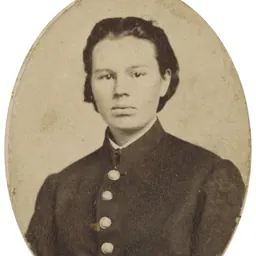
Related people
Same field, nearest in time



Contemporaries
People whose lives overlapped Mary Edwards Walker's


Frequently asked questions
Who was Mary Edwards Walker?
American feminist and doctor (1832–1919)
When was Mary Edwards Walker born?
Mary Edwards Walker was born on 26 November 1832 in Oswego.
When did Mary Edwards Walker die?
Mary Edwards Walker died on 21 February 1919 in Oswego.
What was Mary Edwards Walker's occupation?
Mary Edwards Walker was an abolitionist, women's rights activist, physician, feminist and surgeon.
What was Mary Edwards Walker known for?
Mary Edwards Walker was known for Abolitionism in the United States, Medal of Honor and Prohibition.
What nationality was Mary Edwards Walker?
Mary Edwards Walker was American.
Sources & further reading
· Wikipedia: Mary Edwards Walker
· DBpedia: Mary Edwards Walker
Cite this page
APA: Biography.guide. (2026). Mary Edwards Walker. https://biography.guide/mary-edwards-walker/
MLA: "Mary Edwards Walker." Biography.guide, https://biography.guide/mary-edwards-walker/.
Chicago: "Mary Edwards Walker." Biography.guide. https://biography.guide/mary-edwards-walker/.
Data last updated: 2026-09-22 · Spot an error? Report a correction.
Page generated 2026-09-27 05:30 UTC