
About Mary C. Rabbitt
Lived 1915 – 2002 (aged 87). Mary C. Rabbitt was an American geologist, geophysicist and earth scientist.
Mary Collins Rabbitt (January 25, 1915 – August 8, 2002), born Mary Priscilla Collins, was an American geophysicist, administrator, and historian for the United States Geological Survey (USGS). Her interest in seismology led her to working alongside well-known seismologist, Perry Byerly. Later on, she worked for Kirtley Mather, and eventually, as an assistant to James Balsley. As well as her contributions to the USGS, Volume 3 describes the USGS' interest in reviewing basic research from the 1904 conservation movement for strategic mineral studies. She describes the struggles researchers faced during the intervention of the Federal government for conservation and public land classification, and how World War I's subsequent economic crash in 1929 increased strain on the studies. Rabbitt also conveys how the changing economies of coal and agriculture, as well as the need to study water and minerals, put excess strain on the Survey.
Career In 1937, after earning her bachelor of arts in geological sciences from Radcliffe, Rabbitt worked alongside Perry Byerly as a research assistant at the University of California, Berkeley. Continuing her career as a research assistant, she would return to Radcliffe to work for Kirtley Mather.
During the second world war, she moved her career to Tennessee to serve at the Oak Ridge Observatory, working with the Office of Scientific Research and Development on explosion seismology.
After the war, Rabbitt assisted the Allied groups, moving to Japan to do so. Mary later joined her husband working for the USGS in 1949, headlining the Geophysical Abstracts Unit.
On August 9, 1950, Rabbit was appointed to a committee, which was part of the Seismological Society of America. They were tasked with nominating candidates for the Board of Directors and the Scientific Council election. She was the only female member in the group. She worked as the Branch's Assistant Chief during the years of 1950-1957. During this time, and even after, she worked alongside branch chief James Balsley as his assistant on many projects. The two of them worked to further articulate the concepts of tectonics, geologic time scale, and the impact of factors such as stress and heat on stratification. This led to a greater understanding of various topics, including magnetic-ore deposits, global tectonics and the behaviour of rocks and soils under various temperatures and pressures.
In the year of 1954, she published her first book, Geophysical Abstracts 157: April–June 1954: abstracts of current literature pertaining to the physics of the solid earth and to geophysical exploration, alongside Dorothy B. Vitaliano, S.T. Vesselowsky, and others.
Shortly after, in 1956, she published Geophysical abstracts, 166 July–September 1956.
After her retirement in 1978, Rabbitt would carry on with her passion for geology by publishing a 3-volume history and assessment of federal earth-science and mapping policies. The first volume of Minerals, Lands, and Geology for the Common Defense and General Welfare was published in 1979.
In 1980, she published the second volume of Minerals, Lands, and Geology for the Common Defense and General Welfare, as well as John Wesley Powell: soldier, explorer, scientist. Volume 3, 1904‒1939 was published in 1986. In the same year, Rabbitt also published A Brief History of the U.S. Geological Survey.
In 1995, she published John Wesley Powell's exploration of the Colorado River, her last published work before Volume 4 was published in 2015. The fourth edition was begun by Rabbitt, but completed by Clifford M. Nelson, a geologist with the USGS who co-authored the book. These texts covered the late 18th century and early 19th century reviewing topics in American history such as politics, economics and democracy through the lens of geologic history, minerals and mining. Rabbitt also provides information about geography, topography and palaeontology. Her pieces influenced a number of geologists, including George W. White and James R. Fleming. Her contributions are referenced in White's article, The Colorado River Region and John Wesley Powell. Mary C. Rabbitt, Edwin D. McKee John Wesley Powell and the Anthropology of the Canyon Country. Don D. Fowler, Robert C. Euler, Catherine S. Fowler, and Fleming's Minerals, Lands, and Geology for the Common Defence and General Welfare. Volume III: 1904-1939.
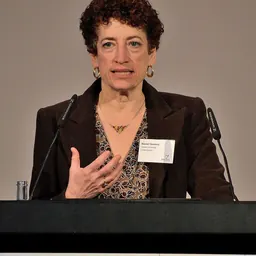
Personal life Mary Collins Rabbitt, née Mary Priscilla Collins, was born on January 25, 1915. She was of Irish heritage and grew up in Boston, Massachusetts, in the suburb of Canton. Notable recipients of the award include Claude C. Albritton (1983), Ursula B. Marvin (1986), Martin J. S. Rudwick (1987), Stephen Jay Gould (1988), Sandra Herbert (2006), Naomi Oreskes (2019) and Marianne Klemun (2022).
Works published Rabbitt published throughout the duration of her career, including:
Volume 78., No. 6., (published in 1954) Rabbitt had work published by the American Association for the Advancement of Science. This volume outlines how the Survey had implemented an extensive program targeted at determining the quantity, quality, and availability of surface and ground waters as well as providing data for their efficient utilization and conservation. This review only highlighted the Survey’s activities in the Colorado Plateaus, but the data provided from it was published by the Geological Survey in the form of maps and reports as well as published as technical papers for scientific and engineering journals. “Volume 1, Before 1879” “Volume 2, 1879‒1904” (published in 1980) outlines how the development of public land, mapping policies, and the development of mineral resources in the United States shaped the maturation of the field of geology. John Wesley Powell: soldier, explorer, scientist (published 1980) Volume 3, 1904‒1939” (published in 1986). This volume outlines the USGS' study into the research obtained from the 1904 conservation movement until the studies on strategic minerals. Rabbitt outlines the struggles researchers faced during the Federal government’s intervention for conservation and public land classification. She describes how World War 1 and the subsequent economic crash in 1929 increased strain on these studies. She also conveyed how the changing economies of coal, agriculture, and the need to study water and minerals put excess strain on the Survey. A Brief History of the U.S. Geological Survey (published 1986) John Wesley Powell’s Exploration of the Colorado River: (published in 1995) Rabbitt describes U.S. soldier, geologist, explorer, John Wesley Powell's, discoveries in the Colorado Plateau. She describes the depositional processes in the Grand Canyon as the Colorado River flows through the Grand Canyon, eroding the canyon walls and exposing layers of rock and fossil evidence recording a span of approximately two billion years. The book primarily discusses the geological mapping done by the USGS and the history of the USGS between 1939 and 1961. This volume highlights the implications geological surveying had in international relations and conflicts, specifically during World War II. The contributions Rabbitt made before she passed were edited and extended upon by coauthor, Clifford Nelson. This was in an effort to make the book coherent and ‘that readers will not be able to distinguish between the parts of this volume written by Mary Rabbitt and those modified or newly written by [him]’
Don’t just read it —
keep it.
Full-length biographies made to live with: read them, listen on the way to work, watch them tonight.
- E-book
- Audio
- Video
Instant download · yours to keep · every purchase keeps this site free
Important facts
People in Mary C. Rabbitt's life
Named in this biography and alive at the same time







Related people
Same field, nearest in time



Contemporaries
People whose lives overlapped Mary C. Rabbitt's



Frequently asked questions
Who was Mary C. Rabbitt?
American geologist
When was Mary C. Rabbitt born?
Mary C. Rabbitt was born on 25 January 1915 in Boston.
When did Mary C. Rabbitt die?
Mary C. Rabbitt died on 8 August 2002 in Washington, D.C..
What was Mary C. Rabbitt's occupation?
Mary C. Rabbitt was a geologist, geophysicist and earth scientist.
What nationality was Mary C. Rabbitt?
Mary C. Rabbitt was American.
Sources & further reading
Cite this page
APA: Biography.guide. (2026). Mary C. Rabbitt. https://biography.guide/mary-c-rabbitt/
MLA: "Mary C. Rabbitt." Biography.guide, https://biography.guide/mary-c-rabbitt/.
Chicago: "Mary C. Rabbitt." Biography.guide. https://biography.guide/mary-c-rabbitt/.
Data last updated: 2026-09-22 · Spot an error? Report a correction.
Page generated 2026-09-27 05:10 UTC