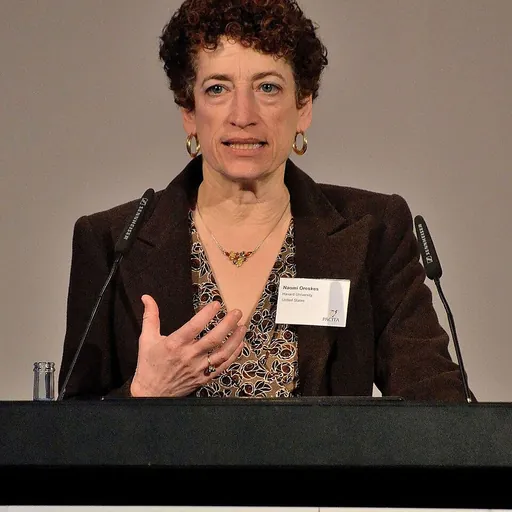
Naomi Oreskes
American historian, scientist, academic
About Naomi Oreskes
Born 1958. Naomi Oreskes is an American historian of science, university teacher, geophysicist, earth scientist and historian.
Naomi Oreskes (; born November 25, 1958) is an American historian of science. After 15 years as Professor of History and Science Studies at the University of California, San Diego, she became professor of the history of science and affiliated professor of earth and planetary sciences at Harvard University in 2013, and in 2020 was also named the Henry Charles Lea Professor of the History of Science. She has worked on studies of geophysics, environmental issues such as global warming, and the history of science. In 2010, Oreskes co-authored Merchants of Doubt, which identified significant parallels between the climate change debate and earlier public controversies, notably the tobacco industry's campaign to obscure the link between smoking and serious disease.
Early life and education Oreskes is the daughter of Susan Eileen (née Nagin), a teacher, and Irwin Oreskes, a professor of medical laboratory sciences and former dean of the School of Health Sciences at Hunter College in New York. She has three siblings: Michael Oreskes, a journalist; Daniel Oreskes, an actor; and Rebecca Oreskes, a writer and former U.S. Forest Service ranger.
She studied at Stuyvesant High School, New York, and received her Bachelor of Science in mining geology from the Royal School of Mines of Imperial College, University of London in 1981. She later received her PhD degree in the Stanford University Graduate Special Program in Geological Research and History of Science.
Career Oreskes has worked as a consultant for the United States Environmental Protection Agency and US National Academy of Sciences, and has also taught at Dartmouth College, New York University, UCSD and Harvard University. She is the author of or has contributed to a number of essays and technical reports in economic geology and history of science in addition to several books.
Academics Oreskes' academic career started in geology, then broadened into history and philosophy of science. Her work was concerned with scientific methods, model validation, consensus, dissent, as in 2 books on the often-misunderstood history of continental drift and plate tectonics. She later focused on climate change science and studied the doubt-creation industry opposing it.
She worked as a mining geologist for WMC (Western Mining Company) in outback South Australia, based in Adelaide.
Starting in 1984, she returned to academia as a research assistant in the Geology Department and as a teaching assistant in the departments of Geology, Philosophy and Applied Earth Sciences at Stanford University.
The 1992 Hitzman-Oreskes-Einaudi paper on Cu-U-Au-REE ("Olympic Dam") deposits has been cited more than 700 times, according to Google Scholar. She received a National Science Foundation's Young Investigator Award in 1994.
During 1991–1996, she was an Assistant Professor of Earth Sciences and Adjunct Asst. Professor of History at Dartmouth College in Hanover, New Hampshire. She spent 1996–1998 as associate professor, History and Philosophy of Science at the Gallatin School of Individualized Study, New York University.
As an example of studying scientific methods, she wrote on model validation in the Earth sciences, cited more than 3200 times according to Google Scholar.
She moved to University of California, San Diego in 1998 as associate professor in the Department of History and Program in Science Studies,
In 1999, she participated as a consultant to the US Nuclear Waste Technical Review Board for developing a repository safety strategy for the Yucca Mountain project, with special attention to model validation.
Since 2013, Oreskes has served as a professor at Harvard University in the Department of the History of Science and Department of Earth and Planetary Sciences (by courtesy).
Since 2017, she has been listed on the board of directors of the National Center for Science Education.
Oreskes is on the board of directors of the Climate Science Legal Defense Fund.
Science and society essay Oreskes wrote an essay "The Scientific Consensus on Climate Change", published in the science and society section of the journal Science in December 2004.
Merchants of Doubt
Merchants of Doubt is a 2010 book by Naomi Oreskes and Erik M. Conway. Oreskes and Conway, both American historians of science, identify some remarkable parallels between the climate change debate and earlier controversies over tobacco smoking, acid rain, and the hole in the ozone layer. They argue that spreading doubt and confusion was the basic strategy of those opposing action in each case. In particular, Fred Seitz, Fred Singer, and a few other contrarian scientists joined forces with conservative think tanks and private corporations to challenge the scientific consensus on many contemporary issues.
Most reviewers received it "enthusiastically". One reviewer said that Merchants of Doubt is exhaustively researched and documented and may be one of the most important books of 2010. Another reviewer saw the book as his choice for best science book of the year.
A film with the same name, inspired by the book, was released in 2015.
Other film released in 2020 was The Campaign Against the Climate, a documentary directed by the Danish journalist and filmmaker Mads Ellesøe.
Controversies Together with Erik Conway and Matthew Shindell, in 2008, Oreskes wrote the paper "From Chicken Little to Dr. Pangloss: William Nierenberg, Global Warming, and the Social Deconstruction of Scientific Knowledge" which argued that William Nierenberg as chairman reframed a National Academy of Sciences committee report on climate change in 1983 into economic terms to avoid action on the topic. Nierenberg died in 2000 but his son co-authored a rebuttal published in 2010 in the same journal which said the paper contradicted the historical report and there was no evidence that any committee members disagreed with the report; the evidence was that the report reflected the consensus at the time.
In 2015, Oreskes published an opinion piece in The Guardian, titled "There is a New Form of Climate Denialism to Look Out For – So Don't Celebrate Yet", in which she said scientists who call for a continued use of nuclear energy are renewable-energy "deniers" and "myth" makers. She cited an article by four prominent climate scientists (James Hansen, Ken Caldeira, Kerry Emanuel and Tom Wigley) saying nuclear power must be used to combat climate change. An opinion piece by Michael Specter in The New Yorker asserted that she had branded these four scientists as "climate deniers", and that her characterization was absurd, as they were among those who had done the most to push people to combat climate change.
In 2015, news outlets reported that ExxonMobil scientists had found evidence for climate change, but had nonetheless continued to raise doubts about it, a charge that Oreskes also reported. The company criticized Oreskes and invited her and the public to read approximately 187 documents written between 1977 and 2014.
Selected awards, honors, and fellowships Margaret W. Rossiter History of Women in Science Prize for "Objectivity or Heroism? On the Invisibility of Women in Science," Osiris, 1996, 11: 87–113, awarded 2000 American Philosophical Society Sabbatical Fellowship, 2001–2002 George Sarton Award Lecture, American Association for the Advancement of Science, 2004 AAAS Fellow, American Association for the Advancement of Science, 2007 Listed, Who's Who in American Science and Engineering, Who's Who in the West Chancellors Associates’ Faculty Excellence Award for Community Service UCSD 2008 Francis Bacon Award in the History and Philosophy of Science and Technology, Caltech 2008 Climate Change Communicator of the Year, George Mason University Center for Climate Change Communication, 2011 Commencement Speaker University of California, Riverside 2012 National Science Foundation Young Investigator Award, 1994–1999 Ritter Memorial Fellowship in History of Marine Sciences, Scripps Institution of Oceanography, 1994 Society of Economic Geologists Lindgren Prize for outstanding work by a young scientist, 1993 Forum for the History of Science in America Distinguished Lecture History of Science Society 2014 Herbert Feis Prize for Public History, American Historical Association 2014 Presidential Citation for Science and Society American Geophysical Union 2014 Elected a Fellow of the Committee for Skeptical Inquiry, 2015 Public Service Award, Geological Society of America, 2015 William T. Patten Visiting Lectureship, Indiana University, March 2015 Ambassador and Fellow, American Geophysical Union, 2016 Convocation Speaker, The Evergreen State College, Olympia and Tacoma, Washington, 2016 Frederick Anderson Climate Change Award, Center for International Environmental Law, 2016 Stephen H. Schneider Award for Outstanding Climate Science Communication, Climate One, 2016 Elected Member of American Academy of Arts and Sciences, 2017 Plenary Speaker, American Association for the Advancement of Science, 2017 Guggenheim Fellow, 2018-2019, John Simon Guggenheim Memorial Foundation, Honorary degree ETH Zurich, 2018. Elected Member of the American Philosophical Society, 2019 Mary C. Rabbit Award (History and Philosophy of Geology Division), Geological Society of America, 2019 The British Academy Medal, 2019 Honorary degree, Université libre de Bruxelles, 2023. TIME 100 inaugural climate leaders, 2023 Honorary degree from Bard College 2024 Nonino Prize, Master of Our Time, 2024 Patrick Suppes Prize in History of Science, for Science on a Mission, American Philosophical Society, 2024 Tyndall Lecturer in Global Environmental Change, American Geophysical Union, 2024 Volvo Environment Prize 2025
Selected writings Books
The Rejection of Continental Drift: Theory and Method in American Earth Science, Oxford University Press, 1999, Perspectives on Geophysics, Special Issue of Studies in History and Philosophy of Modern Physics, 31B, Oreskes, Naomi and James R. Fleming, eds., 2000. Plate Tectonics: An Insider’s History of the Modern Theory of the Earth, Edited with Homer Le Grand, Westview Press, 2003, Merchants of Doubt: How a Handful of Scientists Obscured the Truth on Issues from Tobacco Smoke to Global Warming, Naomi Oreskes and Erik M. Conway, Bloomsbury Press, 2010 The Collapse of Western Civilization: A View from the Future, Naomi Oreskes and Erik M. Conway, Columbia University Press, 2014 Encyclical on Climate Change and Inequality: On Care for Our Common Home, Pope Francis, introduction by Naomi Oreskes, (Brooklyn, NY: Melville House, 2015) Discerning Experts: The Practices of Scientific Assessment for Environmental Policy. Michael Oppenheimer, N. Oreskes, D. Jamieson, K. Brysse, J. O’Reilly & M. Shindell, University of Chicago Press, 2019, Why Trust Science?, Princeton University Press, 2019, Edited by Stephen Macedo, Science on a Mission: How Military Funding Shaped What We Do and Don't Know about the Ocean, University of Chicago Press, 2020, The Big Myth: How American Business Taught Us to Loathe Government and Love the Free Market. Naomi Oreskes and Erik M. Conway. Bloomsbury Publishing, 2023.
Papers
Editorials and opinion articles
Oreskes, Naomi, "History Matters to Science: It helps to explain how cynical actors undermine the truth", Scientific American, vol. 323, no. 6 (December 2020), p. 81. "In our 2010 book, Merchants of Doubt, Erik M. Conway and I showed how the same arguments [as those used to cast doubt on the link between tobacco use and lung cancer] were used to delay action on acid rain, the ozone hole and climate change – and this year we saw the spurious "freedom" argument being used to disparage mask wearing [during the COVID-19 pandemic]."
Oreskes, Naomi, "Breaking the Techno-Promise: We do not have enough time for nuclear power to save us from the climate crisis," Scientific American, vol. 326, no. 2 (February 2022), p. 74. Oreskes, Naomi, "Furious about Firearms: Outrage, not hope, will move us to prevent gun violence", Scientific American, vol. 329, no. 1 (July/August 2023), p. 96. Oreskes, Naomi, "Fusion's False Promise: Despite a recent advance, nuclear fusion is not the solution to the climate crisis", Scientific American, vol. 328, no. 6 (June 2023), p. 86. Oreskes, Naomi, "Masked Confusion: A trusted source of health information misleads the public by prioritizing rigor over reality", Scientific American, vol. 329, no. 4 (November 2023), pp. 90–91. Oreskes, Naomi, "Social Security and Science: Attacks on the program rest on false 'facts' similar to ones used against climate change action", Scientific American, vol. 328, no. 5 (May 2023), p. 86. Oreskes, Naomi, "The Eight-Billion-Person Bomb: A surging population – and the planet – cannot survive without help", Scientific American, vol. 328, no. 3 (March 2023), p. 76.
Don’t just read it —
keep it.
Full-length biographies made to live with: read them, listen on the way to work, watch them tonight.
- E-book
- Audio
- Video
Instant download · yours to keep · every purchase keeps this site free
Important facts
People in Naomi Oreskes's life
Named in this biography and alive at the same time



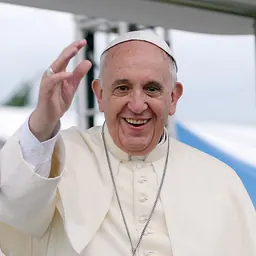
Related people
Same field, nearest in time
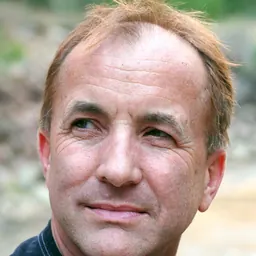

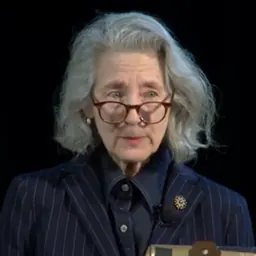
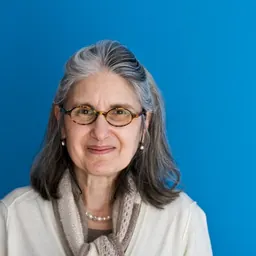

Contemporaries
People whose lives overlapped Naomi Oreskes's


Frequently asked questions
Who is Naomi Oreskes?
American historian, scientist, academic
When was Naomi Oreskes born?
Naomi Oreskes was born on 25 November 1958 in New York City.
What is Naomi Oreskes's occupation?
Naomi Oreskes is a historian of science, university teacher, geophysicist, earth scientist and historian.
What nationality is Naomi Oreskes?
Naomi Oreskes is American.
Sources & further reading
Cite this page
APA: Biography.guide. (2026). Naomi Oreskes. https://biography.guide/naomi-oreskes/
MLA: "Naomi Oreskes." Biography.guide, https://biography.guide/naomi-oreskes/.
Chicago: "Naomi Oreskes." Biography.guide. https://biography.guide/naomi-oreskes/.
Data last updated: 2026-09-23 · Spot an error? Report a correction.
Portrait: Wikimedia Commons · author & licence
Page generated 2026-09-27 05:07 UTC