
About Mary Burt Messer
Lived 1881 – 1960 (aged 78–79). Mary Burt Messer was an American educator, social worker and writer.
Mary Burt Messer (1881–1960) was an American activist, social worker, professor, author, and Christian Science practitioner. Messer was an advocate for women's rights and a leader of the Wisconsin chapter of the National Women's Party. As a scholar, she wrote The Family in the Making: A Historical Sketch, a study of family structure from early history to the 20th century. Influenced by the writings of Mary Baker Eddy, Messer's life and work emphasized healing, spiritual idealism, and autonomy for women.
Early life Mary Burt Messer was born in Washington, D.C., in 1881. Her maternal grandfather was John Wesley North. Her mother, Emma North Bacon Messer, wrote a three-part memoir that spanned her childhood on the frontier to her memory of the Lincoln assassination. Mary Burt's father, Edmund Clarence Messer, was an artist and arts administrator in Washington, where Mary Burt spent her early years. Mary Burt had one sibling, a sister named Margaret, who died as a child. All three members of the family wrote poetry.
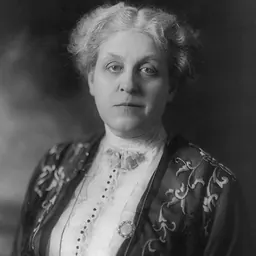
From 1901 to 1902, Messer attended Vassar College (as a "special student", not fully-enrolled) During this time, she also served as an organizer for the National American Woman Suffrage Association, led by Carrie Chapman Catt, in New York. Soon thereafter, Messer became active in the National Woman's Party (NWP) and served as vice-chairman of the Wisconsin branch. Her activities in the NWP are reflected in newspaper stories from the Wisconsin press that acknowledge her role as an organizer. Among other events, Messer had a lead role in hosting suffragist speaker, Lillian Ascough and in organizing a series of events connected to a chartered train, known as the "Prison Special", through Wisconsin. The Prison Special featured speakers who had been jailed for their suffragist activism. After the Nineteenth Amendment was ratified, Messer became the chair of the Wisconsin Teachers' Council of the NWP and focused her work on labor issues and equal pay for women teachers. In 1921 Messer participated in an effort to draft an additional constitutional amendment, which, after three years of editing, became the Equal Rights Amendment. Messer hoped the amendment would strengthen women's citizenship by "straightening out the status of woman at every point."
While doing this work, Messer's parents (after her father retired from teaching in D.C.) moved to Wisconsin to join her. After her father's death, her mother continued to live with her even after she moved to California.
While beginning her career as an activist, Messer also joined the Church of Christ, Scientist. In 1923 Messer and her mother moved to Berkeley, California, so that Mary Burt could take a position as an instructor at the University of California, Berkeley Extension. In that same year, she began studying the teachings of Mary Baker Eddy under the instruction of Frank Gale in San Francisco. Messer taught the class without a textbook, but from her notes and in discussions with students. While teaching this class, Messer began researching the causes of divorce. Her course at Berkeley and her focus on divorce drew the attention of The New York Times in 1924, which echoed Messer's thesis by noting that the loss of religious prohibitions against divorce should be met with an increased attention to idealism in relationships. Her work, however, also drew criticism. For example, a reviewer in a Jesuit publication, America: A Catholic Review of the Week, argued that the religious significance of marriage is its own version of idealism.
The themes of political activism, social work, and Christian Science idealism formed the foundation for her key work, the book, The Family in the Making: An Historic Sketch. The book, dedicated to Lorenzo D. Harvey, was published in 1928. It received attention from sociologists and others who provided reviews, including: Sophonisba Breckinridge, Manuel Conrad Elmer, and Ernest Groves. The final chapter of the book, "The Advance of Woman", favorably compared the Christian Science teachings of Mary Baker Eddy to the patriarchy Messer found in contemporary Christianity. Three years later, in 1931, Messer was listed as a Christian Science practitioner in The Christian Science Journal. The role of practitioner in Christian Science required a commitment to the care and support of Christian Science patients and clients. discontinued the series after its first installment. After 1943, all the work by Messer published in the Monitor were poems and not direct editorials about spirituality. The unpublished entries, however, may have served as the foundation for work that was later published by the Philosophical Library in New York City.
In the following decade, Messer published two books, East and West, as Face to Face and Side by Side: A Christian Scientist Replies to the Communist Manifesto (1950) and The Science of Society: The Identity of Each as Godlike Embracing All (1959). These works received negative reviews from scholars who objected to Messer's interest in Mary Baker Eddy's ideas and to Messer's thoughts on materialism. In the work, Messer critiques both capitalism and communism for their over-emphasis on materialism and their neglect of the spiritual.
Selected works The Family in the Making: An Historic Sketch. New York: G.P. Putnam's & Sons, 1943. "'As Man Awakes,' The World We Have: A Study of Society Today by a Student of Christian Science." Christian Science Monitor. March 1, 1943: 18. East and West, as Face to Face and Side by Side: A Christian Scientist Replies to the Communist Manifesto. New York: Philosophical Library, 1950. The Science of Society: The Identity of Each as Godlike Embracing All. New York: Philosophical Library, 1959.
Don’t just read it —
keep it.
Full-length biographies made to live with: read them, listen on the way to work, watch them tonight.
- E-book
- Audio
- Video
Instant download · yours to keep · every purchase keeps this site free
Important facts
People in Mary Burt Messer's life
Named in this biography and alive at the same time




Related people
Same field, nearest in time



Contemporaries
People whose lives overlapped Mary Burt Messer's





Frequently asked questions
Who was Mary Burt Messer?
American educator and writer (1881–1960)
When was Mary Burt Messer born?
Mary Burt Messer was born in 1881 in Washington, D.C..
When did Mary Burt Messer die?
Mary Burt Messer died in 1960.
What was Mary Burt Messer's occupation?
Mary Burt Messer was an educator, social worker and writer.
What nationality was Mary Burt Messer?
Mary Burt Messer was American.
Sources & further reading
Cite this page
APA: Biography.guide. (2026). Mary Burt Messer. https://biography.guide/mary-burt-messer/
MLA: "Mary Burt Messer." Biography.guide, https://biography.guide/mary-burt-messer/.
Chicago: "Mary Burt Messer." Biography.guide. https://biography.guide/mary-burt-messer/.
Data last updated: 2026-09-20 · Spot an error? Report a correction.
Page generated 2026-09-27 05:25 UTC