
About Mary Baker Eddy
Lived 1821 – 1910 (aged 89). Mary Baker Eddy was an American writer, author and theologian, known for Christian Science.
Mary Baker Eddy (née Baker; July 16, 1821 – December 3, 1910) was an American religious leader and author, who in 1879 founded The Church of Christ, Scientist, the Mother Church of the Christian Science movement. She also founded The Christian Science Monitor in 1908, and three religious magazines: the Christian Science Sentinel, The Christian Science Journal, and The Herald of Christian Science.
Born in 1821 in Bow to a Congregationalist family, Mary Morse Baker was often afflicted by unknown diseases as a child. Rejecting the Congregationalism of her family, she became influenced by the Mesmerist ideas of Phineas Parkhurst Quimby, and after falling on the ice in Lynn, Massachusetts in 1866 she said she underwent a miraculous recovery through reading the Bible. In the decades after, she would teach her doctrine to many students, establishing the Christian Science movement in the 1860s and 1870s. In the 1880s, Eddy opened a college in Massachusetts, writing and lecturing widely, while managing internal conflicts and growing public scrutiny. She was the leader of the Christian Science movement until her death in 1910. Christian Scientists today honor Eddy as the "Discoverer and Founder of Christian Science", while critics view Eddy's methods as harmful and ineffective.
Eddy wrote numerous books and articles, most notably the book Science and Health with Key to the Scriptures, first published in 1875 and republished many times until 1910. Other works Eddy authored include Manual of The Mother Church, and a collection of varied writings that were consolidated posthumously into a book called Prose Works.
Building a church
Crafts was replaced as Eddy's main student by Richard Kennedy, whom Eddy had met as a fellow tenant in 1867. Eddy had agreed to form a partnership with Kennedy in 1870, in which Kennedy would pay her $1000 dollars for her to teach him how to heal, and he would take patients, with Eddy receiving half of his earnings. The partnership was rather successful at first, but by 1872 Kennedy had fallen out with Eddy. Although there were multiple issues raised, the main reason for the break was Eddy's insistence that Kennedy stop "rubbing" his patient's head and solar plexus, which she saw as harmful since, as Gill states, "traditionally in mesmerism or hypnosis the head and abdomen were manipulated so that the subject would be prepared to enter into trance." After their split, Eddy believed that Kennedy was using his mesmeric abilities to try to harm her and her movement, and sued him in 1878, being awarded $250. After another former student named Wallace W. Wright wrote an article in the Lynn Transcript criticizing Eddy, including for what he saw as her practicing mesmerism, Eddy came to believe Wright and Kennedy were plotting together to take her down. Eddy quit teaching from 1872 to 1875 to work on her manuscript and due to a reduced demand for her services. Kennedy was eventually replaced as Eddy's student by George Barry.
Eddy divorced Daniel Patterson for adultery in 1873. After being rejected by publishers in 1873 and 1874, and receiving $1500 in funding from Barry and another student, published her work in 1875 in a book entitled Science and Health (years later retitled Science and Health with Key to the Scriptures). The first publication run was 1,000 copies, which she self-published, but only a few hundred were sold. According to Eddy, the book had been written by a "divine power". Robert Peel described the first edition by noting that "Sentences are chaotic, punctuation erratic, quotations inexact, meanings obscure." Caroline Fraser considers it an "odd and unformed book", with "crude" grammar and sentence construction.
During these years, she taught what she considered the science of "primitive Christianity" and the "lost art of healing" to at least 800 people. Many of her students became practitioners themselves. The last 100 pages of Science and Health (chapter entitled "Fruitage") contains testimonies of people who affirm to have been healed by reading her book, who were listed only by their initials, which made it difficult for skeptics to verify the veracity of the statements made in the testimonials. She made numerous revisions to her book from the time of its first publication until shortly before her death.
George Barry was supplanted around 1875 as Eddy's favorite student by Daniel Spofford, a healer who had been introduced to Eddy's thought by his wife. Spofford attempted to divorce his wife, with the apparent intention of marrying Eddy, but was rebuffed. She then married another student of hers, Asa Gilbert Eddy. On January 1, 1877, the two were wed, and she became Mary Baker Eddy in a small ceremony presided over by a Unitarian minister. George Barry then sued Eddy for $2,700, and after Spofford testified on his behalf he along with Barry was expelled from the Christian Science Association, which had been founded in 1876.
In 1878, Gilbert Eddy and Edward Arens, an attorney and follower of Eddy, were arrested on suspicion of conspiring to murder Daniel Spofford, with barkeeper Thomas Sargent testifying Arens had offered him $500 to kill Spofford. After suspicions arose that Sargent had lied all charges were dropped in January 1879, but the media attention to the case gave Mary Baker Eddy a negative reputation.
By the 1870s, Eddy was telling her students, "Some day I will have a church of my own." The second edition of Science and Health was published in 1878 in two volumes, although copies of the first volume were ordered destroyed by Eddy due to the many typographical errors it contained. In 1879, she and her students established the Church of Christ, Scientist, "to commemorate the word and works of our Master [Jesus], which should reinstate primitive Christianity and its lost element of healing."
In 1881, Mary Baker Eddy started the Massachusetts Metaphysical College with a charter from the state which allowed her to grant degrees. She appointed herself as Professor of Metaphysics and Christian Science, and charged her students $300 each for tuition, a large sum for the time. That same year, during a meeting of the Christian Science Association at Eddy's home eight students read out a critical declaration denouncing what they viewed as Eddy's "departure from the straight and narrow road [...] made manifest by frequent ebullitions of temper, love of money, and the appearance of hypocrisy", after which Eddy had a spiritual revelation and had several followers stay with her for three days, thereby weakening the blow to the Christian Science movement as a whole.
In Spring 1882, the Eddys moved to Boston to Massachusetts Metaphysical College. Gilbert Eddy's health began to decline around this time, and he died on June 3 that year. After his death, Eddy took on Calvin Frye as her secretary and loyal companion, who would remain by her side until Eddy's death.
Eddy taught students at Massachusetts Metaphysical College between 1882 and 1889, and spent much of the 1880s traveling the United States lecturing publicly about Christian Science and gaining many followers, including in Chicago in 1884 and a debate with two Protestant ministers in Boston in 1885 where despite the cold reception she gained the respect of some members of the clergy. Eddy's growing popularity during this time led to the rise of many competing organizations claiming to be teaching Christian Science, some of them former adherents of Eddy who had split off from her. Eddy condemned these groups as "Mind-Quacks" who were in her opinion deceiving the public.
In 1888, the first Christian Science Reading Room was opened, with the intention of spreading Christian Science publications and serving as a social gathering place for Christian Scientists. That same year in September, the movement was rocked by a scandal surrounding Abby Corner, a Christian Science Practitioner in West Medford, Massachusetts, who had provided Christian Science treatment during her daughter's childbirth after which her daughter and the newborn both died. Corner was tried for manslaughter but acquitted as the court ruled that her daughter would have died even if given medical treatment. In the April 1888 issue of the Christian Science Journal, Eddy disavowed Corner, stating she had never attended Massachusetts Metaphysical College, but after her acquittal Eddy said she had always known Corner would be acquitted. From 1888, obstetrics courses at Massachusetts Metaphysical College would be taught by Ebenezer J. Foster, who Eddy legally adopted in November 1888, changing his name to Ebenezer J. Foster Eddy, but eventually fell out of favor with Eddy a decade later. In 1902 Eddy abolished the teaching of obstetrics in Christian Science courses altogether, allowing Christian Scientists to utilize medical help during childbirth.
In 1889, Massachusetts Metaphysical College was closed due to Eddy being "tired, tired, of teaching and being the slave of so many minds.", what according to Caroline Fraser some writers have attributed to the Massachusetts Attorney General investigating colleges granting fraudulent medical degrees around this time.
Eddy devoted the rest of her life to the establishment of the church, writing its bylaws, The Manual of The Mother Church, and revising Science and Health. In 1889, she had the Boston branch of the church give up its rights to elect their pastors and administer their own affairs, formally bringing it under the church hierarchy.
An 1890 religious census counted 8,724 adherents of Christian Science across the United States. In 1892, at Eddy's direction, the church reorganized as The First Church of Christ, Scientist. In 1894, an edifice for The First Church of Christ, Scientist was completed in Boston. Eddy refused to attend the dedication ceremony in person, which Robert Peel interpreted as a sign of Eddy's rejection of a cult of personality within the church. A diary from Clara Shannon, one of Eddy's servants reveals she had Shannon withdraw money from her personal bank account to buy a dress uncontaminated by malicious animal magnetism for the occasion, but decided at the last minute not to attend for unclear reasons.
Her students spread across the country practicing Christian Science, and instructing others, and in the 1890s to the United Kingdom and Germany. Eddy authorized these students to list themselves as Christian Science Practitioners in the church's The Christian Science Journal. She also founded the Christian Science Sentinel, a weekly magazine with articles about how to heal and testimonies of healing.
When the church re-organized in 1892, Eddy was made the leader of the church as "Pastor Emeritus". In 1895, she ordained the Bible and Science and Health as the church's religious texts. As the leader of the church, Eddy was often called "Mother" by her followers.
Eddy founded The Christian Science Publishing Society in 1898, which became the publishing home for numerous publications launched by her and her followers. In 1908, at the age of 87, she founded The Christian Science Monitor, a daily newspaper. She also founded The Christian Science Journal in 1883, a monthly magazine aimed at the church's members and, in 1898, the Christian Science Sentinel, a weekly religious periodical written for a more general audience, and the Herald of Christian Science, a religious magazine with editions in many languages.
In June 1890, Josephine Curtis Woodbury, a follower of Eddy since the 1870s who had operated her own Christian Science college in the 1880s, announced she had given birth to a son she dubbed the "Prince of Peace" through what she labeled an "immaculate conception". Woodbury claimed she had conceived him without sexual intercourse, exclusively by making use of an eccentric interpretation of the teachings of Eddy, and citing a passage in Science and Health which recounted a story where a child was trained to remain underwater for nearly 20 minutes nearly drowned Woodbury's son while attempting to recreate the passage. Eddy strongly opposed Woodbury's ideas, and eventually expelled her from Christian Science in 1896, after which a public battle in the press ensued ending in Woodbury unsuccessfully suing Eddy for libel from 1899 to 1901.
In response, Eddy created the Committee on Publication in 1900, with the intention to "correct in a Christian manner impositions on the public in regard to Christian Science, injustices done Mrs. Eddy or members of this Church by the daily press, by periodicals or circulated literature of any sort." In the decade after, Eddy frequently attempted to stop the publication of supportive literature about her, including initially Sibyl Wilbur's sympathetic 1907 biography, financed by Christian Scientists, though she later allowed its publication. In 1908, she paid Michael Meehan, a sympathetic New Hampshire newspaper editor, to withdraw a book he had written requested by Eddy, saying it would "keep alive a memory of bitterness and discord."
Influences and teachings Malicious animal magnetism
According to Eddy, the opposite of Christian Science mental healing was the use of mental powers for destructive or selfish reasons – for which she used terms such as animal magnetism, hypnotism, or mesmerism interchangeably. "Malicious animal magnetism", sometimes abbreviated as M.A.M., is what Catherine Albanese called "a Calvinist devil lurking beneath the metaphysical surface". As there is no personal devil or evil in Christian Science, M.A.M., or mesmerism became the explanation for the problem of evil. Eddy was concerned that a new practitioner could inadvertently harm a patient through unenlightened use of their mental powers, and that less scrupulous individuals could use them as a weapon.
Animal magnetism became one of the most controversial aspects of Eddy's life. The McClure's biography spends a significant amount of time on malicious animal magnetism, which it uses to make the case that Eddy had paranoia. During the Next Friends lawsuit, it was used to charge Eddy with incompetence and "general insanity".
According to Gillian Gill, Eddy's experience with Richard Kennedy, one of her early students, was what led her to begin her examination of malicious animal magnetism.
In 1882, Eddy publicly stated that her last husband, Asa Gilbert Eddy, had died of "mental assassination". Daniel Spofford was another Christian Scientist expelled by Eddy after she accused him of practicing malicious animal magnetism. This gained notoriety in a case irreverently dubbed the "Second Salem Witch Trial".
At her Pleasant View estate near Concord, New Hampshire, Eddy set up "watches" for her staff to pray about challenges facing the Christian Science movement and to handle animal magnetism that arose. Gill writes that Eddy got the term from the New Testament account of the garden of Gethsemane, where Jesus chastises his disciples for being unable to "watch" even for a short time; and that Eddy used it to refer to "a particularly vigilant and active form of prayer, a set period of time when specific people would put their thoughts toward God, review questions and problems of the day, and seek spiritual understanding." Cooks at Pleasant View often had to prepare two meals for Eddy's dinner, in case the first meal was contaminated by animal magnetism, and animal magnetism routinely caused Eddy's dresses not to fit well enough or to have wrinkles according to her. Critics such as Georgine Milmine in Mclure's, Edwin Dakin, and John Dittemore, say this was evidence that Eddy had a great fear of malicious animal magnetism; although Gilbert Carpenter, one of Eddy's staff at the time, insisted she was not fearful of it, and that she was simply being vigilant.
According to Gill, as time went on, Eddy tried to publicly lessen the focus on animal magnetism within the movement, and she worked to clearly define it as unreality, which only had power if one conceded to it. Nonetheless, it continued to play an important role in the teaching of Christian Science, and her fear of malicious animal magnetism would profoundly influence her private life.
The belief in malicious animal magnetism remains a part of Christian Science doctrine. Christian Scientists use it as a specific term for a hypnotic belief in a power apart from God.
Hinduism, Buddhism, or other Eastern religions There is some debate on the possible influence of Hinduism, Buddhism, or other Eastern religions on Eddy and her work. The 33rd edition of Science and Health referenced the Bhagavad Gita, which according to Gillian Gill was likely added by James Henry Wiggin, who worked as an editor for Eddy; however Eddy removed all references to Eastern religions in 1891. According to Christian Science historian Stephen Gottschalk, Eddy consciously distinguished Christian Science from Eastern religions starting in the mid-1880s. According to Claire Badaracco, "Eddy knew little about" these religions. Damodar Singhal, however, believes that there were the "echoes" of Vedanta in her work, whether Eddy was directly influenced by Hindu philosophy or not.
British Israelism
Eddy was introduced to British Israelism by Julia Field-King, who herself was introduced by the writings of C. A. L. Totten. Totten allegedly traced Queen Victoria's genealogy to King David, and Field-King offered to create a genealogy tracing Eddy to King David. Eddy eventually requested that Field-King cease work on the genealogy and transferred her to London to expand the church there. Since her death, academics have debated the extent of Eddy's relationship with British Israelism with Church of Christ, Scientist historian Robert Peel arguing she was "intrigued by the theory for several years," while keeping "it resolutely out of her work and her writing on Christian Science." He acknowledges she uses the term "Anglo-Israel" in one poem, but argues the meaning is "metaphorical" instead of "ethnic or historical."
Political Scientist Michael Barkun argued that "Eddy continued to maintain an interest in British-Israelism, although she kept it out of her doctrinal writings" and noted that a "schismatic offshoot" organized by Annie Cecelia Bill in England after Eddy's death centered on British-Israelism. Professor of religious studies John K. Simmons, citing Peel, argued that Eddy "gave the theory no real credence, at least in verifiable written form," but acknowledged British-Israelism "seemed to attract the turn-of-the-century metaphysical crowd."
Later life and death From 1888 to 1892, Eddy moved around various towns in New England, first to Barre, Vermont, then to Concord, finally ending up in a Boston suburb. In June 1892, Eddy, along with Calvin Frye and her servants, moved in to an estate named Pleasant View which she had remodeled, and where she would operate a working farm. In the opinion of biographer Caroline Fraser, Eddy became "more haughty in manner and autocratic" at Pleasant View, frequently criticizing her servants for their "ignorance of the methods of animal magnetism". Many Christian Scientists would travel to Pleasant View during this period to see Eddy, who would address them from her balcony once a year.
Use of medicine In Science and Health, Eddy established the principle of "radical reliance", which implied that Christian Scientists should fully eschew medicine in favor of Eddy's methods, stating that "on this fundamental point, timid conservatism is absolutely inadmissible. Only through radical reliance on Truth can scientific healing power be realized." However, as Eddy's use of medicine became public, she had to reconcile this with her doctrines, formulating several exceptions to the principle of radical reliance. On December 2, 1900, the Boston Herald reported on a lecture at the Episcopal Congress in Boston where Eddy was criticized for stating that she was able to cure bone diseases despite having gone to a dentist to have teeth pulled, to which Eddy responded in the same issue. Shortly thereafter, Eddy publicly announced that Christian Scientists would be allowed to visit dentists, a policy which remains to this day.
In 1905, Eddy wrote in a new edition of Science and Health that allowed Christian Scientists afflicted by severe pain which they were not able to treat themselves to "call a surgeon, who would give him a hypodermic injection", following bouts of severe pain as a result of kidney stones. There is controversy about how much Eddy used morphine. Biographers Ernest Sutherland Bates and Edwin Franden Dakin described Eddy as a morphine addict. Miranda Rice, a friend and close student of Eddy, told a newspaper in 1906: "I know that Mrs. Eddy was addicted to morphine in the seventies." A diary kept by Calvin Frye, Eddy's personal secretary, suggests that Eddy occasionally reverted to "the old morphine habit" when she was in pain. Gill writes that the prescription of morphine was normal medical practice at the time, and that "I remain convinced that Mary Baker Eddy was never addicted to morphine."
Eddy recommended to her son that, rather than go against the law of the state, he should have her grandchildren vaccinated. She also paid for a mastectomy for her sister-in-law. Eddy used glasses for several years for very fine print, but later said she had dispensed with them almost entirely and could read fine print with ease. In 1907, Arthur Brisbane interviewed Eddy. At one point, he picked up a periodical, selected a paragraph at random, and asked Eddy to read it. According to Brisbane, at the age of eighty-six, she read the ordinary magazine type without glasses. Towards the end of her life, she was frequently attended by physicians.
Next Friends lawsuit
In her final years, Eddy became increasingly reclusive, with sources differing on her physical state and to what extent she remained lucid during this period, which led to frequent, often embellished, rumors in the press about Eddy's behavior and well-being. In 1906, the New York World had run a story falsely asserting that Eddy was dying of cancer, with her household and finances under the control of Calvin Frye. A year later, the newspaper sponsored a lawsuit, known as "The Next Friends suit", which journalist Erwin Canham described as "designed to wrest from [Eddy] and her trusted officials all control of her church and its activities."
During the course of the legal case, four psychiatrists interviewed Eddy, then 86 years old, to determine whether she could manage her own affairs, and concluded that she was able to. Physician Allan McLane Hamilton told The New York Times that the attacks on Eddy were the result of "a spirit of religious persecution that has at last quite overreached itself", and that "there seems to be a manifest injustice in taxing so excellent and capable an old lady as Mrs. Eddy with any form of insanity."
A 1907 article in the Journal of the American Medical Association noted that Eddy exhibited hysterical and psychotic behavior. Psychiatrist Karl Menninger, in his book The Human Mind (1927), cited Eddy's paranoid delusions about malicious animal magnetism as an example of a "schizoid personality". Psychologists Leon Joseph Saul and Silas L. Warner, in their book The Psychotic Personality (1982), concluded that Eddy had diagnostic characteristics of psychotic personality disorder (PPD). In 1983, psychologists Theodore Barber and Sheryl C. Wilson suggested that Eddy displayed traits of a fantasy prone personality. Psychiatrist George Eman Vaillant wrote that Eddy was hypochondriacal. Psychopharmacologist Ronald K. Siegel has written that Eddy's lifelong secret morphine habit contributed to her development of "progressive paranoia".
Final years and death
In 1908, concerned that her Pleasant View estate, as well as the state of New Hampshire were contaminated with malicious animal magnetism, Eddy moved in secrecy to Chestnut Hill in Massachusetts.
Eddy died of pneumonia on the evening of December 3, 1910, at her home at 400 Beacon Street, in the Chestnut Hill section of Newton, Massachusetts. Her death was announced the next morning, when a city medical examiner was called in. She was buried on December 8, 1910, at Mount Auburn Cemetery in Cambridge, Massachusetts. Her open-air mausoleum was designed by New York architect Egerton Swartwout (1870–1943).
Legacy A bronze memorial relief of Eddy by Lynn sculptor Reno Pisano was unveiled in December 2000, at the corner of Market Street and Oxford Street in Lynn, Massachusetts, near the site of her fall in 1866.
In 1995, Eddy was elected to the National Women's Hall of Fame as the first American woman to have founded a worldwide religion.
Eddy was named one of the "100 Most Significant Americans of All Time" in 2014 by Smithsonian Magazine, and her book Science and Health with Key to the Scriptures was ranked as one of the "75 Books by Women Whose Words Have Changed the World" by the Women's National Book Association in 1992.
Residences In 1921, on the 100th anniversary of Eddy's birth, a 100-ton (in rough) and 60–70 tons (hewn) pyramid with a footprint was dedicated on the site of her birthplace in Bow, New Hampshire. A gift from James F. Lord, it was dynamited in 1962 by order of the church's board of directors. Also demolished was Eddy's former home in Pleasant View, as the Board feared that it was becoming a place of pilgrimage. Eddy is featured on a New Hampshire historical marker (number 105) along New Hampshire Route 9 in Concord, New Hampshire.
Several of Eddy's homes are owned and maintained as historic sites by the Longyear Museum and may be visited (the list below is arranged by date of her occupancy): 1855–1860: Hall's Brook Road, North Groton, New Hampshire 1860–1862: Stinson Lake Road, Rumney, New Hampshire 1865–1866: 23 Paradise Road, Swampscott, Massachusetts 1868,1870: 277 Main Street, Amesbury, Massachusetts 1868–1870: 133 Central Street, Stoughton, Massachusetts 1875–1882: 8 Broad Street, Lynn, Massachusetts (NRHP-listed in 2021) 1889–1892: 62 North State Street, Concord, New Hampshire (NRHP-listed in 1982) 1908–1910: 400 Beacon Street, Chestnut Hill, Massachusetts (NRHP-listed in 1986)
Selected works Source:
Don’t just read it —
keep it.
Full-length biographies made to live with: read them, listen on the way to work, watch them tonight.
- E-book
- Audio
- Video
Instant download · yours to keep · every purchase keeps this site free
Important facts
People in Mary Baker Eddy's life
Named in this biography and alive at the same time

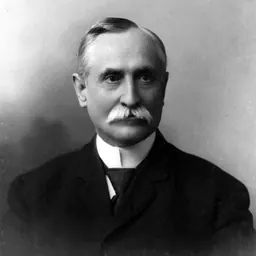
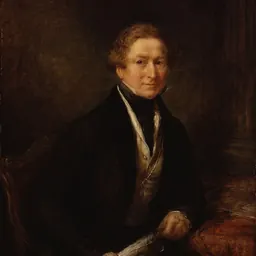




Related people
Same field, nearest in time

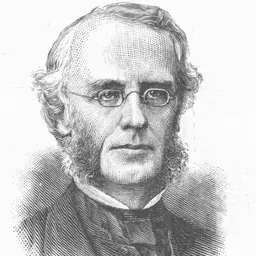
Contemporaries
People whose lives overlapped Mary Baker Eddy's




Frequently asked questions
Who was Mary Baker Eddy?
American founder of Christian Science (1821–1910)
When was Mary Baker Eddy born?
Mary Baker Eddy was born on 16 July 1821 in Bow.
When did Mary Baker Eddy die?
Mary Baker Eddy died on 3 December 1910 in Chestnut Hill.
What was Mary Baker Eddy's occupation?
Mary Baker Eddy was a writer, author and theologian.
What was Mary Baker Eddy known for?
Mary Baker Eddy was known for Christian Science.
What nationality was Mary Baker Eddy?
Mary Baker Eddy was American.
Sources & further reading
Cite this page
APA: Biography.guide. (2026). Mary Baker Eddy. https://biography.guide/mary-baker-eddy/
MLA: "Mary Baker Eddy." Biography.guide, https://biography.guide/mary-baker-eddy/.
Chicago: "Mary Baker Eddy." Biography.guide. https://biography.guide/mary-baker-eddy/.
Data last updated: 2026-09-20 · Spot an error? Report a correction.
Page generated 2026-09-27 05:28 UTC