
About Marv Owen
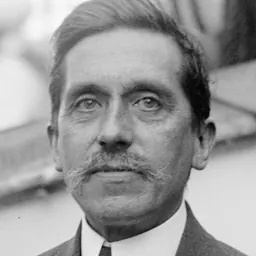
Lived 1906 – 1991 (aged 85). Marv Owen was an American baseball player.
Marvin James Owen (March 22, 1906 – June 22, 1991) was an American baseball player, manager, coach and scout.
A native of northern California, Owen played both baseball and football at Santa Clara University. He made his Major League Baseball debut in 1931, but spent the 1932 season in the International League where he was named the league's Most Valuable Player. He returned to the Tigers in 1933, became part of Detroit's "Battalion of Death" infield, and remained the team's starting third baseman from 1933 to 1937. He had his best season in 1934 when he compiled a .317 batting average with 98 RBIs. He was involved in a fight with Joe Medwick during the final game of the 1934 World Series that led to a near riot and Medwick's ejection from the game.
In December 1937, Owen was traded to the Chicago White Sox where he played in 1938 and 1939 and compiled a career-high 305 assists in 1938. In December 1939, he was sold to the Boston Red Sox where he concluded his major league career during the 1940 season. During his nine-year career in Major League Baseball, Owen compiled a .275 batting average and .339 on-base percentage, appeared in 1,011 games, and totaled 1,388 total bases, 1,040 hits, 499 RBIs, 474 runs scored, 338 bases on balls, and 242 extra base hits.
Owen later served as a minor league manager for 11 years for the Portland Beavers (1944–1946), San Jose Red Sox (1947–1951), Davenport Tigers (1952), Durham Bulls (1953), and Valdosta Tigers (1954). He was also a scout for the Detroit Tigers until retiring in the 1970s.
Early years Owen was born in Agnew, California (now part of Santa Clara), and attended Bellarmine College Preparatory. Instead, he served as the coach of the Santa Clara baseball team during his senior year.
Playing career
Seattle Indians (1930) Owen began his professional baseball career in 1930 with the Seattle Indians of the Pacific Coast League. He appeared in 138 games and compiled a .300 batting average with 24 doubles and seven triples.
Detroit Tigers (1931) Prior to the 1931 season, Owen was purchased by the Detroit Tigers from the Seattle Indians. Tigers manager Bucky Harris rated Owen as "the greatest prospect the American League has seen in many years." During the 1931 season, Owen appeared in 105 games, 37 as the team's starting shortstop, 34 as the third baseman, and 21 as the second baseman.
Newark Bears (1932) After batting only .223 with the Tigers in 1931, Owen returned to the minors. He split the 1932 season in the International League with the Toronto Maple Leafs and the Newark Bears. He was named the Most Valuable Player in the International League for the 1932 season.
Detroit Tigers
1933 season In 1933, Owen returned to the Tigers and became the team's starting third baseman. He was part of an infield that became known as the "Battalion of Death" consisting of Hank Greenberg at first, Charlie Gehringer at second, Billy Rogell at shortstop, and Owen at third. The Battalion of Death remained intact from 1933 to 1935 (until injury sidelined Greenberg in 1936) and was considered one of the best infield combinations in baseball history. Owen appeared in 138 games in 1933, 134 of them as the Tigers' starting third baseman, compiled a .262 batting average, and collected 64 RBIs.
Owen also stood out on defense in 1934, turning a career high 33 double plays at third base. He also led the American League's third baseman with 202 putouts. Owen's hands were so large that he was reportedly able to hold and secure seven baseballs in each hand. He was featured in Ripley's Believe It or Not! with the claim that he "can hold 7 baseballs in one hand."
The 1934 Tigers won the American League pennant with a 101–53 record but lost the 1934 World Series to the St. Louis Cardinals. In Game 7 of the World Series at Navin Field, Joe Medwick of the Cardinals tripled in the sixth inning and knocked Owen down with a hard slide at third. Owen stepped on Medwick, and Medwick, as he lay on the ground, "suddenly began lashing out at Owen's legs with his spiked feet." Interviewed in 1989, Owen recalled, "Medwick slid extra hard into me at third base. When he did that, I kicked him in the groin and he didn't like that." Owen appeared in 131 games as the Tigers' starting third baseman in 1935. Despite the injuries, he continued to contribute defensively, ranking third among the American League's third basemen with 19 double plays and a .958 fielding percentage.
1936–1937
In 1936, Owen had one of his best seasons. He compiled a .295 batting average and a .361 on-base percentage with a career high 105 RBIs. appearing in only 107 games, 102 as the team's starting third baseman. In those appearances, Owen compiled a .288 batting average and a .358 on-base percentage and led the American League third basemen with a .970 fielding percentage. During the 1938 season, Owen appeared in 141 games for the White Sox, 139 as the starting third baseman, and compiled a .287 batting average with 35 extra base hits and 55 RBIs. Owen concluded his major league career appearing in 20 games for the Boston Red Sox during the 1940 season. He appeared in 144 games for Portland during the 1941 season. He continued to play for the Beavers through the 1946 season. He also played for San Jose until an injury led him to announce his retirement as a player in June 1947 at age 41. He continued to manage the San Jose club through the 1951 season.
In January 1952, he was hired as the manager of the Davenport Tigers in the Illinois–Indiana–Iowa League. After one year as manager at Davenport, Owen was hired in January 1953 as the manager of the Durham Bulls. After one year as manager at Durham, Owen served as the manager of the Valdosta Tigers during the 1954 season.
Family and death In December 1938, Owen married Violet Walsh, a Detroit public school teacher. Teammate Charlie Gehringer was his best man. They had a son, Skip, in approximately 1944. He was buried at the Mission Santa Clara de Asís cemetery.
A baseball on which Owen gathered the signatures of 11 of the first 12 members of the Baseball Hall of Fame was sold at auction in August 2018 for $623,369. He had preserved the ball inside a fur-lined glove kept in a safe deposit box until his death in 1991.
Don’t just read it —
keep it.
Full-length biographies made to live with: read them, listen on the way to work, watch them tonight.
- E-book
- Audio
- Video
Instant download · yours to keep · every purchase keeps this site free
Important facts
People in Marv Owen's life
Named in this biography and alive at the same time




Related people
Same field, nearest in time

Contemporaries
People whose lives overlapped Marv Owen's

Frequently asked questions
Who was Marv Owen?
American baseball player and coach
When was Marv Owen born?
Marv Owen was born on 22 March 1906 in Agnew's Village.
When did Marv Owen die?
Marv Owen died on 22 June 1991 in Mountain View.
What was Marv Owen's occupation?
Marv Owen was a baseball player.
What nationality was Marv Owen?
Marv Owen was American.
Sources & further reading
Cite this page
APA: Biography.guide. (2026). Marv Owen. https://biography.guide/marv-owen/
MLA: "Marv Owen." Biography.guide, https://biography.guide/marv-owen/.
Chicago: "Marv Owen." Biography.guide. https://biography.guide/marv-owen/.
Data last updated: 2026-09-20 · Spot an error? Report a correction.
Page generated 2026-09-27 05:20 UTC