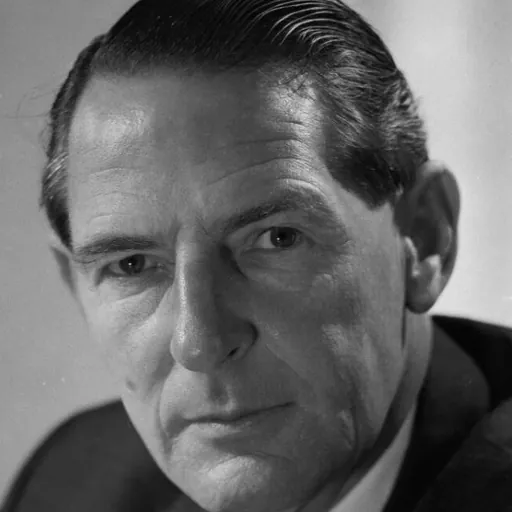
About Martyn Finlay
Lived 1912 – 1999 (aged 87). Martyn Finlay was a New Zealand politician and lawyer.
Allan Martyn Finlay (1 January 1912 – 20 January 1999) was a New Zealand lawyer and politician of the Labour Party. He was an MP in two separate spells and a member of two different governments, including being a minister in the latter where he reformed the country's justice system.
Early life Finlay was born in Dunedin to Baptist missionaries who had worked in India. His father, David Finlay, died when he was two and his mother was forced by economic circumstances to take in boarders. He used to push his brother Harold, ten years older and with polio, two miles to Otago University in his wheelchair. With the oncoming depression, Martyn had to leave school to get a job at the end of fifth form – he had wanted to be a doctor. With a job as an office boy in a law firm at the age of 16, he was able to study law part-time at Otago University for eight years before getting his LLM with First Class Honours. In 1934 he was the winner of the Otago University Law Society's prize in evidence.
He got a scholarship to the London School of Economics and got a PhD in 1938 before becoming a Resident Fellow at Harvard. He met many influential intellectuals in London including Harold Laski, who encouraged him to enter politics. He returned to NZ in 1939 and was employed as a private secretary to Cabinet Ministers Rex Mason and Arnold Nordmeyer. Finlay was impressed by Mason's mastery of the legal system and was impressed that he devised and drafted almost all of his legislation himself. In later years Finlay frequently described himself and fellow Labour MP Warren Freer as the "only remnants" of the first Labour government, a government of whose record he was proud of stating "It was a government of very practical talents. If they saw people hungry, they knew hunger came from malnutrition and that malnutrition came from lack of money, in turn due to lack of a job. They knew nothing of such concepts as level playing fields. And they did not have the help of economists." Despite his disagreements with Fraser, he spoke fondly of him when reminiscing. In 1977 he said Fraser was a statesman of the highest order whose qualities few New Zealanders fully appreciated. From 1957 to 1960 he was a director of Tasman Empire Airways Limited (TEAL). 11 years later he publicly recalled frustrations felt by the government in trying to put changes in policy into practice immediately following the election which, in Finlay's view, stemmed from a lack of positive cooperation from senior public servants who were biased to the National Party. Finlay established the small claims court where "people owed $10 can be heard without having to pay a lawyer $30" and also established duty solicitors to look after the interests of poor people charged in court. The same year he was a member of the legal team that represented the New Zealand and Australian government at the International Court of Justice in an attempt to ban French nuclear tests in the Pacific. Finlay attracted world-wide attention with his performance leading the New Zealand team at the World Court in the joint New Zealand-Australia case seeking a ban on French nuclear testing at Mururoa Atoll. He said later "Ours was a much better case than the Australians and better received by the court," and eventually the court ruled it would be unlawful for France to continue atmospheric testing. While he gave serious consideration to standing ultimately he did not stand.
He set up the Disputes Tribunal and was responsible for much of the work leading to the Matrimonial Property Act which would give divorced wives a right to share in their husband's possessions. He was the recipient of a harsh verbal attack from then prime minister Robert Muldoon in 1977. Muldoon said he despised Finlay, and the sooner the retiring MP was out of the house the better. However, in a rare move, Muldoon later apologised publicly for the outburst, stating that he had misunderstood the situation. and together, they had two daughters. One daughter was sentenced to nine months' imprisonment on charges of supplying and possessing heroin. In 1989, aged 28, she was found dead in her Wellington flat. The other daughter followed her father's career and became a lawyer.
Later life After leaving parliament he practiced law full-time as a Queen's Counsel. He was appointed by the government to investigate two industrial relations disputes; in 1984 during a railway workers' dispute in Picton and in 1985 during a refinery expansion in Whangārei. He retired in 1988. Bassett also said: "To his dying day Finlay was an opponent of capital punishment, a cause to which he added divorce law reform (his own divorce in the 1950s was particularly fraught), homosexual, and abortion law reform. Finlay’s reputation as an advanced liberal on social issues attracted the support of younger party idealists as much as it repelled Labour's more conservative wing, especially Catholics. Finlay’s marital complications irked the puritanical Walter Nash, who did nothing to advance his return to Parliament, and seems not to have welcomed his election as party president in 1960."
Don’t just read it —
keep it.
Full-length biographies made to live with: read them, listen on the way to work, watch them tonight.
- E-book
- Audio
- Video
Instant download · yours to keep · every purchase keeps this site free
Important facts
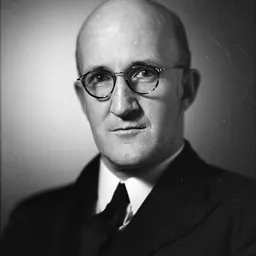
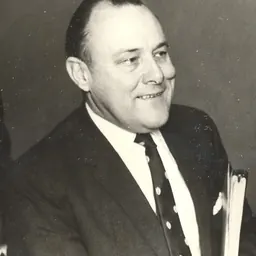
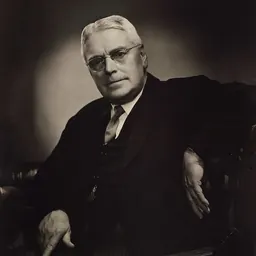
People in Martyn Finlay's life
Named in this biography and alive at the same time




Related people
Same field, nearest in time





Contemporaries
People whose lives overlapped Martyn Finlay's





Frequently asked questions
Who was Martyn Finlay?
New Zealand lawyer and politician (1912–1999)
When was Martyn Finlay born?
Martyn Finlay was born on 1 January 1912 in Dunedin.
When did Martyn Finlay die?
Martyn Finlay died on 20 January 1999 in Auckland.
What was Martyn Finlay's occupation?
Martyn Finlay was a politician and lawyer.
What nationality was Martyn Finlay?
Martyn Finlay was New Zealand.
Sources & further reading
Cite this page
APA: Biography.guide. (2026). Martyn Finlay. https://biography.guide/martyn-finlay/
MLA: "Martyn Finlay." Biography.guide, https://biography.guide/martyn-finlay/.
Chicago: "Martyn Finlay." Biography.guide. https://biography.guide/martyn-finlay/.
Data last updated: 2026-09-21 · Spot an error? Report a correction.
Portrait: Wikimedia Commons · author & licence
Page generated 2026-09-27 04:59 UTC