
About Martin Johnson Heade
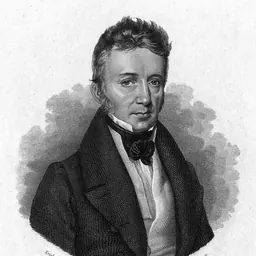
Lived 1819 – 1904 (aged 85). Martin Johnson Heade was an American painter and traveler.
Martin Johnson Heade (August 11, 1819 – September 4, 1904) was an American painter known for his salt marsh landscapes, seascapes, and depictions of hummingbirds, often depicted with orchids, as well as lotus blossoms and other still lifes. His painting style and subject matter, while derived from the romanticism of the time, are regarded by art historians as a significant departure from those of his peers.
Heade was born in Lumberville, Pennsylvania, the son of a storekeeper. He studied with Edward Hicks, and possibly with Thomas Hicks. His earliest works were produced during the 1840s and were chiefly portraits. He travelled to Europe several times as a young man, became an itinerant artist on American shores, and exhibited in Philadelphia in 1841 and New York in 1843. Friendships with artists of the Hudson River School led to an interest in landscape art. In 1863, he planned to publish a volume of Brazilian hummingbirds and tropical flowers, but the project was eventually abandoned. He travelled to the tropics several times thereafter, and continued to paint birds and flowers. Heade married in 1883 and moved to St. Augustine, Florida. His chief works from this period were Floridian landscapes and flowers, particularly magnolias laid upon velvet cloth. His best known works are depictions of light and shadow upon the salt marshes of New England.
Heade was not a widely known artist during his lifetime, but his work attracted the notice of scholars, art historians, and collectors during the 1940s. He quickly became recognized as a major American artist. Although he was often considered a Hudson River School artist, some critics and scholars take exception to this categorization. Heade's works are now in major museums and collections. His paintings are occasionally discovered in unlikely places such as garage sales and flea markets.
Childhood and early career Heade was born in 1819 and was raised in Lumberville, Pennsylvania. Lumberville was a small hamlet, along the Delaware River in Bucks County, Pennsylvania. Until the mid-1850s, his family ran what is now called the Lumberville Store and Post Office, the village's sole general store. The family spelling of the name was Heed.
Heade received his first art training from the folk artist Edward Hicks, who lived in nearby Newtown, and possibly also from Edward's cousin, Thomas Hicks.
Transition to landscape painting
Around 1857 Heade became interested in landscape painting, partly by meeting the established artists John Frederick Kensett and Benjamin Champney in the White Mountains of New Hampshire. Heade moved to New York City and took a studio in the Tenth Street Studio Building, which housed many of the famous Hudson River School artists of the time, such as Albert Bierstadt, Sanford Gifford, and Frederic Edwin Church.
Heade and the Hudson River School Art historians have come to disagree with the common view that Heade is a Hudson River School painter, a view given wide currency by Heade's inclusion in a landmark exhibition of Hudson River School landscapes at the Metropolitan Museum of Art in 1987.
The leading Heade scholar and author of Heade's catalogue raisonné, Theodore E. Stebbins, Jr., wrote some years after the 1987 exhibition, "Other scholars—myself included—have increasingly come to doubt that Heade is most usefully seen as standing within that school."
According to the Heade catalogue raisonné, only around 40 percent of his paintings were landscapes. The remaining majority were still lifes, paintings of birds, and portraits, subjects unrelated to the Hudson River School. Of Heade's landscapes, perhaps only 25 percent had traditional Hudson River School subject matter.
Heade had less interest in topographically accurate views than the Hudson River painters, and instead focused on mood and the effects of light. Stebbins wrote, "If the paintings of the shore as well as the more conventional compositions...might lead one to think of Heade as a Hudson River School painter, the [marsh scenes] make it clear that he was not."
Legacy and collections
Heade was not a famous artist during his time, and for much of the first part of the 20th century was nearly forgotten.
In 1999 and 2000, Heade was the subject of a major exhibition Martin Johnson Heade organized by Theodore E. Stebbins, Jr. It traveled from the Museum of Fine Arts in Boston to the National Gallery of Art in Washington, ending at the Los Angeles County Museum of Art.
In 2004, Heade was honored with a stamp from the U.S. Postal Service featuring his 1890 oil-on-canvas painting, "Giant Magnolias on a Blue Velvet Cloth." As Stebbins notes in his writings, Heade's work has also been copied and forged extensively. Since Heade was not popular during his lifetime, there were few contemporaries who emulated his work. 20th century copies are therefore readily apparent as fakes, since it takes oil paint decades to dry out and harden.
Discoveries of works by Heade Theodore Stebbins, Jr., now curator of American art at the Harvard University Art Museums, writes, "...one of the things that has always made the study of Heade's work exciting is the way his paintings continue to turn up in garage sales and other unlikely places all over the country, in a manner that the paintings of Frederic E. Church and John F. Kensett do not." Stebbins speculates the reason for this was Heade's popularity with middle-class buyers, and his willingness to distribute his works widely across the country. Among the more notable of Heade's discoveries are: Thunderstorm on Narragansett Bay, now in the collection of the Amon Carter Museum of American Art, Fort Worth, Texas, was originally discovered in an antiques store in Larchmont, New York, in 1943 by NYC art dealer Victor Spark. Magnolia Blossoms on Blue Velvet and Cherokee Roses, now in private collections, were purchased at an estate sale in Arizona for $60 in 1996. They sold at Christie's auction house later that year for $937,500 and $134,500 respectively. Two Magnolias on Blue Plush was originally purchased for $29 at a rummage sale by a Wisconsin man in 1989. It sold at Christie's auction house in 1999 for $882,500. It is now in the collection of James W. McGlothlin of Bristol, Virginia. Magnolias on Gold Velvet Cloth was used to cover a hole in the wall of an Indiana resident for years. The owner became curious about the value of the painting after playing an art-related board game, and verified its authenticity with a New York art gallery. The Museum of Fine Arts in Houston purchased the work for $1,250,000 in 1999. An unnamed Heade salt marsh landscape now titled "River Scene" was discovered in the attic of a Boston-area resident in 2003. It sold at a local auction house to an art dealer for $1,006,250 and was featured on the PBS television show, "Find!". It was purchased by a private collector, and is now on view at the Fogg Art Museum in Cambridge, Massachusetts. In 2004 a Florida woman was informed of the Heade discovery featured on "Find!" by her son, and inquired about a small 6 by 12 inch landscape that had hung in her living room. The painting, which her late husband had purchased for several dollars in St. Augustine in the 1970s, was authenticated as a late Heade marsh landscape. It sold at auction to an art dealer for $218,500. A painting was found in a Massachusetts attic in 2006 and consigned to a local auction in Fall River. The painting was authenticated by Dr. Theodore Stebbins, Jr. as a Heade, having been painted between 1883 and 1890 in St. Augustine, Florida. It sold for $198,000 on November 22, 2006.
Fakes On the other hand, an unknown number of Heade's were faked. In 2012, Ken Perenyi (born 1947) disclosed in his book, Caveat Emptor how he forged numerous works purporting to be by Heade and other American masters. He avoided prosecution because he published his book after the statute of limitations had elapsed.
Works
Don’t just read it —
keep it.
Full-length biographies made to live with: read them, listen on the way to work, watch them tonight.
- E-book
- Audio
- Video
Instant download · yours to keep · every purchase keeps this site free
Important facts
People in Martin Johnson Heade's life
Named in this biography and alive at the same time




Related people
Same field, nearest in time

Contemporaries
People whose lives overlapped Martin Johnson Heade's


Frequently asked questions
Who was Martin Johnson Heade?
American painter (1819-1904)
When was Martin Johnson Heade born?
Martin Johnson Heade was born on 11 August 1819 in Bucks County.
When did Martin Johnson Heade die?
Martin Johnson Heade died on 4 September 1904 in St. Augustine.
What was Martin Johnson Heade's occupation?
Martin Johnson Heade was a painter and traveler.
What nationality was Martin Johnson Heade?
Martin Johnson Heade was American.
Sources & further reading
· Wikipedia: Martin Johnson Heade
· DBpedia: Martin Johnson Heade
Cite this page
APA: Biography.guide. (2026). Martin Johnson Heade. https://biography.guide/martin-johnson-heade/
MLA: "Martin Johnson Heade." Biography.guide, https://biography.guide/martin-johnson-heade/.
Chicago: "Martin Johnson Heade." Biography.guide. https://biography.guide/martin-johnson-heade/.
Data last updated: 2026-09-20 · Spot an error? Report a correction.
Page generated 2026-09-27 05:31 UTC