
About Martin Boyd
Lived 1893 – 1972 (aged 78). Martin Boyd was a writer, poet and biographer.
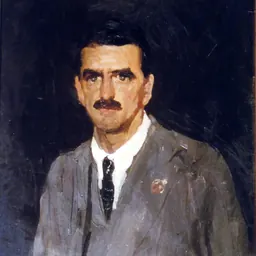
Martin à Beckett Boyd (10 June 1893 – 3 June 1972) was an Australian writer born into the à Beckett–Boyd family, a family synonymous with the establishment, the judiciary, publishing and literature, and the visual arts since the early 19th century in Australia.
Boyd was a novelist, memoirist and poet who spent most of his life after World War I in Europe, primarily Britain. His work drew heavily on his own life and family, with his novels frequently exploring the experiences of the Anglo-Australian upper and middle classes. His writing was also deeply influenced by his experience of serving in World War One.
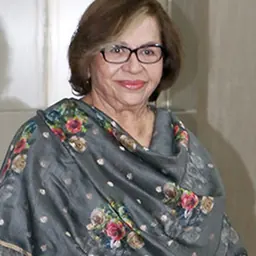
Boyd's siblings included the potter Merric Boyd (1888–1959), painters Penleigh Boyd (1890–1923) and Helen à Beckett Read, née Boyd (1903–1999). He was intensely involved in family life and took a keen interest in the development of his nephews and nieces and their families, including potter Lucy Beck (1916-2009), painter Arthur Boyd (1920–1999), sculptor Guy Boyd (1923–1988), painter David Boyd (1924–2011), painter Mary Nolan (1926–2016) – who was married to painters John Perceval and Sidney Nolan – and architect Robin Boyd (1919–1971). His nephew Guy Boyd was his literary executor.
Life Boyd's friends saw him as "harming, generous, frivolous and funny".
Boyd lived in the Melbourne suburb of Sandringham until he was 13 when the family moved permanently to the family farm in , Victoria. He had a love of books and writing from an early age, but he was also colour blind. He became the only writer in his ancient family amongst painters and artists. Brenda Niall, Boyd's biographer, comments, "His family seems to have been one of those so distinctive in character and achievement that it confers its own citizenship. Being a Boyd was more important than being an Australian: it gave him a sense of identity strong enough to bypass nationalism for civilization."
Boyd's siblings included the potter William Merric Boyd (1888–1959), and the painters Theodore Penleigh Boyd (1890–1923) and Helen à Beckett Read (1903–1999). He fondly remembered his childhood years at Yarra Glen. "he Yarra, only yards away, still provides summer swimming as it did for the Boyds. The river yields cold eels that writhe and bite like snakes but make nice eating later. On the farm the Boyds had ponies, hunting, and fishing, and gorged themselves in the evenings on unlimited fruit and cream." He enjoyed his school years at Trinity Grammar School, Kew. Niall notes that "Boyd did respectably in academic work; he edited the school magazine, the Mitre; he developed a love of English poetry; and, through [his headmaster's] example, he began to consider a future as a clergyman."
After finishing school in 1912, Boyd was undecided on a career path and so commenced study for a religious vocation at St John's College, St Kilda. He did not see out the year but this was the beginning of a lifelong, but never resolved, investigation of the place of religious devotion in his life. At the suggestion of his mother, he began training as an architect at Purchas and Teague in Melbourne.
Michael Bardwell notes that Boyd was "a great campaigner [...] often writing letters to the press about matters he thought were of public importance." A wartime example of this activism was an incident in December 1943, which Boyd relates in his autobiography Day of my Delight, quoted by Bardwell: "A group of eminent people had drawn up a petition to end by mutual agreement the night bombing of cities, which had now become senseless massacres. I put one of the printed forms of this petition on the village notice board, and one on my gate, saying it could be signed at my house. The notices were torn off at night. . .I then put up another inscribed: "The object of this petition is to stop the murder of women and children. Will those who think this aim undesirable, please come in and explain why, instead of tearing this notice off under cover of darkness?" No one came, and a farmer's wife in the village said: "It is a pity Mr. Boyd put up those notices. It quite spoiled the Christmas spirit." he supported those who did.
Life after World War One Boyd returned to Australia after World War One but found he no longer fitted in. Because of his decision to join the British Army, he felt that a wedge had developed between him and his friends as their wartime experiences were different. Listless and directionless he left Melbourne in 1921 to live in London, did some newspaper work and travelled. The image of loss in oozing mud is recreated by Boyd's character Dominic Langton who flung his Military Cross and other medals into the "clayey-yellow pond". As Boyd wrote in When Blackbirds Sing, Langton "his native Toryism was shocked at his anarchy. He realized fully the implication of what he had done". Langton's wife Helena cries "we must try to rake them out". Langton replies: "we can't. They're in the middle - I threw them there."
In 1925 Boyd's first novel, Love Gods, was published. He had found his vocation and between 1925 and 1949 he published ten novels, a volume of autobiography and a children's story.
After his father's death in July 1940, his mother's inheritance was released, which gave Boyd the financial freedom to live life however he chose.
Boyd delayed a return to Australia in the hope he could return a success. They are known for their various contributions to the creative and literary arts but also had many links to the military and, through the a'Becketts, to legal affairs. Martin Boyd was one such individual who greatly contributed to Australian Literature. Being from an upper-middle-class family predominantly associated with the creative arts was a fundamental influence in the development of his identity and the sense of beauty that would later influence his literary style. Boyd's novels soon gained the appreciation of many despite an inherent disinterest in Australian literature. His social comedies provided colourful characters in understandable if not relatable settings.
Behaviour
One of the defining characteristics of Boyd was his reputation as a social enigma. This can mainly be traced to the contrast between the professional aspects of his life and the socially deviant behaviour of, and rumours surrounding, his personal life.
One such behavioural trait was his inability to remain in one place for an extended amount of time, which he himself referred to as wanderlust. Throughout his life he took up residence in a variety of places throughout Australia and Europe. Because of this trait, Boyd was often considered a travelled individual, even publishing his own travel book, and extended his social influence to many of the new locations where he took up residence. However his well known wanderlust also contributed to a reputation for restlessness among his social peers and raised the issue of his inability to settle down and take a wife.
The fact he never married, coupled with rumours and reports of behaviour deviant from that expected of a gentleman and popular author in his position, began to raise questions and doubts about his sexual tendencies. The suspicions centred around his close relationships with those of the same sex; in particular, he was suspected of having an illicit relationship with a young Italian boy, Luciano Trombini.
However it was not until well after his death that such issues were viewed without the sense of prejudice and taboo that were common during his time. It was then that multiple papers analysing the erotic and homosexual undertones of his works were published.
Social views
Boyd was quite outspoken in his beliefs and morals. The publication of his two autobiographies, and to a lesser extent the biographies detailing his life and his novels contain his opinions and beliefs on society and the contemporary issues of the time.
One of the foremost beliefs that influenced Boyd and his works is that of religion. Despite his move towards literature, Boyd retained strong religious beliefs and morals which played a big part in many of his works. This was one of the fundamental reasons for Boyd's success, despite a disinterest in Australian literature, as his strong religious beliefs and morals resonated with the views societies had at the time. He later expressed his disdain for the adoption of purely materialistic values and the self-importance that riddled the aristocracy at the time.
Another major issue surrounding Boyd's values was his disapproval of the supposed blind patriotism encouraged during his education and military service. to his name. He is, however, most renowned for his novels, which were inspired, according to many critics, by his own life and family experiences. Often described as a witty author, Boyd is recognised as one of the most important Australian novelists of the 20th century although responses to his novels vary.
Early works
Verses
The following novels were written under the pseudonym of Martin Mills, though Boyd later gave his birth name to The Montforts. First publication details given below.
Love Gods (London, England: Constable, 1925.) Bangrane: a memoir (London, England: Constable, 1926.) The Madeleine Heritage (Indianapolis, USA: Bobbs-Merrill, 1928.) This is the American edition of The Montforts (London, England: Constable, 1928.) Dearest Idol (Indianapolis, USA: Bobbs-Merrill, 1929.) Published under the pseudonym Walter Beckett.
Later works While almost all of Boyd's novels were written in England, some regard his earlier novels as less refined when compared to his later works, those being:
Scandal of Spring (London, England: J. M. Dent, 1934) The Lemon Farm (London, England: J. M. Dent, 1935) The Painted Princess (London, England: Constable, 1936) For Children. The Picnic (London, England: J. M. Dent, 1937) Night of the Party (London, England: J. M. Dent, 1938) Nuns in Jeopardy (London, England: J. M. Dent, 1940) Lucinda Brayford (London, England: Cresset Press, 1946) Such Pleasure (London, England: Cresset Press, 1949) The Langton tetralogy which, though not published as a series during his lifetime, is now referred to as a collective: The Cardboard Crown (London, England: Cresset Press, 1952) A Difficult Young Man (London, England : Cresset Press, 1955) Outbreak of Love (London, England: John Murray, 1957) When Blackbirds Sing (London, England: Abelard-Schuman, 1962) Why They Walk Out (Rome, M. Boyd, 1970)
Unpublished works The Shepherd of Admetus Bitter Sauces
Autobiography A Single Flame (London, England: J. M. Dent, 1939) Day of My Delight: An Anglo-Australian Memoir (Melbourne, Victoria: Lansdowne, 1965)
Subject matter While writing most of his novels in England, Boyd's novels frequently focus on the contrasting and conflicting realities of upper-class English and Australian societies. He tended to concentrate on the niceties and absurdities of social exchanges, instead of a greater concern with universal problems of human life.
Responses to Boyd's work vary from outright hostility, Fitzpatrick writes, "In spite of very great gifts, which included a prose style of great flexibility and grace, Martin Boyd, the man without a country and the writer without a subject has remained a gifted amateur rather than a professional novelist", In his own time, Boyd's novels received few reviews in the Australian newspapers, and little critical attention between 1928 and 1949. While Boyd's first three novels did not sell well and led to his following three novels being rejected by publishers,
Don’t just read it —
keep it.
Full-length biographies made to live with: read them, listen on the way to work, watch them tonight.
- E-book
- Audio
- Video
Instant download · yours to keep · every purchase keeps this site free
Important facts
People in Martin Boyd's life
Named in this biography and alive at the same time





Related people
Same field, nearest in time





Contemporaries
People whose lives overlapped Martin Boyd's


Frequently asked questions
Who was Martin Boyd?
novelist, autobiographer (1893-1972)
When was Martin Boyd born?
Martin Boyd was born on 10 June 1893 in Lucerne.
When did Martin Boyd die?
Martin Boyd died on 3 June 1972 in Rome, London.
What was Martin Boyd's occupation?
Martin Boyd was a writer, poet and biographer.
What nationality was Martin Boyd?
Martin Boyd's recorded nationality: English people.
Sources & further reading
Cite this page
APA: Biography.guide. (2026). Martin Boyd. https://biography.guide/martin-boyd/
MLA: "Martin Boyd." Biography.guide, https://biography.guide/martin-boyd/.
Chicago: "Martin Boyd." Biography.guide. https://biography.guide/martin-boyd/.
Data last updated: 2026-09-20 · Spot an error? Report a correction.
Page generated 2026-09-27 05:21 UTC