
About Marshal Clarke
Lived 1841 – 1909 (aged 67). Marshal Clarke was a military personnel.
Lieutenant-Colonel Sir Marshal James Clarke (24 October 1841 – 1 April 1909) was a British colonial administrator and an officer of the Royal Artillery. He was the first Resident Commissioner in Basutoland from 1884 to 1893; Resident Commissioner in Zululand from 1893 to 1898; and, following the botched Jameson Raid, the first Resident Commissioner in Southern Rhodesia from 1898 to 1905.
For his work in Basutoland, Clarke drew praise from the economist John A. Hobson in his treatise Imperialism for his devotion to the education and development of the native people, while Viscount Bryce noted that his approach fostered goodwill amongst native people towards Britain. In Zululand, Clarke granted considerable authority and special judicial functions to the hereditary chiefs; and was commended by Sir Walter Hely-Hutchinson, Governor of Natal, for his action in the face of potential famine. He recommended to the Imperial Government the return from exile of Dinuzulu, the paramount chief. While in Southern Rhodesia, he was appointed to protect the interests of native people against the overarching ambitions of the British South Africa Company.
He married Annie Stacy Lloyd, daughter of Major General Banastyre Pryce Lloyd in 1880 and had three children. He died suddenly of pneumonia in his home country of Ireland.
Early life Reverend Mark Clarke, the Rector and Vicar of Shronell, County Tipperary, married Maria Hill on 6 April 1837. Marshal James Clarke was their eldest son, born on 24 October 1841. He was born in Tipperary, educated at a private school in Dublin and studied at Trinity College, Dublin. He went on to study at the Royal Military Academy, Woolwich and was commissioned a Lieutenant in the Royal Artillery in February 1863.
He served in India, where he lost an arm to a tiger. Moving to Africa, he was Resident Magistrate of Pietermaritzburg in 1874. He was promoted to captain in December 1875. He was Aide-de-Camp to Sir Theophilus Shepstone, the Special Commissioner of South Africa in 1876 on his mission to the Transvaal. He was appointed Special Commissioner to South Africa in 1876. During the First Boer War, Clarke was twice mentioned in despatches. He was brevetted Major in April 1880 in recognition of his services during operations in South Africa. He was Resident Magistrate of Basutoland in 1881. He was promoted to Major in November 1882. He was Commissioner of Cape Police in 1882. He was seconded to the Sultan of Turkey's army in command of a regiment of the Egyptian Gendarmerie in 1882.
He retired from the military in March 1883 with the honorary rank of Lieutenant-Colonel.
Basutoland (1884–1893) Clarke was appointed the first Resident Commissioner in Basutoland (today Lesotho) and took office on 16 March 1884. In the preceding years, Basutoland had become unruly. In 1879, an uprising by Chief Morosi was quelled but led to intertribal strife over the partition of his land. The Cape government sought to regain control in 1880 by extending the Cape Peace Preservation Act of 1878 to Basutoland, which provided for the disarmament of natives. Attempts to enforce the law resulted in the Basuto Gun War of 1880 to 1881. Unrest continued until it was agreed in 1884 to place the territory under direct British control.
Under Imperial Administration through Clarke, Basutoland once again demonstrated the loyalty seen under previous Imperial rule and returned to prosperity, supplying neighbouring territories with grain and livestock, as well as labour for the Kimberley Diamond Fields. James Bryce (later Viscount Bryce) noted in his Impressions, after his tour of Southern Africa in 1897, that Clarke combined tactfulness with firmness in order to inspire goodwill towards the British government. While he suppressed the more "noxious" customs of the native people, he did not allow Europeans to own land and mineral prospectors were forbidden: the only whites permitted to reside were officials, missionaries and certain traders. Clarke's policy was to reinstate the tribal institutions and to govern through the recognised chiefs, amongst whom Letsie, son of Moshesh, was paramount. An annual pitso (national assembly) was held to debate questions of welfare. The white authorities only intervened when disturbances occurred between natives.
Clarke served until 1893. The Duke of Marlborough, then Permanent Under-Secretary of State for the Colonies, recorded that he found Clarke's argument more convincing than Milner's, and the Colonial Office refused the proposal.
After serving in office for an extra year to 1905, Clarke retired, having helped to create a better system for the benefit of all. While the Colonial Office sought to mediate conflicts of interest, its impact was varied due to its desire to avoid expense. Milner was preoccupied with his vision of a new South Africa incorporating Southern Rhodesia, for which he needed the support of the BSAC. He appears to have had respect for Clarke, although he seems to have resented his influence at the Colonial Office, denying him an increase in salary or an official secretary. On Clarke's retirement, Milner wrote 'Personally I hardly think the office of Resident Commissioner any longer necessary'.
Arthur Cripps, the Anglican missionary and supporter of the rights of natives, said at the end of the BSAC era:
Honours He was invested as a Companion of the Order of St Michael and St George in April 1880, and promoted to Knight Commander in 1886.
He was granted authority to wear the insignia of the Third Class of the Order of the Medjidieh in November 1883 conferred on him by Tewfik Pasha, Khedive of Egypt, as authorised by Abdul Hamid II, Sultan of the Ottoman Empire, in recognition of his services in the employ of the Khedive.
Personal life Clarke married Annie Stacy Lloyd, eldest daughter of Major General Banastyre Pryce Lloyd in 1880 and had three children: Elizabeth Clarke (17 June 1885 – 26 July 1952), Admiral Sir Marshal Llewelyn Clarke (9 May 1887 – 8 April 1959) and Captain Brian Lloyd Clarke (30 September 1888 – 19 April 1915).
H. Rider Haggard was a friend of Clarke's and he dedicated Swallow, his story of the Boer Great Trek of 1836, to him: "...I hope that you will accept these pages in memory of past time and friendship, and more especially for the providential events connected with a night-long ride which once we took on duty together..."
Clarke died suddenly on 1 April 1909 of pneumonia at The Lodge, Enniskerry, County Wicklow, Ireland.
Don’t just read it —
keep it.
Full-length biographies made to live with: read them, listen on the way to work, watch them tonight.
- E-book
- Audio
- Video
Instant download · yours to keep · every purchase keeps this site free
Important facts
People in Marshal Clarke's life
Named in this biography and alive at the same time


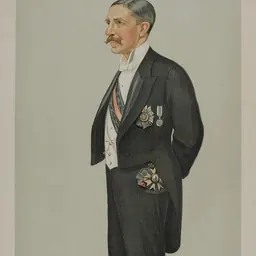
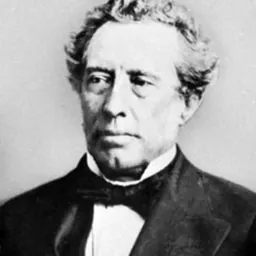

Related people
Same field, nearest in time
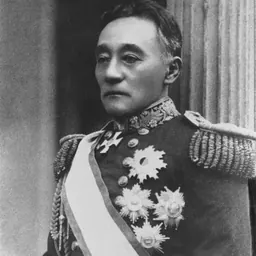
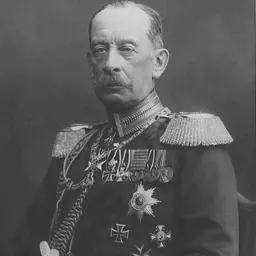


Contemporaries
People whose lives overlapped Marshal Clarke's


Frequently asked questions
Who was Marshal Clarke?
British colonial administrator
When was Marshal Clarke born?
Marshal Clarke was born on 24 October 1841 in Tipperary.
When did Marshal Clarke die?
Marshal Clarke died on 1 April 1909 in Enniskerry.
What was Marshal Clarke's occupation?
Marshal Clarke was a military personnel.
Sources & further reading
Cite this page
APA: Biography.guide. (2026). Marshal Clarke. https://biography.guide/marshal-clarke/
MLA: "Marshal Clarke." Biography.guide, https://biography.guide/marshal-clarke/.
Chicago: "Marshal Clarke." Biography.guide. https://biography.guide/marshal-clarke/.
Data last updated: 2026-09-20 · Spot an error? Report a correction.
Page generated 2026-09-27 05:29 UTC