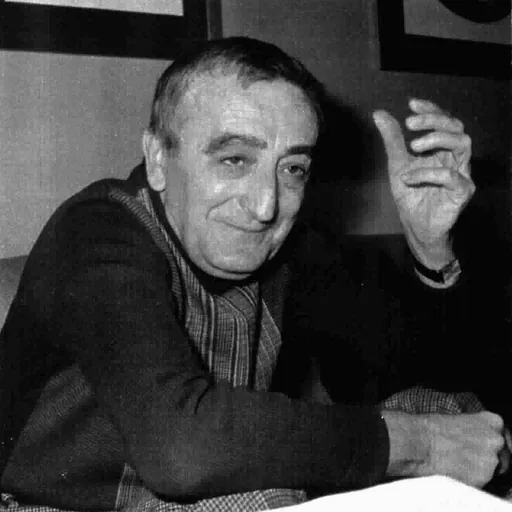
Mario Bava
Italian filmmaker, screenwriter, special effects artist and cinematographer
About Mario Bava
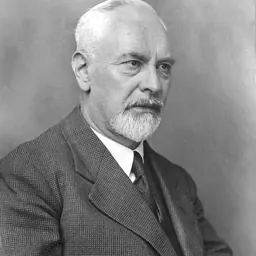
Lived 1914 – 1980 (aged 65). Mario Bava was an Italian film director, screenwriter, cinematographer, writer, special effects artist and film producer.
Family Born to sculptor, cinematographer and special effects pioneer Eugenio Bava, the younger Mario Bava followed his father into the film industry, and eventually earned a reputation as one of Italy's foremost cameramen, lighting and providing the special effects for such films as Hercules (1958) and its sequel Hercules Unchained (1959) (both were lampooned on Mystery Science Theater 3000).
Mario Bava's son and frequent assistant director, Lamberto Bava, later became a noted fantasy and horror film director in his own right.
Biography
Mario Bava was born in Sanremo, Liguria, on 31 July 1914. He was the son of Eugenio Bava (1886–1966), a sculptor who also worked as a special-effects photographer and cameraman in the Italian silent-film industry. Mario Bava's first ambition was to become a painter. Unable to turn out paintings at a profitable rate, he went into his father's business, working as an assistant to other Italian cinematographers like Massimo Terzano. He also helped his father at the special effects department at Benito Mussolini's film factory, the Istituto Luce.
Bava became a cinematographer himself in 1939, shooting two short films with Roberto Rossellini. He made his feature debut in the early 1940s. Bava's camerawork was an instrumental factor in developing the screen personas of such stars of the period as Gina Lollobrigida, Steve Reeves and Aldo Fabrizi.
During the late 1950s, his eventual career trajectory as a director began when he was relied upon to complete projects begun by or credited to his colleague Riccardo Freda and other filmmakers, including The Day the Sky Exploded (1958) (the first Italian science fiction film), Caltiki – The Immortal Monster (1959) and The Giant of Marathon (1959). Many elements of the 1966 film Kill, Baby... Kill!, regarded by Martin Scorsese as Bava's masterpiece, also appear in the Asian strain of terror film known as J-horror. 1971's A Bay of Blood is considered one of the early slasher films, and was explicitly imitated in Friday the 13th Part 2.
Bava was disappointed with the theatrical distribution of some of his later films. His Lisa and the Devil (1972) was never selected by a distributor. Eventually, in order to get it released, the producer reedited the movie into an Exorcist clone, adding footage shot in 1975, and retitling it House of Exorcism. Bava's Semaforo Rosso (1974) was never released theatrically during his lifetime, and in the late 1990s, it also would be reedited, with new footage added, and retitled; it was released on video as Rabid Dogs. It was released on DVD in 2007, slightly altered and again retitled, as Kidnapped.
In 1977, Bava directed his last horror film, Shock. His son, Lamberto Bava, was an uncredited co-director. The elder Bava later did special effects matte work on Dario Argento's 1980 film Inferno. Bava died suddenly of a heart attack on 27 April 1980, at age 65. His doctor had given him a physical just a few days before, and had pronounced him to be in perfect health. At the time of his death, Bava was about to start shooting a science fiction film titled Star Riders, on which Luigi Cozzi had hoped to collaborate.
Filmography
Influence and legacy Although most of Bava's films as director failed to achieve major commercial success upon release, many eventually found acclaim as cult classics, with their content and production values being favourably compared to the works of Alfred Hitchcock. Despite his reputation as a talented artist during his lifetime, Bava's shy, self-deprecating demeanour prevented him from taking advantage of opportunities that would have furthered his international standing within the industry, and he declined multiple opportunities to work in Hollywood.
Bava's son Lamberto worked for fourteen years as his father's assistant director (beginning with Planet of the Vampires), and became a horror film director in his own right. On several of Mario's movies, Mario was credited as John M. Old. Later, Lamberto was sometimes credited as John M. Old Jr. When Lamberto screened his debut film Macabre for his father, Mario commented jokingly to Lamberto: "I am very proud of you. Now I can die in peace". (He actually did die less than two months later.)
Several books have been published about Bava: Mario Bava by Pascal Martinet (Edilig, 1984) and Mario Bava edited by Jean-Louis Leutrat (Éditions du Céfal, 1994) in French; Mario Bava by Alberto Pezzotta (Il Castoro Cinema, 1995) in Italian; The Haunted Worlds of Mario Bava by Troy Howarth (FAB Press, 2002) and most recently, the massive critical biography Mario Bava: All the Colors of the Dark by Tim Lucas (Video Watchdog, 2007; ).
A documentary, Mario Bava: Maestro of the Macabre, was released in 2000.
Bava's directing style influenced entire generations of filmmakers, including Joe Dante, Martin Scorsese, Quentin Tarantino, Francis Ford Coppola, John Landis, and Tim Burton. Bava and his works have also influenced Dario Argento, Lucio Fulci, Federico Fellini, John Carpenter, David Lynch, Nicolas Winding Refn, Roger Corman, Edgar Wright, and Jennifer Kent.
Movie-mocking TV series Mystery Science Theater 3000 concluded its original ten-season run in 1999 with Danger: Diabolik.
Don’t just read it —
keep it.
Full-length biographies made to live with: read them, listen on the way to work, watch them tonight.
- E-book
- Audio
- Video
Instant download · yours to keep · every purchase keeps this site free
Important facts
Family & relationships
People in Mario Bava's life
Named in this biography and alive at the same time



Related people
Same field, nearest in time


Contemporaries
People whose lives overlapped Mario Bava's



Frequently asked questions
Who was Mario Bava?
Italian filmmaker, screenwriter, special effects artist and cinematographer (1914–1980)
When was Mario Bava born?
Mario Bava was born on 31 July 1914 in Sanremo.
When did Mario Bava die?
Mario Bava died on 25 April 1980 in Rome.
What was Mario Bava's occupation?
Mario Bava was a film director, screenwriter, cinematographer, writer, special effects artist and film producer.
What nationality was Mario Bava?
Mario Bava was Italian.
Sources & further reading
Cite this page
APA: Biography.guide. (2026). Mario Bava. https://biography.guide/mario-bava/
MLA: "Mario Bava." Biography.guide, https://biography.guide/mario-bava/.
Chicago: "Mario Bava." Biography.guide. https://biography.guide/mario-bava/.
Data last updated: 2026-09-21 · Spot an error? Report a correction.
Portrait: Wikimedia Commons · author & licence
Page generated 2026-09-27 04:59 UTC