
About Mario Arana Mendívil
Lived 1884 – 1931 (aged 46). Mario Arana Mendívil was a Spanish politician, lawyer and association football player.
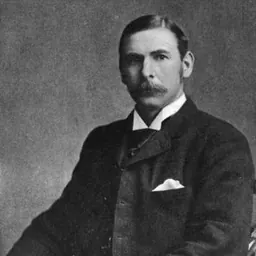
Mario Arana Mendívil (24 May 1884 – 22 March 1931) was a Spanish politician who served as a mayor of Bilbao between 1916 and 1919, and a footballer who played as a forward for Athletic Club.
Early life and education Arana was born on 24 May 1884 in Bilbao to an industrial and liberal father, Francisco Arana Lupardo, a member of the El Sitio Society and councilor of the Bilbao City Council in 1883–85, representing the Liberal Democrat party. He was then one of the first players of the newly created Basque team, playing several friendly matches against city rivals Bilbao Football Club in the Hippodrome of Lamiako, which the two teams shared since there were hardly any fields in Bilbao at the time.
Arana played as a forward for Athletic in two matches in December 1901, keeping a clean sheet in the second to help his side to a 2–0 victory. Arana was thus part in what is now regarded as one of the first football rivalries in Spain, one that helped turn football into a mass phenomenon in Bilbao since their duels aroused great expectation. The chronicles of this match reported that "M. Arana played very well and with great serenity".
Politic career Mayor of Bilbao With a nationalist ideology, Arana belonged to the Comunión Nacionalista Vasca in the Basque Nationalist Party. This appointment being supported by the President of the Liberal Committee of Bilbao Federico de Echeverría with great indignation of men like Balparda, and of the socialists and republicans. In 1917, the appointment of mayors was replaced by the election method, and this time he was elected mayor by the vote of the people.
Another of the challenges that Arana had to face during his mandate was the 1917 Spanish general strike, called by the Unión General de Trabajadores (UGT) and the Confederación Nacional del Trabajo (CNT) at the state level. In Bilbao, the strike was carried out by 100,000 workers, who paralyzed the town between 13 and 19 August. The clashes with the assault guard and the derailment of a train near La Peña left 11 dead and dozens injured. Arana's most complicated challenge, however, was when the city of Bilbao was hit by the Influenza pandemic of 1918; during the months of September and October, more than 700 deaths were recorded in Bilbao due to the flu. During the epidemic, the mayor had a direct involvement in managing the crisis and his participation was subsequently praised by doctors and other social entities.
Autonomy issues acquired great prominence during Arana's mandate, and thus, on 17 July 1917, the Bilbao City Council adhered to the manifesto approved by the Basque councils in favor of political self-government. This inspired similar initiatives in other Biscayan city councils, which were supported by the Bilbao city council in order to establish agreements in favor of the autonomy of the City Councils of Bizkaia. A mayoral decree brought together the assembly of municipalities of Biscay on 15 December 1918 to request political self-government, but various altercations took place and the civil Governor suspended Mayor M. Arana from his position on 20 December; Gabino Orbe Usabanderas officially succeeded him as mayor on 3 July 1919.
Later career During the autonomist agitation that followed the collapse of the Empires in the First World War, and having been designated "Favorite Son of Bilbao", Arana was elected to the Spanish Parliament in 1919, as a Deputy to the Cortes for Bizkaia (Guernica) in 1919, defeating the conservative Bergé, although he resigned in September 1920.
During the political situation of 1920, a sector of Basque nationalism advocated for the union of the right, which implied an electoral agreement with the Monarchic League, an alliance that Arana defended. Finally, the leaders of the Monarchist Action League, such as Ramón Bergé, among others, preferred an electoral understanding with the socialist Indalecio Prieto, who had been Arana's lieutenant during his first mayoral mandate, to promote the electoral defeat of Bizkaitarrismo.
Death Arana died in Madrid on 22 March 1931, at the age of 46.
Don’t just read it —
keep it.
Full-length biographies made to live with: read them, listen on the way to work, watch them tonight.
- E-book
- Audio
- Video
Instant download · yours to keep · every purchase keeps this site free
Important facts
People in Mario Arana Mendívil's life
Named in this biography and alive at the same time

Related people
Same field, nearest in time





Contemporaries
People whose lives overlapped Mario Arana Mendívil's

Frequently asked questions
Who was Mario Arana Mendívil?
Spanish footballer
When was Mario Arana Mendívil born?
Mario Arana Mendívil was born on 24 May 1884 in Bilbao.
When did Mario Arana Mendívil die?
Mario Arana Mendívil died on 22 March 1931 in Madrid.
What was Mario Arana Mendívil's occupation?
Mario Arana Mendívil was a politician, lawyer and association football player.
What nationality was Mario Arana Mendívil?
Mario Arana Mendívil was Spanish.
Sources & further reading
· Wikipedia: Mario Arana Mendívil
Cite this page
APA: Biography.guide. (2026). Mario Arana Mendívil. https://biography.guide/mario-arana-mendivil/
MLA: "Mario Arana Mendívil." Biography.guide, https://biography.guide/mario-arana-mendivil/.
Chicago: "Mario Arana Mendívil." Biography.guide. https://biography.guide/mario-arana-mendivil/.
Data last updated: 2026-09-20 · Spot an error? Report a correction.
Page generated 2026-09-27 05:23 UTC