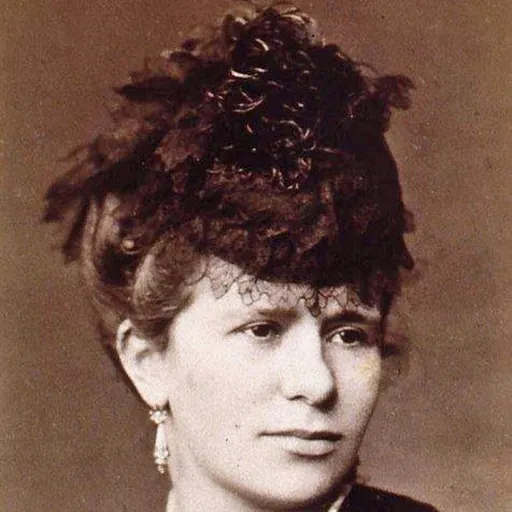
About Marie Jaëll
Lived 1846 – 1925 (aged 78). Marie Jaëll was a French composer, pianist, musicologist, teacher, music educator and piano teacher.
Marie Jaëll (née Trautmann) (17 August 1846, Steinseltz – 4 February 1925, Paris) was a French pianist, composer, and pedagogue. Marie Jaëll composed pieces for piano, concertos, quartets, and others, She dedicated her cello concerto to Jules Delsart, Her students included Albert Schweitzer, who studied with her while also studying organ with Charles-Marie Widor in 1898–99. She died in Paris.
Early life and education Her father was the mayor of Steinseltz in Alsace, and her mother was a lover of the arts. She began piano studies at the age of six and by seven, she was studying under piano pedagogues F.B. Hamma and Ignaz Moscheles in Stuttgart. Marie's mother served as her advocate and manager. A year after she began lessons with Hamma and Moscheles, she gave concerts in Germany and Switzerland.
In 1856, the ten-year-old Marie was introduced to the piano teacher Heinrich Herz at the Paris Conservatory. After just four months as an official student at the Conservatory, she won the First Prize of Piano. Her performances were recognized by the public and local newspapers; the Revue et gazette musicale printed a review on July 27, 1862, that reads: "She marked it [the piece] with the seal of her individual nature. Her higher mechanism, her beautiful style, her play deliciously moderate, with an irreproachable purity, an exquisite taste, a lofty elegance, constantly filled the audience with wonder." The husband and wife team performed popular pieces, duos, solos, and compositions of their own throughout Europe and Russia. As a pianist, Marie specialized in the music of Schumann, Liszt, and Beethoven. They transcribed Beethoven's "Marcia alla Turca" from The Ruins of Athens for piano; the score was successfully published in 1872.
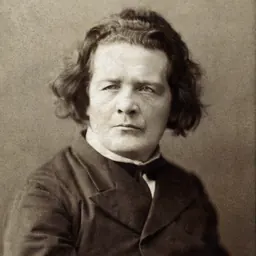
Alfred was able to use his success and fame to help Marie meet with various composers and performers throughout their travels. In 1868, Marie met the composer and pianist Franz Liszt. A record of Liszt's comments about Marie survives in an article published in the American Record Guide: "[Marie Jaëll] has the brains of a philosopher and the fingers of an artist." Liszt introduced Marie to other great composers and performers of the day—for example, Johannes Brahms and Anton Rubinstein. By 1871, Marie's compositions began to be published.
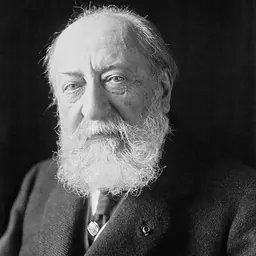
With the death of her husband in 1882, Marie had the opportunity to study with Liszt in Weimar, and with Camille Saint-Saëns and César Franck in Paris. Saint-Saëns dedicated his Piano Concerto No. 1 and the "Étude en forme de valse" to her. Saint-Saëns thought highly enough of Marie to introduce her to the —a great honor for women in those days. She wrote a number of vocal pieces and an opera, Runea. A CD of her chamber music, including the four movement Piano Quartet in G minor (1875) and the Ballade for piano and violin (1886), was issued in 2026.
Physiology research and Jaëll Method
After struggling with tendonitis, Jaëll began to study neuroscience. The strain on her playing and performing led her to research physiology. Jaëll studied a wide variety of subjects pertaining to the functioning of the body, and also ventured into psychology: "She wanted to combine the emotional and spiritual act of creating beautiful music with the physiological aspects of tactile, additive, and visual sensory."
Source:
Le toucher, enseignement du piano ... basé sur la physiologie (Paris, 1895) La musique et la psychophysiologie (Paris, 1896) Le mécanisme du toucher (Paris, 1897) Les rythmes du regard et la dissociation des doigts (Paris, 1901) L’intelligence et le rythme dans les mouvements artistiques (Paris, 1904) Un nouvel état de conscience: la coloration des sensations tactiles (Paris, 1910) La résonance du toucher et la topographie des pulpes (Paris, 1912) Nouvel enseignement musical et manuel basé sur la découverte des boussoles tonales (Paris, 1922) Le toucher musical par l’éducation de la main (Paris, 1927) La main et la pensée musicale (Paris, 1927)
Don’t just read it —
keep it.
Full-length biographies made to live with: read them, listen on the way to work, watch them tonight.
- E-book
- Audio
- Video
Instant download · yours to keep · every purchase keeps this site free
Important facts
People in Marie Jaëll's life
Named in this biography and alive at the same time

Related people
Same field, nearest in time

Contemporaries
People whose lives overlapped Marie Jaëll's


Frequently asked questions
Who was Marie Jaëll?
French composer (1846-1925)
When was Marie Jaëll born?
Marie Jaëll was born on 17 August 1846 in Steinseltz.
When did Marie Jaëll die?
Marie Jaëll died on 4 February 1925 in Paris.
What was Marie Jaëll's occupation?
Marie Jaëll was a composer, pianist, musicologist, teacher, music educator and piano teacher.
What nationality was Marie Jaëll?
Marie Jaëll was French.
Sources & further reading
Cite this page
APA: Biography.guide. (2026). Marie Jaëll. https://biography.guide/marie-jaell/
MLA: "Marie Jaëll." Biography.guide, https://biography.guide/marie-jaell/.
Chicago: "Marie Jaëll." Biography.guide. https://biography.guide/marie-jaell/.
Data last updated: 2026-09-23 · Spot an error? Report a correction.
Portrait: Wikimedia Commons · author & licence
Page generated 2026-09-27 05:05 UTC