
About Marie Bracquemond
Lived 1840 – 1916 (aged 75). Marie Bracquemond was a French painter, porcelain painter, printmaker, ceramicist and artist.
Marie Anne Caroline Bracquemond (; Quivoron; 1 December 1840 – 17 January 1916) was a French Impressionist artist. She was one of four notable women in the Impressionist movement, along with Mary Cassatt, Berthe Morisot, and Eva Gonzalès. Bracquemond studied drawing as a child and began showing her work at the Paris Salon when she was still an adolescent. She never underwent formal art training, but she received limited instruction from Jean-Auguste-Dominique Ingres and advice from Paul Gauguin which contributed to her stylistic approach.
She married noted printmaker Félix Bracquemond, who helped popularize Japanese art in France. Together, they produced ceramic art for Haviland & Co., a manufacturer of Limoges porcelain. Marie's frequent omission from books on artists is sometimes attributed to the efforts of her husband. Although Félix participated with the Impressionist exhibitions, he notably disapproved of the movement at which his wife excelled. Indeed, Pierre Bracquemond, their son, stated that his father was jealous of Marie's work, belittled her ambition, and refused to show her paintings to visitors.
Marie participated in three out of the eight major Impressionist exhibitions, submitting her work to the fourth (1879), fifth (1880), and eighth (1889) group showings. During her lifetime as an artist, Bracquemond produced at least 157 original works, of which only 31 have been located and catalogued in existing collections today, with the rest having disappeared into various private collections without record. Her only two solo exhibitions were held after her death.
Early life She was born Marie Anne Caroline Quivoron on 1 December 1840 in Argenton-en-Landunvez, near Brest, Brittany. She did not enjoy the same upbringing or career as the other well-known female Impressionists – Mary Cassatt, Berthe Morisot, and Eva Gonzalès. She had one sister, Louise, born in 1849 while her family lived near Ussel (department Corrèze in Limousin) in the ancient abbey Notre-Dame de Bonnaigue.
She began lessons in painting at the teenage age of 17 under the instruction of M. Auguste Vassor, "an old painter who now restored paintings and gave lessons to the young women of the town." and introduced her to two of his students, Flandrin and Signol.
The critic Philippe Burty referred to her as "one of the most intelligent pupils in Ingres' studio." As a student in Ingres' private Parisian studio, she wrote that, "The severity of Monsieur Ingres frightened me ... because he doubted the courage and perseverance of a woman in the field of painting ... He would assign to them only the painting of flowers, of fruits, of still lives, portraits and genre scenes."
She later left Ingres' studio and began receiving commissions for her work, including one from the court of Empress Eugenie for a painting of Cervantes in prison. This evidently pleased, because she was then asked by the Count de Nieuwerkerke, the director-general of French museums, to make important copies in the Louvre. As she found the medium constraining, her husband's efforts to teach her etching were only a qualified success. She nevertheless produced nine etchings that were shown at the second exhibition of the Society of Painter-Etchers at the Galeries Durand-Ruel in 1890. Her husband introduced her to new media and to the artists he admired, as well as older masters such as Chardin. She was especially attracted to the Belgian painter Alfred Stevens. Between 1887 and 1890, under the influence of the Impressionists, Bracquemond's style began to change. Her canvases grew larger and her colours intensified. She moved out of doors (part of a movement that came to be known as plein air), and to her husband's disgust, Monet and Degas became her mentors. Bracquemond participated in the Impressionist exhibitions of 1879, 1880, and 1886. In 1890, Marie Bracquemond, worn out by the continual household friction and discouraged by lack of interest in her work, abandoned her painting except for a few private works. Her official last work was in the same year called "The Artist’s Son and Sister in the Garden at Sèvres" In the article, Alexandre wrote that Bracquemond "was one of those artists ignored, of which the times to come will astonish, both the rare talent and the voluntary shadow in which this talent enveloped itself", and described Bracquemond as an "exquisite painter" whose character "was worthy of the work: sensitive, proud and an almost excessive modesty."
Legacy Henri Focillon described Bracquemond in 1928 as one of "les trois grandes dames" of Impressionism alongside Berthe Morisot and Mary Cassatt. Feminist art criticism in the 1970s brought increasing attention to women in the Impressionist art movement, and renewed interest in the forgotten work of Marie Bracquemond. In the 1980s, art historian Tamar Garb popularized women artists like Marie Bracquemond with the publication of Women Impressionists, leading to a new era of research on the subject.
Works There is no catalogue raisonné for Marie Bracquemond. Bracquemond produced at least 81 paintings and oil sketches, 34 watercolors, 23 drawings, and nine etchings. This list does not include her ceramic works. At least two of her works, the ceramic faience panel The Muses (1878) and the painting The Swallow (1880), depicting the Sisleys in a boat on the Seine, are untraced and presumed lost.
Selected exhibitions Selected Marie Bracquemond Exhibitions - Solo DateParis, Bernheim-Jeune. Catalogue des peintres, aquarelles, dessins et eaux-fortes de Marie Bracquemond.1919Paris, Bernheim-Jeune. 1962Group exhibitionsMortagne, Musée de Mortagne. Félix Bracquemond, 1833-1914: gravures, dessins, ceramiques. Marie Bracquemond, 1841-1916. tableaux. Also shown Chartres.1972, May–SeptemberAnn Arbor, University of Michigan, Museum of Art. The Crisis of Impressionism, 1878-1882. Included works by Marie and Félix Bracquemond, Cassatt, and Morisot, among many other Impressionist artists.1979-80, November 2 - January 6Paris, Musée d'Orsay. Women, art and power (Femmes, art et pouvoir)2019-20, September 11 - January 20
Don’t just read it —
keep it.
Full-length biographies made to live with: read them, listen on the way to work, watch them tonight.
- E-book
- Audio
- Video
Instant download · yours to keep · every purchase keeps this site free
Important facts
Family & relationships
People in Marie Bracquemond's life
Named in this biography and alive at the same time


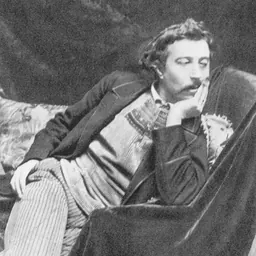
Related people
Same field, nearest in time
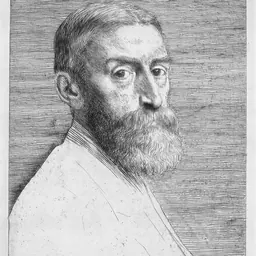
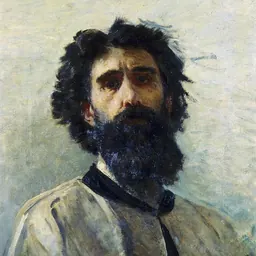
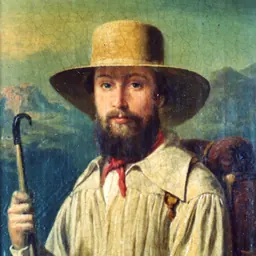
Contemporaries
People whose lives overlapped Marie Bracquemond's

Frequently asked questions
Who was Marie Bracquemond?
French painter (1840–1916)
When was Marie Bracquemond born?
Marie Bracquemond was born on 1 December 1840 in Landunvez.
When did Marie Bracquemond die?
Marie Bracquemond died on 17 January 1916 in Sèvres.
What was Marie Bracquemond's occupation?
Marie Bracquemond was a painter, porcelain painter, printmaker, ceramicist and artist.
What nationality was Marie Bracquemond?
Marie Bracquemond was French.
Sources & further reading
· Wikipedia: Marie Bracquemond
Cite this page
APA: Biography.guide. (2026). Marie Bracquemond. https://biography.guide/marie-bracquemond/
MLA: "Marie Bracquemond." Biography.guide, https://biography.guide/marie-bracquemond/.
Chicago: "Marie Bracquemond." Biography.guide. https://biography.guide/marie-bracquemond/.
Data last updated: 2026-09-20 · Spot an error? Report a correction.
Page generated 2026-09-27 05:18 UTC