
About Marie Adelheid of Lippe-Biesterfeld
Lived 1895 – 1993 (aged 98). Marie Adelheid of Lippe-Biesterfeld was a German novelist.
Princess Marie Adelheid of Lippe (30 August 1895 – 25 December 1993) was a socialite and writer who was active in Nazi Germany. As the wife of Friedrich Kurt "Hanno" Konopacki-Konopath (1882–1962), a prominent DNVP, later NSDAP official (Ministerial Councillor and State Finance Councillor in the Reich Debt Administration), Marie Adelheid was a well known and ardent supporter of the Nazi regime. She was instrumental in the Nordic Ring, a forum for the discussion of issues concerning race and eugenics.
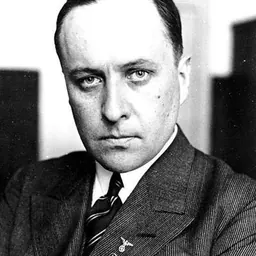
Marie Adelheid also served as an aide to Minister of Food and Agriculture Richard Walther Darré, and produced numerous works of fiction, poetry, translations, and other books. After the end of World War II, she published translations of prominent Holocaust-denying works, such as Paul Rassinier's Le Drame des Juifs européens (The Drama of European Jews) into German in 1964.
Family Countess Marie Adelheid was born the youngest child and only daughter of Count Rudolf of Lippe-Biesterfeld (1856-1931), later Prince Rudolf of Lippe and his wife, Princess Caroline Luise of Ardeck (a morganatic granddaughter of Frederick William, Elector of Hesse). Her father, a son of Count Julius Peter of Lippe-Biesterfeld (1812-1884) and Countess Adelheid zu Castell-Castell (1818-1900), was an uncle of Prince Leopold IV, who ruled the small principality of Lippe from 1905 until the 1918 collapse of the German Empire in World War I. Marie Adelheid was also a first cousin once-removed of Prince Bernhard of Lippe-Biesterfeld (1911-2004) who, in 1937 became the prince consort of Juliana, future Queen of the Netherlands.
Marriages At the age of 24, Marie Adelheid wed, in the castle in which she was born at Drogelwitz, Prince Heinrich XXXII Reuss, J(unior) L(ine), a man seventeen years her senior, Thereafter, Marie Adelheid used the title Princess Reuss zur Lippe. Like the Hesse family, the Lippe dynasty joined the Nazi Party in great numbers (ultimately eighteen members would eventually join). Some German states provided a proportionally higher number of SS officers, including Hesse-Nassau and Lippe, Marie Adelheid's birthplace. A small work of forty-one pages, its spacious layout and the exceptional quality of its paper is evidence that while Germany was suffering from an economic depression, the book was distributed in small quantities to a select, wealthy clientele. Her cousin Ernst, Hereditary Prince of Lippe (son of Leopold IV, Prince of Lippe) was also employed under Darré. These essays included Nordische Frau und Nordischer Glaube [Nordic Women and Nordic Religion] (1934), Deutscher Hausrat [Setting up the German Household] (1936), two edited collections of writings by Darre, and two novels, Mutter Erde [Mother Earth] (1935), and Die Overbroocks [The Overbroocks] (1942).
Nordic Faith Movement In the late 1920s, Marie Adelheid regularly attended meetings for the paganist Nordic Ring, which was a forum for the discussion of issues concerning race and eugenics. Her third husband was a leader of this group. Konopath was a member of the Race and Culture Division in the Reich Leadership Office.
"In the Old Testament, the greatest and most sacred things are treated as a variety of sin. One should not, therefore, place in children's hands the sort of tales of which the Old Testament is made up. However, the new Testament is not much better. Throughout the Old Testament woman is treated as something shameful. We read there that a woman who has borne a child should make a sacrifice".
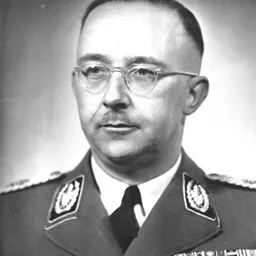
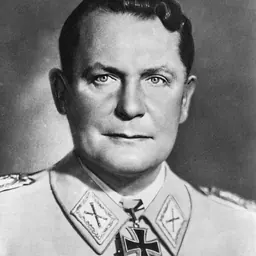
Fall of Darré As the war caused unwelcome developments, Darré's romantic "blood and soil" views suffered as new and more efficient plans were produced by important Nazi officials Heinrich Himmler and Hermann Göring. She translated Paul Rassinier's Holocaust-denying work, Le Drame des Juifs européens (The Drama of European Jews), into German in 1964, and also published two more volumes of poetry. As a result of his publications, Christophersen was threatened with imprisonment for spreading Nazi propaganda, and finally had to leave Germany for Denmark.
Death Marie Adelheid died on Christmas Day 25 December 1993 in Tangstedt, Schleswig-Holstein, Germany, aged 98. All of these original works contained right-wing propaganda, both during and after the fall of the Nazi regime.
Novels Mutter Erde [Mother Earth] (1935)
Ancestry
Don’t just read it —
keep it.
Full-length biographies made to live with: read them, listen on the way to work, watch them tonight.
- E-book
- Audio
- Video
Instant download · yours to keep · every purchase keeps this site free
Important facts
Family & relationships
People in Marie Adelheid of Lippe-Biesterfeld's life
Named in this biography and alive at the same time


Related people
Same field, nearest in time



Contemporaries
People whose lives overlapped Marie Adelheid of Lippe-Biesterfeld's


Frequently asked questions
Who was Marie Adelheid of Lippe-Biesterfeld?
German Princess and Nazi sympathyser (1895-1993)
When was Marie Adelheid of Lippe-Biesterfeld born?
Marie Adelheid of Lippe-Biesterfeld was born on 30 August 1895 in Pęcław.
When did Marie Adelheid of Lippe-Biesterfeld die?
Marie Adelheid of Lippe-Biesterfeld died on 25 December 1993 in Tangstedt.
What was Marie Adelheid of Lippe-Biesterfeld's occupation?
Marie Adelheid of Lippe-Biesterfeld was a novelist.
What nationality was Marie Adelheid of Lippe-Biesterfeld?
Marie Adelheid of Lippe-Biesterfeld was German.
Sources & further reading
· Wikipedia: Marie Adelheid of Lippe-Biesterfeld
· DBpedia: Princess Marie Adelheid of Lippe
Cite this page
APA: Biography.guide. (2026). Marie Adelheid of Lippe-Biesterfeld. https://biography.guide/marie-adelheid-of-lippe-biesterfeld/
MLA: "Marie Adelheid of Lippe-Biesterfeld." Biography.guide, https://biography.guide/marie-adelheid-of-lippe-biesterfeld/.
Chicago: "Marie Adelheid of Lippe-Biesterfeld." Biography.guide. https://biography.guide/marie-adelheid-of-lippe-biesterfeld/.
Data last updated: 2026-09-20 · Spot an error? Report a correction.
Page generated 2026-09-27 05:31 UTC