
Maria Weiterer
German political activist, increasingly prominent in the Communist Party during the 1920s and 1930s
About Maria Weiterer
Lived 1899 – 1976 (aged 77). Maria Weiterer was a German politician, resistance fighter, union secretary and referent.
Maria Weiterer (born Maria Tebbe; 18 February 1899 – 1 December 1976) was a German political activist, increasingly prominent in the Communist Party during the 1920s and 1930s.
She survived the twelve Nazi years, living in exile from 1934. She returned to Germany after the war, settling in the Soviet occupation zone and building a career in what became the East German political establishment. In 1950, however, she was stripped of her offices and party membership and given a low grade clerical post in the south of the country, far from the centres of power. Much was made, at the time, of her sometimes close (it was asserted) association, as a political exile during the early 1940s, with the US diplomat-spy Noel Field. She was subsequently rehabilitated in 1956, but her political career never resumed its former upward trajectory.
Life Provenance and early years Maria Tebbe was born in Essen, at the heart of the industrial Ruhr region in north-western Germany. Her father worked as a bookkeeper: her mother worked as a midwife.
She attended school locally between 1906 and 1915, concluding her studies with a half year at a commercially focused "kaufmännisch" school. She then took a series of jobs in the private sector before joining, in 1916, the war victim support service of the city council in nearby Bochum. In 1918 war ended in military defeat for Germany and a period of social and political turmoil ensued. Maria Tebbe married Mathias Weiterer of whom little more is known: their marriage together appears to have been of short duration. In 1921 Maria Weiterer joined the recently formed Communist Party and started work, as volunteer, for the "Ruhr-Echo" newspaper in Essen. One of her jobs involved working as a typist for Adolf "Lex" Ende. She became a member of the women's secretariat with the party's Ruhr regional leadership team ("Bezirksleitung") and later headed up the local branch of the Red Front Struggle League's women's and girls' section ("Rote Frauen und Mädchenbund" / RFMB) till 1927 or 1928. Later she joined the organisation department of the party local leadership in the Charlottenburg quarter of Berlin, then becoming head of the women's section in the party local leadership in the city's Prenzlauer Berg quarter. Still in Berlin, she then, till 1933, served as a party political leader ("Polleiter"). (Her partner already had close contacts with "anti-fascists" in Czechoslovakia. Although war had been declared, France had not yet been invaded by Germany. It was nevertheless widely anticipated that large scale fighting would begin at some stage, and in May 1940 the German army did indeed invade, quickly overrunning the north of the country. To the south, among the German communists interned in Rieucros sharp divisions arose over whether or not to obey the orders of their guards and so work for the French army, hoping that they might thereby be given political asylum and permitted to participate more directly in the fight against Hitler. Weiterer was one of those rejecting this position, however, asserting that the only place they would expect to receive asylum was within the confines of a concentration camp, and that for the French government the war was an imperialist one which female communist internees had no reason to support. After these discussions she ended up leading a group of Rieucros inmates committed to applying for exit visas in order that they might leave France.
Meanwhile, two successive attempts by Weiterer to quit Marseille failed, the first because of the sudden closure of the Spanish frontier with France and the second after the French interior ministry (in what was now becoming a tightly controlled German puppet state) sent a cable to the emigration authorities in Marseille with a list of people prohibited from leaving France. Weiterer's name was on the list. The port of Marseille was closely monitored, and in order to pass through it Weiterer would have needed to pass through control points operated by the customs services, the French police service, and (dressed in German military uniforms) the Gestapo: the exit was blocked. It was Tempi who instructed Weiterer to work on the Service Committee's relief efforts on behalf of the many refugees from Germany, Austria, Hungary and Poland who had come to Paris, working to organise clothes, jobs and money: the German Communist Party endorsed the instruction. During her final years in Berga she was also, at one point, in charge of a school. In 1959 she was permitted to return to (East) Berlin, where she worked at the Ministry for Culture in the publications and books department, till her retirement in 1965.
Maria Weiterer died in East Berlin on 1 December 1976.
Awards and honours 1962 Clara Zetkin Medal 1964 Patriotic Order of Merit in bronze 1969 Patriotic Order of Merit in silver
Don’t just read it —
keep it.
Full-length biographies made to live with: read them, listen on the way to work, watch them tonight.
- E-book
- Audio
- Video
Instant download · yours to keep · every purchase keeps this site free
Important facts
People in Maria Weiterer's life
Named in this biography and alive at the same time
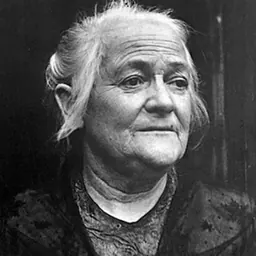

Related people
Same field, nearest in time






Contemporaries
People whose lives overlapped Maria Weiterer's
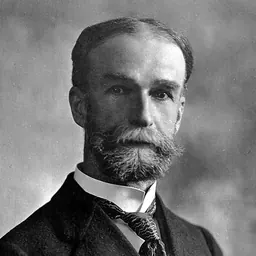
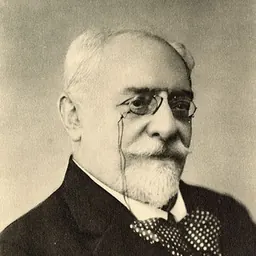
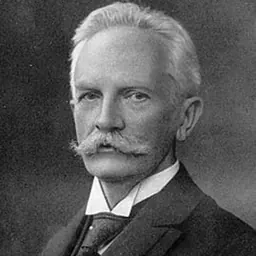

Frequently asked questions
Who was Maria Weiterer?
German political activist, increasingly prominent in the Communist Party during the 1920s and 1930s
When was Maria Weiterer born?
Maria Weiterer was born on 18 February 1899 in Essen.
When did Maria Weiterer die?
Maria Weiterer died on 1 December 1976 in Berlin, East Berlin.
What was Maria Weiterer's occupation?
Maria Weiterer was a politician, resistance fighter, union secretary and referent.
What nationality was Maria Weiterer?
Maria Weiterer was German.
Sources & further reading
Cite this page
APA: Biography.guide. (2026). Maria Weiterer. https://biography.guide/maria-weiterer/
MLA: "Maria Weiterer." Biography.guide, https://biography.guide/maria-weiterer/.
Chicago: "Maria Weiterer." Biography.guide. https://biography.guide/maria-weiterer/.
Data last updated: 2026-09-20 · Spot an error? Report a correction.
Page generated 2026-09-27 04:58 UTC