
About Maria Lamas
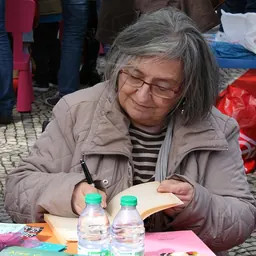
Lived 1893 – 1983 (aged 90). Maria Lamas was a Portuguese journalist, writer, photographer, translator, activist and feminist.
Maria Lamas (born Maria da Conceição Vassalo e Silva; 6 October 1893 – 6 December 1983) was a Portuguese writer, translator, journalist, and feminist political activist.
Early life Maria da Conceição Vassalo e Silva da Cunha Lamas was born on 6 October 1893 in Torres Novas in the Santarém District of Portugal. Her parents both came from well-off families. Her father was a Freemason while her mother was a pious Catholic. She had two younger sisters and was the older sister of Manuel António Vassalo e Silva, who would become the last Governor-General of Portuguese India, and cousin of the children’s book writers Alice Vieira and of the writer and publisher Maria Lúcia Vassalo Namorado. She attended primary and secondary school in Torres Novas, completing her secondary education at a boarding school run by Spanish nuns, from which her father removed her, concerned that she was developing a religious vocation. The nuns may not have been too disappointed: one was quoted as saying “a demon left here”. At the age of 17, in 1911, she married Teófilo José Pignolet Ribeiro da Fonseca, an officer at the local Cavalry School. In the same year, and already pregnant, she accompanied her husband who was assigned to work at a military prison in Capelongo in what was then Portuguese Angola. Her first daughter was born there.
In 1913 Maria Lamas returned to Portugal, again pregnant. With the First World War beginning, the marriage breaking down, and her husband being transferred to the front in Flanders and France, she was forced to look for a way of supporting herself and her daughters. She moved to Lisbon and started working at the American News Agency with the help of Virgínia Quaresma, Portugal’s first female professional journalist. She also wrote for Portuguese newspapers such as Correio da Manhã. In 1920 she was granted a divorce and in 1921 she married the journalist Alfredo da Cunha Lamas. The couple had a daughter but separated soon after her birth and were formally divorced in 1936. But she always kept the surname of her second husband.
She began a relationship with Ferreira de Castro, often referred to by historians as being an "amitié amoureuse". They exchanged numerous letters, postcards and telegrams reporting on daily life, travel, thoughts, sadness, dreams and compliments about each other's literary work, ending only in 1973, the year before his death. Apparently, they planned for these to be published after their deaths. In 1930, she created, together with the CNMP and O Século, an "Exhibition of Female Work, ancient and modern of a literary, artistic and scientific character", which intended to give visibility to women's work from all of Portugal. It generated much media attention and also raised her visibility with the CNMP, which elected her President for Education in 1937 and Literature in 1939. She was made an Officer of the Order of Santiago on 7 February 1934, for her work on behalf of women. A year later, she joined the Associação Feminina Portuguesa para a Paz (Portuguese Women's Peace Association - AFPP), where she got to know a fellow feminist and anti-government activist, Virgínia Moura. From this time, she started to sign her work as Maria Lamas, having previously used pseudonyms such as "Serrana d'Ayre", "Rosa Silvestre", "Vagna Ina" and "Armia", the last mainly being used in the magazine Alma feminina, the official means of communication of the CNMP.
After the Carnation Revolution Following the overthrow of the Estado Novo as a result of the Carnation Revolution, on 25 April 1974, Lamas officially joined the Portuguese Communist Party. She also received several honours, becoming director of the Portuguese Committee for Peace and Cooperation; honorary president of the Democratic Women's Movement in 1975; and director of the publication Mulheres in 1978. She received the Order of Liberty in 1980; was honoured by the Assembleia da República in 1982; and also received the Eugénie Cotton medal from the Women's International Democratic Federation (FDIM) in 1983. Lamas had participated in the congress that set up the Federation, in 1946.
Lamas died in Lisbon on 6 December 1983, at the age of 90, of cardiac arrest. In her home town of Torres Novas, in 1989, her name was given to the town’s industrial school, in celebration of its 50th anniversary. A small square had been named after her in October 1987. These changes were locally controversial, not so much because of her politics but because she was known for having a short temper, having had several fights with neighbours. Her name has also been given to several other roads and squares in other parts of Portugal.
Published works Humildes (poetry) (1923). Diferença de Raças (novel) (1924). O Caminho Luminoso (novel) (1928). Maria Cotovia (children's book) (1929). As Aventuras de Cinco Irmãozinhos (children's book) (1931). A Montanha Maravilhosa (children's book) (1933). A Estrela do Norte (children's book) (1934). Brincos de Cereja (children's book) (1935). Para Além do Amor (novel) (1935). A Ilha Verde (children's book) (1938). O Vale dos Encantos (children's book) (1942). O Caminho Luminoso (1942). As Mulheres do Meu País (1948). A Mulher no Mundo (1952). O Mundo dos Deuses e dos Heróis, Mitologia Geral (1961). Arquipélago da Madeira (1956).
Don’t just read it —
keep it.
Full-length biographies made to live with: read them, listen on the way to work, watch them tonight.
- E-book
- Audio
- Video
Instant download · yours to keep · every purchase keeps this site free
Important facts
People in Maria Lamas's life
Named in this biography and alive at the same time


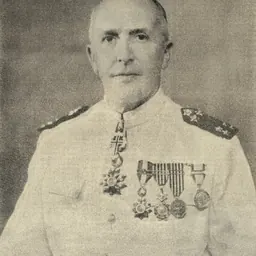

Related people
Same field, nearest in time

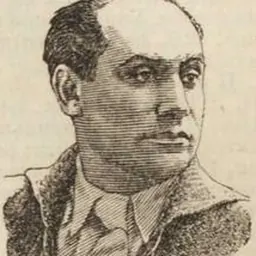
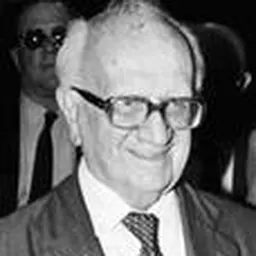



Contemporaries
People whose lives overlapped Maria Lamas's


Frequently asked questions
Who was Maria Lamas?
Portuguese journalist
When was Maria Lamas born?
Maria Lamas was born on 6 October 1893 in Torres Novas.
When did Maria Lamas die?
Maria Lamas died on 6 December 1983 in Lisbon.
What was Maria Lamas's occupation?
Maria Lamas was a journalist, writer, photographer, translator, activist and feminist.
What nationality was Maria Lamas?
Maria Lamas was Portuguese.
Sources & further reading
Cite this page
APA: Biography.guide. (2026). Maria Lamas. https://biography.guide/maria-lamas/
MLA: "Maria Lamas." Biography.guide, https://biography.guide/maria-lamas/.
Chicago: "Maria Lamas." Biography.guide. https://biography.guide/maria-lamas/.
Data last updated: 2026-09-20 · Spot an error? Report a correction.
Page generated 2026-09-27 05:29 UTC