
About Maria Jane Jewsbury
Lived 1800 – 1833 (aged 32). Maria Jane Jewsbury was a British writer, poet and literary critic.
Maria Jane Jewsbury (later Maria Jane Fletcher; 25 October 1800 – 4 October 1833) was an English writer, poet and reviewer. In 1821, while bringing up brothers and sisters, she wrote for the Manchester Gazette. Her Phantasmagoria of poetry and prose, The Three Histories (1830) and Letters to the Young (1837) were highly popular.
Her religious advice tended towards dogmatism and a feeling of Christian right. Phantasmagoria was noticed by William Wordsworth and Dorothy, whom she visited in Lancashire. Other friends were Felicia Hemans, with whom she stayed in Wales in summer 1828, Barbara Hofland, Sara Coleridge, the Roscoes, the Dilkes, the Carter Halls, the Chorleys and Thomas De Quincey. Through its editor, Dilke, she began writing for The Athenaeum in 1830. In 1832 she married Rev. William Kew Fletcher (died 1867) at Penegoes, Montgomeryshire. They sailed for India, but she kept a journal and had poetry printed in The Athenaeum as "The Oceanides".
Early life and education Maria Jane Jewsbury was born in 1800 in Measham, then Derbyshire, now Leicestershire. She was the daughter of Thomas Jewsbury (died 1840), a cotton manufacturer and merchant, and his wife Maria, born Smith, (died 1819). Her paternal grandfather, Thomas Jewsbury Sr (died 1799), was a surveyor of roads, an engineer of canal navigation, and a student of philosophy. On his death he left the family; four cottages, a warehouse, a piece of land in Measham and a large sum of money.
Jewsbury's father worked as the master of a cotton factory, but the War of 1812 with America hurt the cotton business and the family had to move to George Street, Manchester, in 1818, after the business failed. Jewsbury's mother died one month after giving birth. Then 19, Jewsbury took on the mother's role for the household, so that her father could keep working. She continued in the role for over twelve years after their mother's death. Her remains were interred in the cemetery at Poonah.
She had brought several unpublished works to India, and many were published anonymously after her death. After Jewsbury's death, her siblings Geraldine and Francis retained a collection of their sister's private letters, and of the manuscript "Journal of her Voyage and Residence in India". All her letters, hurried and unstudied, bore marks of intelligence under the steady and habitual control of the highest principles. Her pen ennobled all it touched and gave interest even to small details. The letters throw light on one important trait in her character – the strength and constancy of its attachment – showing her father, her sister, her brothers, and her friends, to have been continually present in her thoughts.
Many of Jewsbury's papers are now in the library of Manchester University.
The Three Histories The Three Histories (1830) is reckoned clearly to be her best work. The histories are those of an Enthusiast, a Nonchalant, and a Realist. In the first there is a misnomer; the heroine as a child may in parts be deemed enthusiastic, but grows up into a selfish woman of genius, full of worldly ambition that predominates over her few, weak social affections, valuing her rare abilities and attainments merely as a lever to raise her into the sphere of fashionable distinction, delighting in neither literature nor anything else for its own sake, not loving with any true affection that rests satisfied in finding an appropriate object, while regarding all adventitious advantages as pleasant superfluities,
Julia's primary motivation is the pursuit of public recognition and the establishment of a lasting reputation. Unlike writers who publish for financial necessity or specific social causes, she focuses on the acquisition of fame and the adulation of a wider audience. Critics have characterized her approach as prioritizing personal vanity over the promotion of external purposes.
The tale reveals Jewsbury's ability in delineation of character, and it is the ability to depict so many distinct characters, that show Miss Jewsbury's genius with the combined effect of the "Three 2".
Style and themes
In the process of self-education Jewsbury had not only much to acquire, but much to unlearn. Obsolete phrases of a local dialect haunt her prose, probably derived from daily conversation with uncultivated associates, caught up and made habitual before her taste was formed on purer models. The mercantile idiom, "I will write you" occasionally occurs; and an odd substitution of the preposition "of" in the proper place of the preposition "for", which disfigures her style: "I liked it more than I have liked anything of years," "He has not seen you of a year," etc. This idiosyncratic usage occurs often in the epistles of Margaret Tudor, Queen of Scotland, who, for instance, desires Wolsey to "thank his grace (King Henry VIII) of his diamond that his grace sent me."
Half-consciousness of this habitual fault may probably have induced, by way of counteraction, that sort of fantastic daintiness which sometimes vitiates even her family letters. These faults are mentioned here chiefly to confirm that despite her natural fluency of expression and aptitude in selecting words, the general correctness and elegance of her diction resulted rather from vigilant care. See Mrs Everett Green's Letters of Royal and Illustrious Ladies.
Many passages in her journal are eloquent. "In the best of everything I have done you will find one leading idea – Death; all thoughts, all images, all contrasts of thoughts and images, are derived from living much in the valley of that shadow; from having learned life rather in the vicissitudes of man than woman; from the mind being Hebraic. My poetry, except some half-dozen pieces, may be consigned to oblivion; but in all you would find the sober hue, which to my mind's eye blends equally with the golden glow of sunset, and the bright green of spring; and is seen equally in the temple of delight as in the tomb of decay and separation. I am melancholy by nature, but cheerful on principle."
Selected works Phantasmagoria (1825) The Oceanides (1832-33)
Don’t just read it —
keep it.
Full-length biographies made to live with: read them, listen on the way to work, watch them tonight.
- E-book
- Audio
- Video
Instant download · yours to keep · every purchase keeps this site free
Important facts
People in Maria Jane Jewsbury's life
Named in this biography and alive at the same time

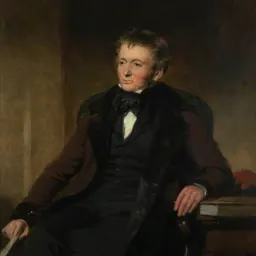

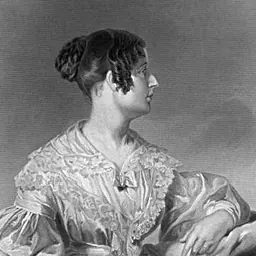
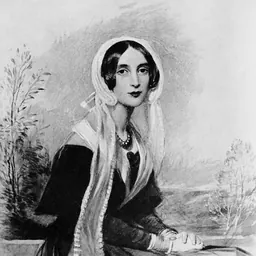
Related people
Same field, nearest in time
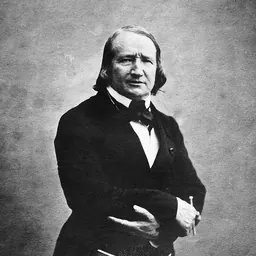




Contemporaries
People whose lives overlapped Maria Jane Jewsbury's





Frequently asked questions
Who was Maria Jane Jewsbury?
English writer and literary reviewer (1800-1833)
When was Maria Jane Jewsbury born?
Maria Jane Jewsbury was born on 25 October 1800 in Measham.
When did Maria Jane Jewsbury die?
Maria Jane Jewsbury died on 4 October 1833 in Pune.
What was Maria Jane Jewsbury's occupation?
Maria Jane Jewsbury was a writer, poet and literary critic.
What nationality was Maria Jane Jewsbury?
Maria Jane Jewsbury was British.
Sources & further reading
· Wikipedia: Maria Jane Jewsbury
· DBpedia: Maria Jane Jewsbury
Cite this page
APA: Biography.guide. (2026). Maria Jane Jewsbury. https://biography.guide/maria-jane-jewsbury/
MLA: "Maria Jane Jewsbury." Biography.guide, https://biography.guide/maria-jane-jewsbury/.
Chicago: "Maria Jane Jewsbury." Biography.guide. https://biography.guide/maria-jane-jewsbury/.
Data last updated: 2026-09-20 · Spot an error? Report a correction.
Page generated 2026-09-27 05:25 UTC