
About Thomas De Quincey
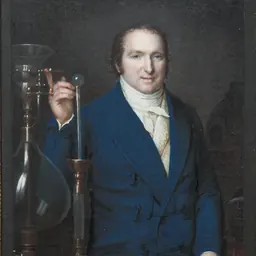
Lived 1785 – 1859 (aged 74). Thomas De Quincey was a British linguist, journalist, writer, novelist, translator and autobiographer.
Thomas Penson De Quincey (; Thomas Penson Quincey; 15 August 17858 December 1859) was an English writer, essayist, and literary critic, best known for his Confessions of an English Opium-Eater. Many scholars suggest that in publishing this work De Quincey inaugurated the tradition of addiction literature in the Western world.
Life and work Child and student Thomas Penson Quincey was born at 86 Cross Street, Manchester, Lancashire. His father was a successful merchant with an interest in literature. Soon after Thomas's birth, the family moved to The Farm and then later to Greenheys, a larger country house in Chorlton-on-Medlock near Manchester. In 1796, three years after the death of his father, Thomas Quincey, his mother – the erstwhile Elizabeth Penson – took the name De Quincey. That same year, his mother moved to Bath and enrolled him at King Edward's School. He was a weak and sickly child. His youth was spent in solitude, and when his elder brother, William, came home, he wrought havoc in the quiet surroundings. De Quincey's mother was a woman of strong character and intelligence but seems to have inspired more awe than affection in her children. She brought them up strictly, taking De Quincey out of school after three years because she was afraid he would become big-headed, and sending him to an inferior school at Wingfield, Wiltshire. He was sent to Manchester Grammar School, in order that after three years' stay he might obtain a scholarship to Brasenose College, Oxford, but he took flight after 19 months. From July to November 1802, De Quincey lived as a wayfarer. He soon lost his guinea by ceasing to keep his family informed of his whereabouts and had difficulty sustaining himself. Still, apparently fearing pursuit, he borrowed some money and travelled to London, where he tried to borrow more. Having failed, he lived close to starvation rather than return to his family. De Quincey was married in 1816, and soon after, having no money left, he took up literary work in earnest.
Journalist
In July 1818, de Quincey became editor of the Westmorland Gazette, a Tory newspaper published in Kendal, after its first editor had been dismissed, but he was unreliable at meeting deadlines, and in June 1819 the proprietors complained about "their dissatisfaction with the lack of 'regular communication between the Editor and the Printer'", and he resigned in November 1819. His political sympathies tended towards the right. He was "a champion of aristocratic privilege" and "reserved Jacobin as his highest term of opprobrium." Moreover, he held reactionary views on the Peterloo massacre and the Sepoy rebellion, on Catholic Emancipation, and on the enfranchisement of the common people.
De Quincey was also a proponent of British imperialism, believing it to be inherently just regardless of its cost. Despite his ideological commitment to personal identity and freedom that derived from his addiction to and struggles with opium, and in spite of his opposition to the notion of slavery, In his articles for The Edinburgh Post, on the issue in 1827 and 1828, he accused anti-slavery campaigners of running "schemes of personal aggrandizement", and worried that abolition would undermine the basis of the British Empire and cause uprisings like the Haitian Revolution against colonial rule. Instead he proposed that there should be gradual reformation led by the slave-owners themselves. De Quincey then made a number of new literary acquaintances. Thomas Hood found the shrinking author "at home in a German ocean of literature, in a storm, flooding all the floor, the tables and the chairs—billows of books..." the nearby village of Polton, and Glasgow, and he spent the remainder of his life in Scotland.
Blackwood's Edinburgh Magazine and its rival Tait's Magazine received numerous contributions. Suspiria de Profundis (1845) appeared in Blackwood's, as did The English Mail-Coach (1849). Joan of Arc (1847) was published in Tait's. Between 1834 and 1849, Tait's published a series of De Quincey's reminiscences of Wordsworth, Coleridge, Robert Southey and other figures among the Lake Poets, a series that taken together constitutes one of his most important works.
Financial pressures
Along with his opium addiction, debt was one of the primary constraints of De Quincey's adult life. The debtors who took sanctuary there could emerge only on Sundays, when arrests for debt were not allowed.) Yet De Quincey's money problems persisted; he got into further difficulties for debts he incurred within the sanctuary. He reports using opium first in 1804 to relieve his neuralgia: his opium addiction may have begun as self-medication.
By his own testimony, De Quincey first used opium in 1804 to relieve his neuralgia; he used it for pleasure, but no more than weekly, through 1812. It was in 1813 that he first commenced daily usage, in response to illness and his grief over the death of Wordsworth's three-year-old daughter Catherine (06/09/1808 – 04/06/1812). During 1813–1819 his daily dose was very high, and resulted in the sufferings recounted in the final sections of his Confessions. For the rest of his life, his opium use fluctuated between extremes; he took "enormous doses" in 1843, but late in 1848 he went for 61 days with none at all. There are many theories surrounding the effects of opium on literary creation, and notably, his periods of low use were literarily unproductive. From 1842 until 1859 he spent long periods in a cottage near Midfield House south of Lasswade, assembling his writings in the peace of the countryside.
Death He died in his rooms on 42 Lothian Street, in south Edinburgh, and was buried in St Cuthbert's Church yard at the west end of Princes Street. His stone, in the southwest section of the churchyard on a west-facing wall, is plain and says nothing of his work. His residence on Lothian Street was demolished in the 1970s to make way for the Edinburgh University student centre.
Collected works During the final decade of his life, De Quincey labored on a collected edition of his works. Ticknor and Fields, a Boston publishing house, first proposed such a collection and solicited De Quincey's approval and co-operation. It was only when De Quincey, a chronic procrastinator, failed to answer repeated letters from James Thomas Fields
Major publications
Confessions of an English Opium-Eater (1821) On the Knocking at the Gate in Macbeth (1823) Walladmor (1825) On Murder Considered as One of the Fine Arts (1827) Klosterheim, or the Masque (1832) Lake Reminiscences (1834–40) Revolt of the Tartars (1837) The Logic of Political Economy (1844) Suspiria de Profundis (1845) The English Mail-Coach (1849) Autobiographic Sketches (1853)
Don’t just read it —
keep it.
Full-length biographies made to live with: read them, listen on the way to work, watch them tonight.
- E-book
- Audio
- Video
Instant download · yours to keep · every purchase keeps this site free
Important facts
People in Thomas De Quincey's life
Named in this biography and alive at the same time

Related people
Same field, nearest in time

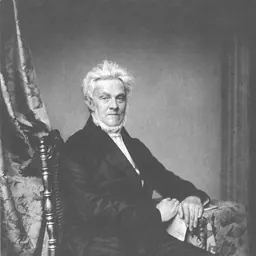
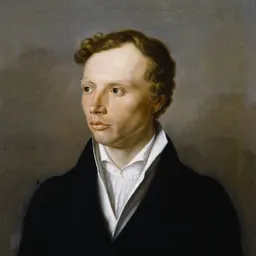
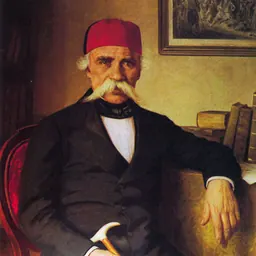
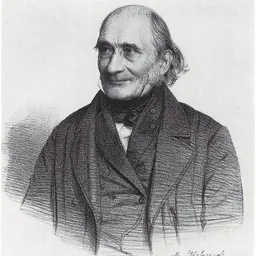

Contemporaries
People whose lives overlapped Thomas De Quincey's




Frequently asked questions
Who was Thomas De Quincey?
British author (1785-1859)
When was Thomas De Quincey born?
Thomas De Quincey was born on 15 August 1785 in Manchester.
When did Thomas De Quincey die?
Thomas De Quincey died on 8 December 1859 in Edinburgh.
What was Thomas De Quincey's occupation?
Thomas De Quincey was a linguist, journalist, writer, novelist, translator and autobiographer.
What nationality was Thomas De Quincey?
Thomas De Quincey was British.
Sources & further reading
· Wikipedia: Thomas De Quincey
Cite this page
APA: Biography.guide. (2026). Thomas De Quincey. https://biography.guide/thomas-de-quincey/
MLA: "Thomas De Quincey." Biography.guide, https://biography.guide/thomas-de-quincey/.
Chicago: "Thomas De Quincey." Biography.guide. https://biography.guide/thomas-de-quincey/.
Data last updated: 2026-09-25 · Spot an error? Report a correction.
Page generated 2026-09-27 05:11 UTC